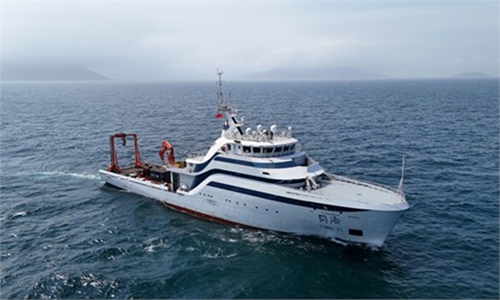
China's first intelligent oceanographic research vessel Tong Ji delivered in Shanghai
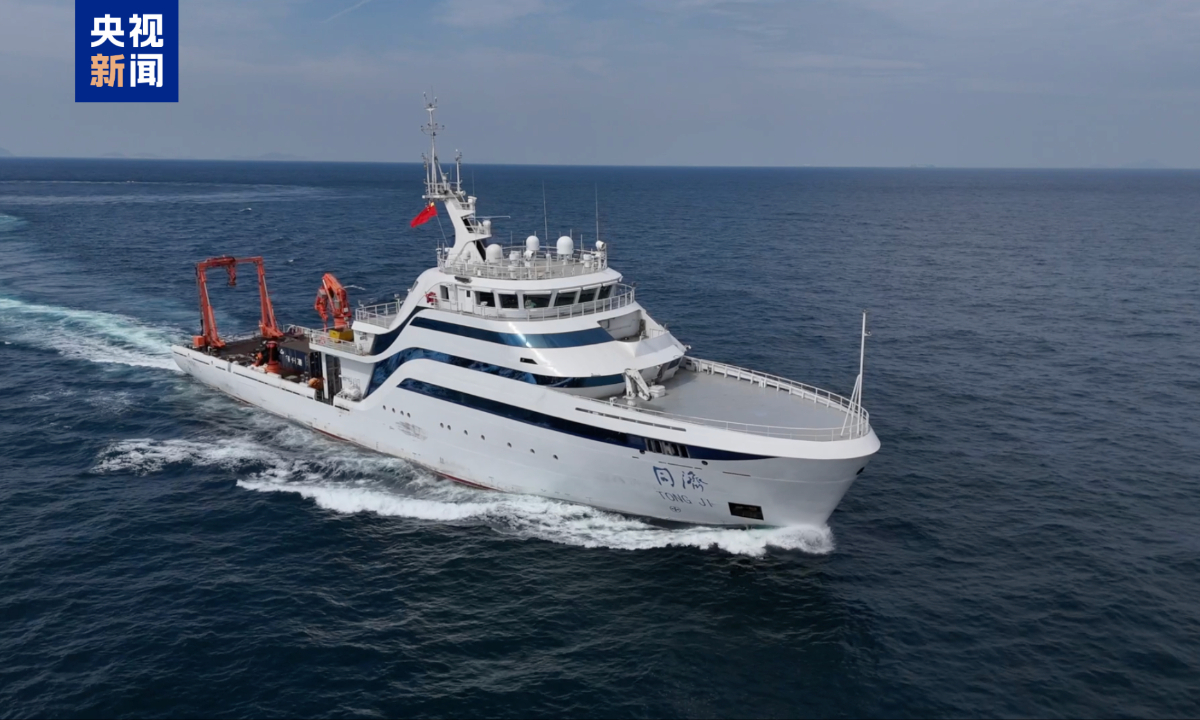
China's first intelligent oceanographic research vessel Tong Ji Photo: CCTV
China's first intelligent oceanographic research vessel, Tong Ji, capable of conducting scientific research and providing engineering support, was officially delivered in Shanghai on Sunday, China Central Television (CCTV) reported.
The marine scientific research and teaching support vessel was built by CSSC Huangpu Wenchong Shipbuilding Company Limited for Tongji University in Shanghai.
The 2,000-metric-ton, new-generation, green, quiet and intelligent comprehensive scientific research vessel Tong Ji was independently designed and built by China. It integrates multiple functions - such as marine geology, marine chemistry, marine biology, scientific research, talent cultivation, science education, and cultural heritage - making it an "offshore campus" for Tongji University. Compared with previous research vessels, Tong Ji operates with enhanced intelligence.
According to Li Zhenghua, chief technologist of Tong Ji, the vessel is 82 meters long and 15 meters wide. It can carry 15 crew members and 30 researchers, with a range of 8,000 nautical miles.
In open waters, the vessel is capable of autonomous navigation and can intelligently plan an energy-efficient route. It also features powerful integrated communication system, enabling seamless ship-to-ship, ship-to-shore, and coordinated operation of unmanned scientific research equipment across air, sea, and underwater domains.
Notably, Tong Ji, which was built based on a 2,000-ton class vessel platform, matches the operational capacity of a 3,000-ton research vessel through optimized spatial design. Optimized for onboard efficiency, the Tong Ji offers a 460-square-meter deck operation area, 320 square meters of laboratory space, an average of 10.2 square meters of living space per crew member, and more than 100 square meters for meetings, leisure, and fitness.
Li explained that the vessel is equipped with modular laboratories designed for various operational purposes and conditions. Depending on the specific research mission of each voyage, it can carry different research containers to support a broad range of expedition goals, including marine geology, marine biology, marine chemistry, and atmospheric environment studies.
In addition, the ship can also perform a series of marine engineering operations, such as submarine cable laying and maintenance.
Global Times
RELATED ARTICLES