US reportedly seeks clarity from allies on their role in potential conflict on China's Taiwan; US' demand is 'coercion': expert
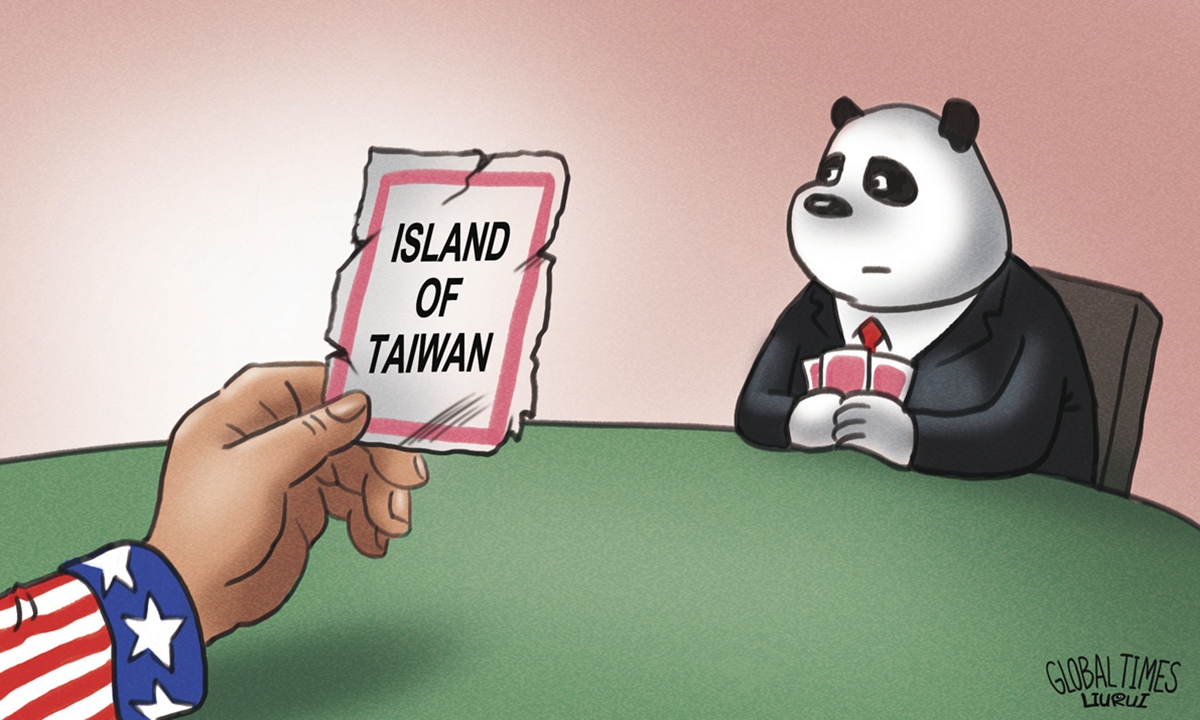
Illustration: Liu Rui/GT
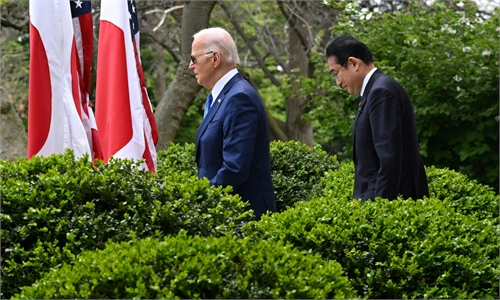
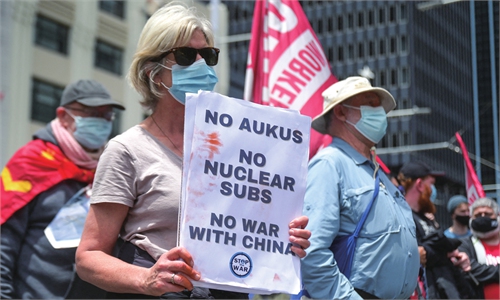
According to a Financial Times (FT) report, the Pentagon is pressing Japan and Australia to make clear what role they would play if the US and China go into conflict over China's Taiwan island, which has frustrated the two American allies. A Chinese expert said on Sunday that US demand on these two countries is "a kind of coercion."
Elbridge Colby, Defense Department undersecretary for policy, has been pushing the issue in meetings with Japanese and Australian defense officials in recent months, said five people familiar with the discussions, according to FT.
The reported request caught both Tokyo and Canberra off guard, as the US itself does not offer a blank check guarantee to the island, Reuters reported, citing the FT report.
Japan's defense ministry said it was difficult to answer the hypothetical question, according to FT.
According to another Reuters report, Australia will not commit troops in advance to any conflict, Pat Conroy, minister for Defense Industry of Australia, said on Sunday, responding to a report on the Pentagon's pressuring.
Australia prioritizes its sovereignty and "we don't discuss hypotheticals," Conroy said in an interview with the Australian Broadcasting Corporation, Reuters reported.
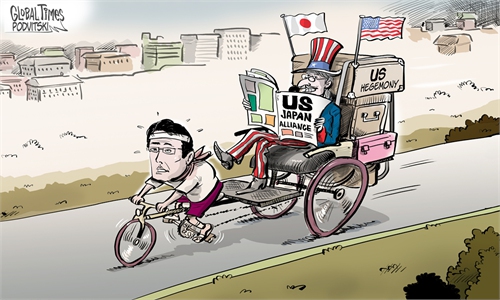
The US' demand on its allies is seen as a kind of coercion, attempting to force the two countries to provoke China, thereby undermining the progress in China-Japan and China-Australia relations, Lü Xiang, a research fellow at the Chinese Academy of Social Sciences, told the Global Times on Sunday.
"In the perception of the US itself, the factors constraining China are increasingly diminishing." Lü said that currently, the US mainly relies on "two cards" - economy and trade, and the island of Taiwan.
Yet the US' demands toward these two countries reflect internal anxiety about its relationships with these allies, Lü said. The forced binding of alliances is bound to encounter problems eventually, and such a move indicates that these relationships are becoming fragile, according to Lü.
There are some competitive areas between China and Japan, but economic cooperation is increasing. For example, Japanese automaker Toyota Motor Corp has signed an agreement to establish a wholly-owned electric vehicle (EV) plant in Shanghai, which shows that Japan is adopting China's technological approach in new industrial fields and is committed to deepening its presence in the Chinese market, Lü said.
Previously, China's Foreign Ministry repeatedly stressed that the Taiwan question is entirely China's internal affair, and no country is in a position to interfere.
Colby is known for arguing that the US military should prioritize competition with China and shift its focus from the Middle East and Europe, according to Reuters.
Li Haidong, a professor at China Foreign Affairs University, told the Global Times that it remains to be seen whether this is Colby's personal opinion or the definitive stance of the current US administration.
Allies form alliances with the US based on the idea that the US can better serve their own interests. Colby's approach essentially turns Japan and Australia into "cannon fodder" for the US, which undoubtedly raises profound doubts among the countries about the reliability of their alliance with the US, according to Li.
RELATED ARTICLES