Exclusive: US farmers eager for trade reset, eye bigger role in Chinese market: USSEC China director
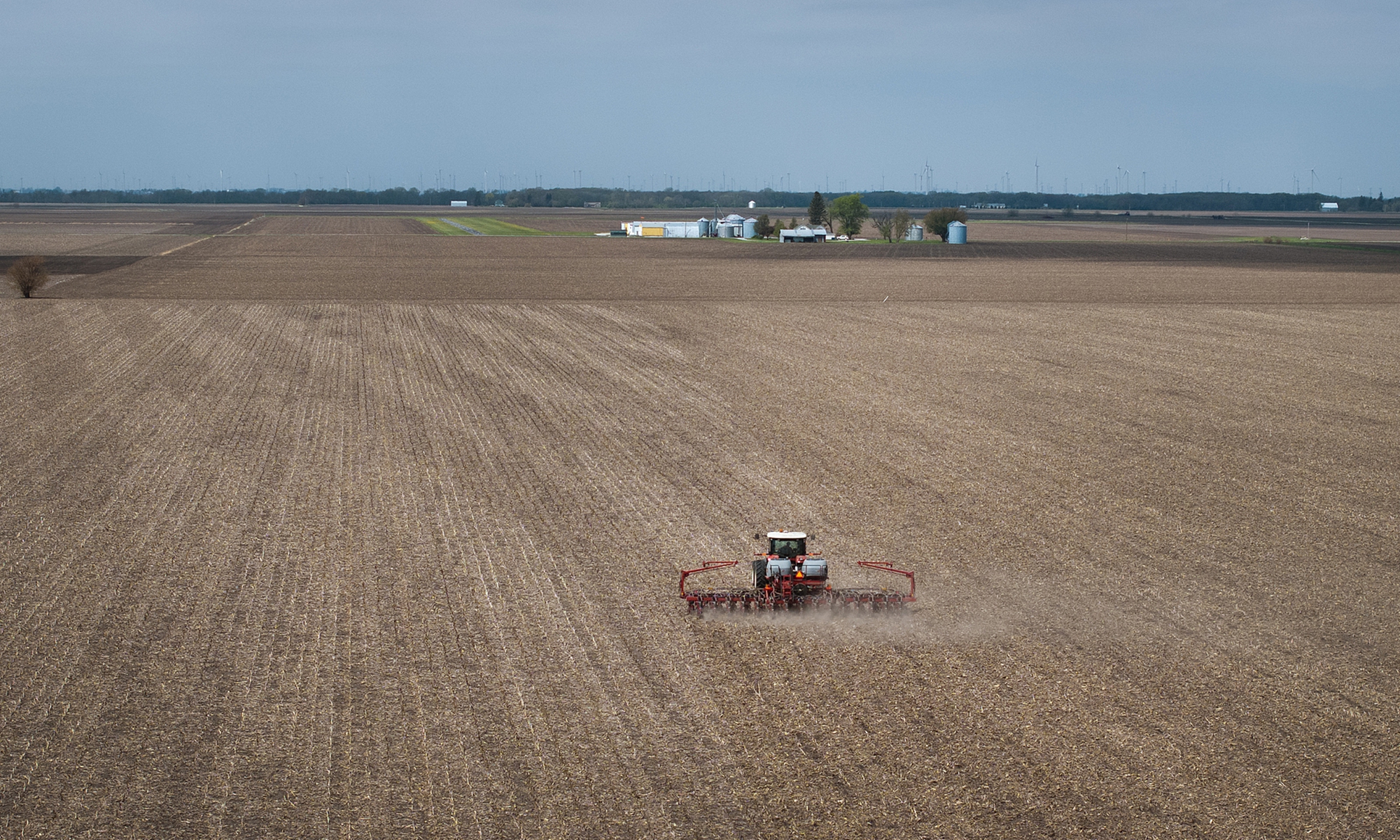
In this aerial view, Dan Duffy uses a tractor to plant soybeans on land he farms with his brother on April 28, 2025 near Dwight, Illinois.Photo: VCG
US soybean farmers value the opportunities in the Chinese market, hope for better economic and trade ties with China, and disapprove of the use of tariffs to balance trade, Zhang Xiaoping, Greater China Regional Director of the US Soybean Export Council (USSEC), told the Global Times in an exclusive interview on Thursday.
He made the comments at the third China International Supply Chain Expo (CISCE) in Beijing.
He noted that American farmers attach great importance to economic ties with China and are eager to see bilateral relations return to a rational course, paving the way for broader agricultural cooperation.
"China has an inelastic demand for soybeans- whether for feed, food, or oil production, the country has consistently been the world's largest soybean importer," Zhang said.
"Among all export destinations for US soybeans, China remains the largest, accounting for over 40 percent of total US soybean exports," he noted.
Since 2018, in response to US tariff measures, China has moved to diversify imports of soybeans and other staple crops to bolster food security and reduce reliance on any single source. As a result, the share of US soybeans in China's import mix has declined, with Brazil emerging as the top supplier, said Xu Shiwei, secretary-general of the market early warning expert committee of the Ministry of Agriculture and Rural Affairs, the Beijing News reported.
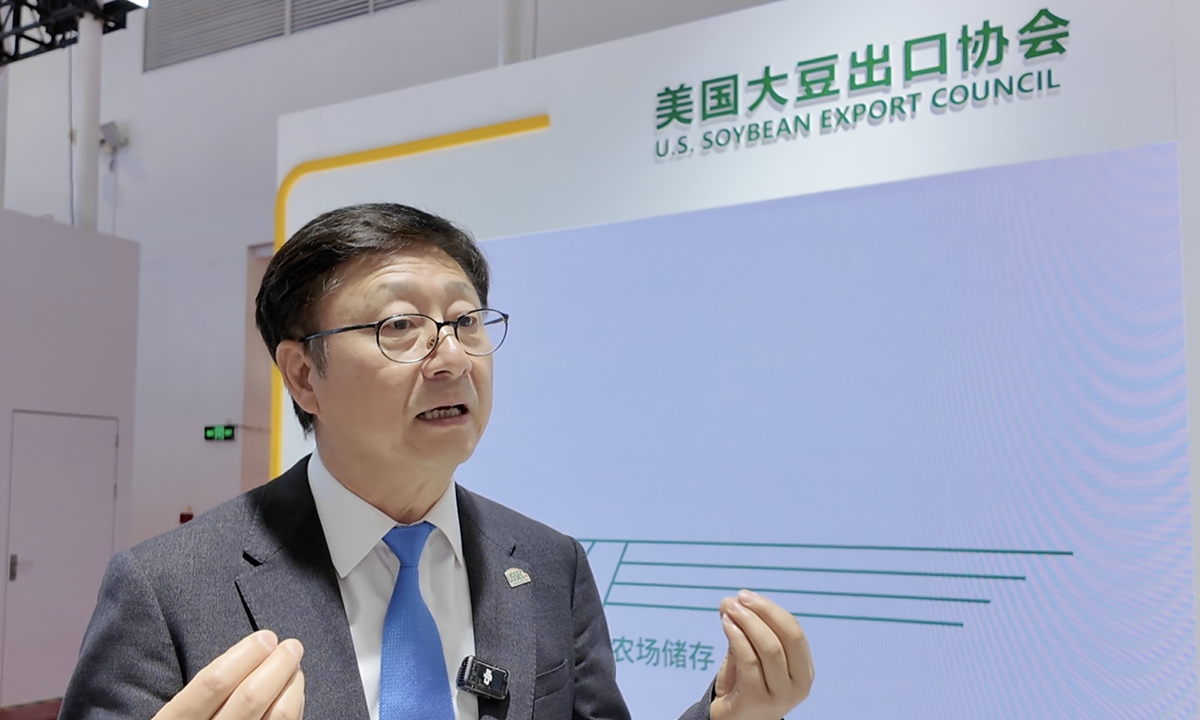
Zhang Xiaoping, Greater China Regional Director of the US Soybean Export Council, speaks with the Global Times during an interview at the third China International Supply Chain Expo (CISCE) in Beijing on July 17, 2025. Photo: Lin Luwen/GT
According to Zhang, the share of US soybeans in the Chinese market has declined from a peak of around 60 percent to roughly 22 percent at present. He attributed the shift to both market-driven changes and what he described as "non-market factors" that can't be ignored.
Despite recent declines in US soybeans' market share in China due to tariffs and other non-market factors, Zhang told the Global Times the trend is temporary. "Market forces are powerful. Once trade returns to its fundamentals, US soybeans remain highly competitive," he noted.
On April 2, the US announced so-called "reciprocal tariffs" on its major trading partners, including China, dealing a clear blow to bilateral trade, with soybeans among the affected products.
Zhang said he and the council members rejected the use of tariffs as a tool to achieve the so-called trade balance, stressing the 43-year foundation of China-US soybean cooperation.
"We believe that achieving more balanced trade can only be done by expanding trade, not restricting it. Tariffs, by nature, limit trade, which is why American farmers do not support such measures - they see them as an artificial disruption," he said.
He added the ultimate solution should be a mutually beneficial trade agreement, which would serve the interests of both countries' industries, markets, and people.
Zhang said that US soybean farmers have a deep and genuine connection to the Chinese market. "Most of the USSEC's funding comes directly from farmers, and they've consistently supported our China-focused programs. That shows just how much they value this partnership."
What US soybean farmers are doing is bringing certainty amid geopolitical uncertainty - highlighting the strengths of US soy in quality, service, and above all, its sustainability, which aligns with China's drive for low-carbon, green growth, he said.
Despite challenges, Zhang remains confident about the industry's prospects in China. He said that with specialized varieties for sprouts, soy milk, tofu and more, US soybeans are tailored to Chinese consumer preferences through contract farming.
At the supply chain level, Zhang noted that Chinese manufacturing is deeply embedded in US soybean logistics. "From transport vessels to port handling equipment, much of it is made in China - a clear sign of the close industrial ties between our two countries."
He said that the US soybean industry, as a stabilizing force in China-US agricultural ties, remains committed to supplying high-quality, sustainable soybeans to China. "Platforms like the CISCE help deepen industry cooperation, bring greater certainty amid uncertainty, and steer bilateral relations toward greater stability, rationality, and mutual benefit."
RELATED ARTICLES