‘China is enterprising, full of people eager to try new things’: British scholar
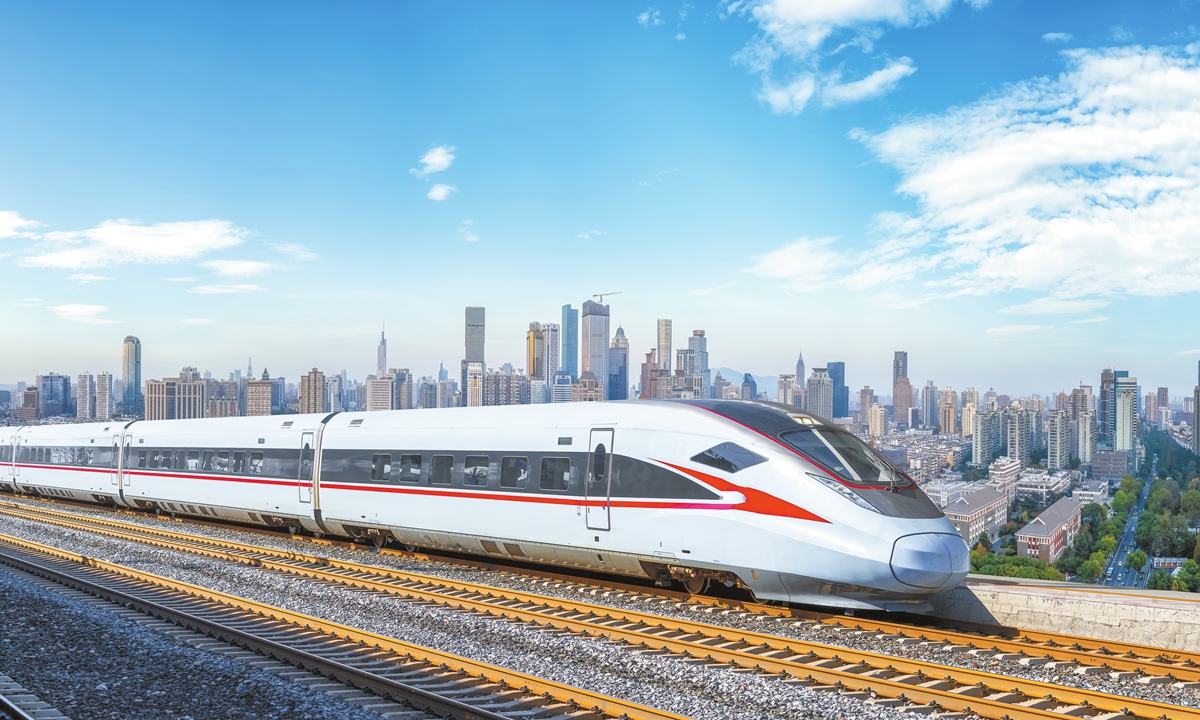
Photo: VCG
Editor's Note:
Curiosity about China is drawing a growing number of international travelers to see the country for themselves. From walking ancient stones atop the Great Wall to riding high-speed trains between glittering skylines, many say they've discovered a China they didn't expect to see. In our special series, "Journey Through China," the Global Times shares the impressions of international travelers who have recently spent time in China. Their firsthand accounts - ranging from casual observations to thoughtful reflections - shed light on three key aspects of today's China: infrastructure, modernization and traditional culture.
In the first piece of the series, Dr Stephen Davies (Davies), head of education of British think tank Institute of Economic Affairs, told Global Times (GT) reporter Li Aixin that he wanted to visit China for many years to see what kind of new world is taking shape in East Asia, and what he has seen in China are dynamism, the novelty of everything, and numerous opportunities.
GT: You traveled through China for a month this year, after which you published your impressions in The Telegraph. What prompted you to visit China in the first place?
Davies: I've wanted to visit China for many years. I'm a historian and for a long time, I've had a great interest in Chinese history. I wanted to see the places in person. I've been to East Asia, having visited Singapore, but I really wanted to see what you might call the heart of East Asia: China. I wanted to see what it's like now, and exactly what kind of new world is taking shape in East Asia.
GT: At the very beginning of your article, you described China's infrastructure as "jaw-dropping" - mentioning high-speed rail, airports and urban development. Could you elaborate on one or two aspects that particularly struck you, that made you feel: This is not the China I thought I knew?
Davies: I did mention the high-speed rail, which was simply staggering, both in terms of scale and quality. The high-speed trains are incredibly smooth - so smooth and quiet, in fact, that you hardly know you're going over 200 miles an hour unless you look out the window. The stations are incredible in terms of their size, cleanliness, and organization.
An obvious comparison is with the terrible state of infrastructure here in the UK. While in China you've built more than 45,000 kilometers of high-speed rail, Britain has faced significant delays in constructing HS2. It is an embarrassing comparison. I knew about all that, but actually seeing it in person was something else.
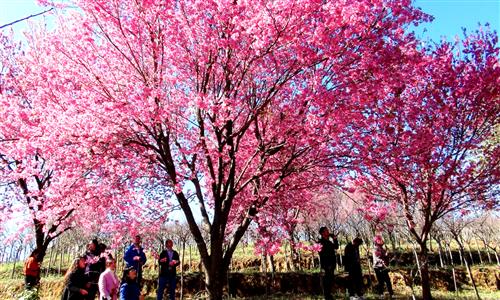
What I also noticed, though, in terms of infrastructure, was the extent of smaller-scale infrastructure built in the countryside. I was struck by the network of small but very useful paved highways, lanes and roads spread throughout very remote rural parts of China, which I noticed, for example, in Yunnan in Southwest China.
The way this has tied even once-remote rural areas into the national highway network was very impressive. Both the organization required to build it and the impact it has - integrating rural areas into the wider national economy and society - are remarkable. It clearly took a great deal of effort, planning and organization.
GT: Some Western media outlets portray China as "repressive," yet you highlighted the dynamic state of China. Are there any stories or moments you could share that made you think China is dynamic?
Davies: The economic data and a whole range of other indicators like scientific publications, suggest that China is a very dynamic society, both economically and in terms of discovery and intellectual research.
From my own historical reading and study, I know that China has periodically, under the Song, Tang (especially the high Tang period), and Han dynasties, been an extremely innovative and dynamic civilization. Therefore, in a way, the things I observed simply confirmed my expectations.
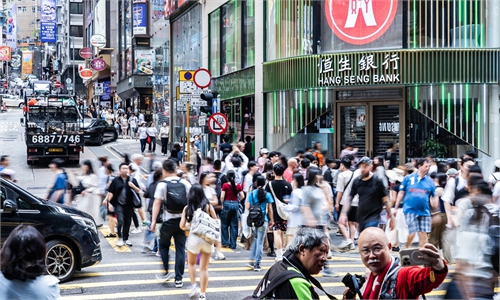
I noticed the sheer liveliness of the cities - the level of activity, the amount of commerce and trade, and the energy you feel in the busyness of the place. It's a marked contrast, I have to say, with the more depressed parts of many Western societies.
If you go to places like London or Paris, you get a similar feeling. But that's often not the case in more depressed, post-industrial areas in the West. I didn't get the impression that China has a "rust belt," or areas lacking in economic dynamism, at least not in the places I visited. You could very quickly sense a strong work ethic: people working long hours, committed to their jobs and eager to advance.
I noticed there's some concern in certain circles about what's called tang ping - or "lying flat," - with young people choosing to opt out of the rat race. But I think that's part of a broader adjustment young people are making all over the world, given current economic trends.
What struck me most was the novelty of everything - the feeling that you're in a part of the world still growing rapidly. It felt incredibly enterprising, full of people eager to try new things, develop products, build infrastructure and innovate intellectually.
That was especially noticeable in the Yangtze Delta. In Hangzhou, Suzhou and Shanghai, you really get a vibrant sense of being in a place where people are always thinking, surrounded by high-rise buildings, asking themselves: What new thing can I do? What new business venture can I try? What new idea can I come up with? There's a very strong innovative energy and spirit.

Stephen Davies Photo: Courtesy of Davies
GT: You are very open-minded toward China's development. In your view, how do people in the UK - common people in society and political leaders - tend to perceive China's development?Davies: I believe the general public is not very aware of what's going on in the rest of the world. The problem is that media focus is not only parochial, but when the rest of the world is mentioned, it largely consists of the US
Others, among both the intellectual class and certain political circles, tend to view China in darker tones, seeing it primarily in terms of competition rather than opportunity. That's an incredibly dangerous way of thinking. I believe it stems from a focus not on opportunities for trade and exchange - which, by definition, bring mutual benefit - but instead on power dynamics.
If you think of relations with other parts of the world, like China, in terms of opportunities for trade, mutual benefit, the exchange of ideas and cultural interaction - leading to hybridization and innovation - then the picture is extremely positive.
China's development should be seen as a tremendous opportunity, one that offers mutual benefit. But if you view it through the lens of power and relative strength - as ruling elites often do - you'll conclude, "This is bad; they're becoming more powerful than us." That's an incredibly dangerous mindset.
That kind of power-based thinking is more common among those with political influence. In contrast, people in business or intellectual circles often see competition as peaceful and productive. They may acknowledge that others are doing better in certain areas by various metrics, and that can motivate progress.
GT: While China seems willing to engage globally, some Western countries are building trade barriers. How do you view this trend?
Davies: It is not sustainable. Protectionism is making a big revival. Any economist will tell you that protectionism is the wrong way to go, and a trade war is incredibly damaging and self-defeating - it's just insanely bad economics. For example, the US president seems to think that selling physical goods and services to Americans in exchange for paper dollars is somehow exploiting Americans. Personally, I would really like to be exploited that way.
If one country is foolish enough to tax its own consumers by making foreign goods more expensive, then you should let them go ahead and do it - because protectionism basically harms one's own domestic consumers.
What's really bad about protectionism are the political implications. Historically, protectionism leads to competition for resources, competition between states for access to key materials like strategic minerals and oil. And that has never ended well.
RELATED ARTICLES