Haier steps up efforts in promoting intelligent manufacturing with the help of AI
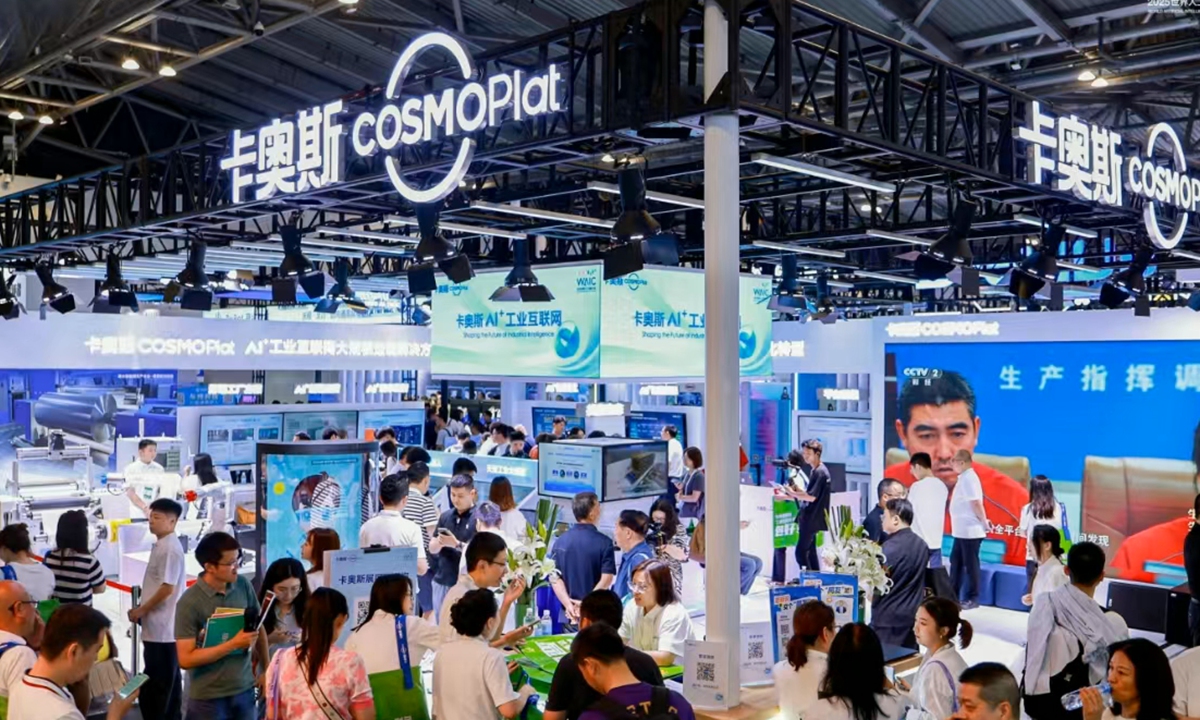
Photo: Courtesy of Haier Group
Smart manufacturing driven by artificial intelligence (AI) in China has slashed downtime, cut defects and turbocharged output, turning factory floors into engines of global competitiveness, Xie Haiqin, deputy general manager of Chinese home appliance maker Haier Group's industrial internet platform COSMOPlat, told the Global Times on Monday.
At an interview on the sidelines of the World Artificial Intelligence Conference (WAIC 2025) in Shanghai, Xie noted that by relying on its strong manufacturing foundation and rich application scenarios, China is efficiently converting the technological potential of AI into real productivity improvements and economic growth momentum.
COSMOPlat is an industrial internet platform introducing users to the whole process of production and mass customization solutions. The platform has powered 12 lighthouse factories spanning multiple sectors in China, linked 900,000 enterprises worldwide and delivered services to 160,000 start-ups along the industrial chain, according to information the company shared with the Global Times.
An auto factory recently improved productivity by about 20 percent, and reduced equipment failure rates by 30 percent and maintenance costs by 25 percent through the COSMOPlat platform featuring the integration of 5G, large AI models, the Internet of Things, automation and advanced analysis technology, Xie said.
This highlights China's broad efforts to modernize the industrial system and develop new quality productive forces, as well as spur industrial innovation through sci-tech innovation and press ahead with new industrialization, so as to raise total factor productivity and foster new growth drivers and strengths.
Digital transformation in manufacturing has become an irreversible trend globally, and Haier takes the industrial transformation trend as a new opportunity to further enhance its manufacturing capabilities, Xie said.
Haier is committed to bolstering the intelligent and digital transformation of enterprises in a wide range of industries through the application of advanced manufacturing technologies such as large AI models and advanced robotic equipment, she said.
According to Xie, the specific applications of AI in Haier factories include production process optimization, quality inspection, equipment maintenance and other aspects. Meanwhile, the application of robots in industrial scenarios is also an irreversible trend that can improve efficiency and quality, and robot technology will continue to iterate and will become more flexible and efficient.
"Chinese companies have unique advantages in the global digital transformation and should make full use of these advantages to accelerate technological innovation and application," Xie said, adding that Chinese companies are more welcoming and practical when it comes to science and technology, and can quickly achieve innovation iteration. These are the advantages of Chinese companies in accelerating digital transformation, a must-answer question for companies in achieving high-quality development, she noted.
Xie said that Haier will step up efforts in promoting intelligent manufacturing with the help of AI. In order to improve efficiency and reduce costs, it will build more lighthouse factories to improve the automation, intelligence, digitization and green production, as well as focus on specific scenarios and continue to invest and optimize in areas such as quality inspection and update intelligent AI agents for quality control and energy management, Xie stated.
Powered by COSMOPlat, six factories owned by Haier have been included in the global lighthouse network, an initiative launched by the World Economic Forum in collaboration with market consultancy McKinsey in 2018.
Boasting high efficiency, intelligence and sustainability, lighthouse factories represent the highest level of global intelligent manufacturing.
RELATED ARTICLES