Upcoming war-themed Chinese film '731 Biochemical Revelations' draws attention from Japanese media
By Published: Aug 03, 2025 08:18 PM

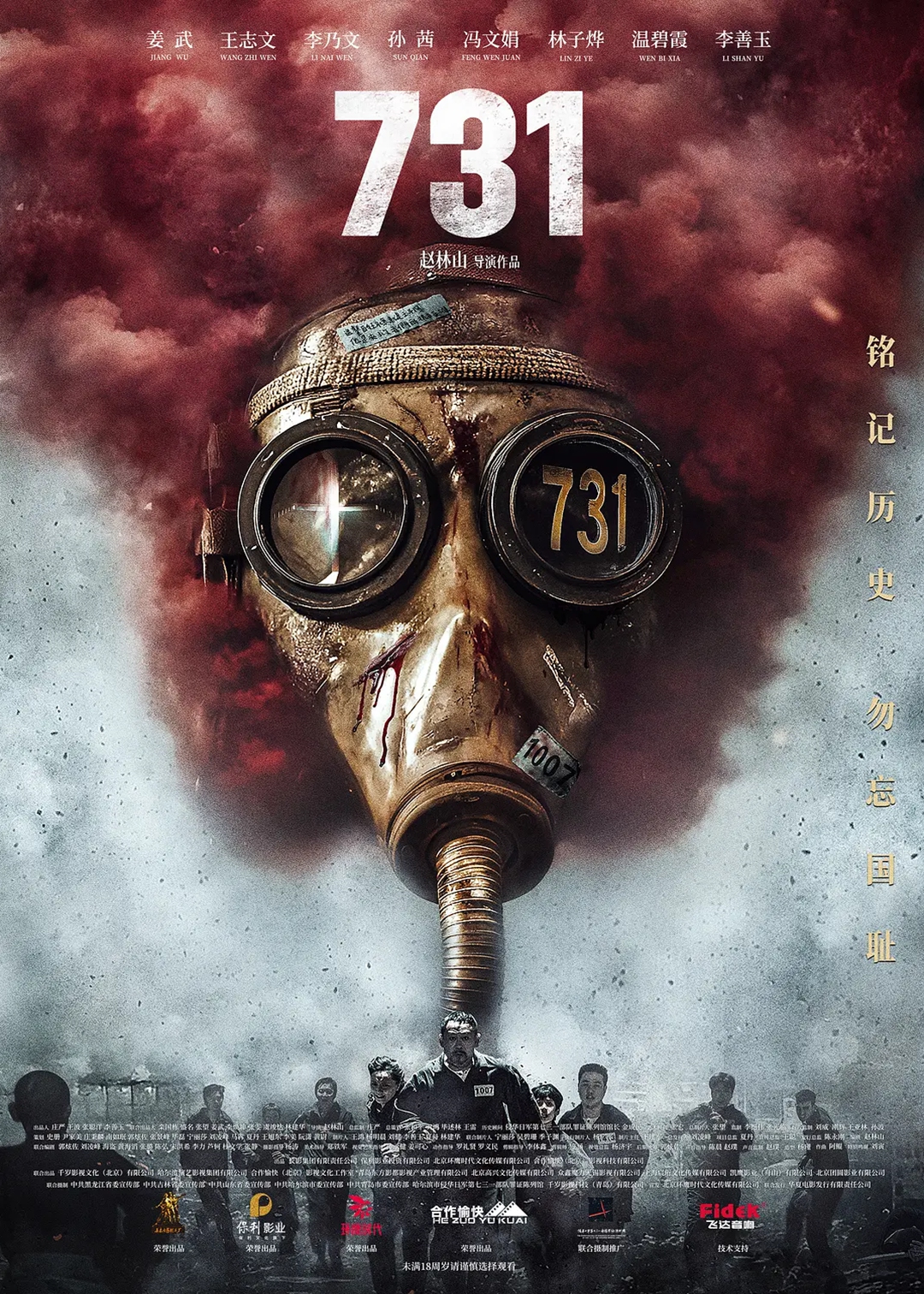
Film '731 Biochemical Revelations' set for Sep 18 release in China
Multiple Japanese media outlets reported Sunday afternoon soon after the announcement of 731 Biochemical Revelations, a war-themed Chinese film set for release on September 18 - the 94th anniversary of Japan's invasion of China, which foreshadowed World War II in Asia and made China the first to resist fascism.
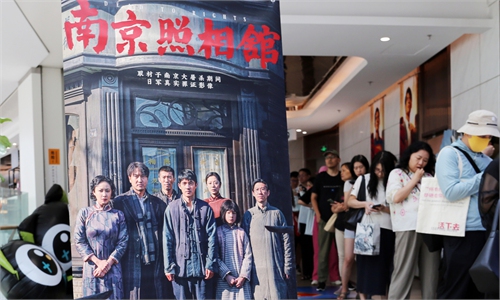
A slew of movies is scheduled to be on screen in the next two months including Mountains and Rivers Bearing Witnesses on August 15, 731 Biochemical Revelations on September 18, and Against All Odds on September 3, according to China Film News on Sunday.
Among these films, 731 Biochemical Revelations is set against the backdrop of the bacterial experiments conducted by Unit 731 of the invading Japanese army in Northeast China. It exposes the crimes of Unit 731 through the tortuous fate of a nonentity.
After the announcement, at least 3.84 million Chinese audience said that they would like to watch the movie, according to data from China's ticketing platform Maoyan, ranking the first on the recent want-to-watch list. One comment on Sina Weibo read: "The decision to release the film on September 18 holds profound significance-a solemn reminder of the atrocities committed by Japanese invaders and a call to never forget our national humiliation." Another netizen said "I'm planning to take my Japanese friend to watch it together."
Kyodo News soon reported the development on Sunday. The report said that the film 731 Biochemical Revelations, which depicts the Imperial Japanese Army (IJA)'s Epidemic Prevention and Water Purification Department of the Kwantung Army (Unit 731), is scheduled to be released on September 18. Kyodo News described September 18 as the anniversary of what it termed the "1931 Liutiaohu Incident." However, according to the Xinhua News Agency, the so-called "Liutiaohu Incident" referred by the Japanese side is the September 18th Incident. On September 18, 1931, Japanese troops blew up a section of railway under their control near Shenyang and accused Chinese troops of sabotage as a pretext for the attack. Later that night, they bombarded barracks near Shenyang, marking the start of Japan's 14-year invasion of China.
Jiji Press reported the upcoming release of 731 Biochemical Revelations on September 18. The Japanese media outlet claimed that the film could "raising concerns about a rise in anti-Japanese sentiment."
Multiple other Japanese media outlets including Iwate Daily and Nikkan Sports have reposted the report by Kyodo News.
A Japanese peace activist Nobuharu Goi, who has received an exclusive interview with the Global Times in May, expressed his strong interests in the film in an e-mail sent to the Global Times in June.
In his e-mail, Goi said he wants to obtain the film director Zhao Linshan's email address or other contact information after they failed to invited the director to Japan in 2018.
Goi, also a chairman of the Yokohama Committee for the Exhibition on Japanese Army's Chemical Warfare, has held an exhibition in Yokohama, Japan, which focused on the Japanese Imperial Army's use of chemical weapons and the dangers posed by abandoned chemical munitions during the Chinese People's War of Resistance Against Japanese Aggression, in a bid to bring these "dormant historical materials" to light.
Goi told the Global Times in May that the Japanese government is attempting to erase the public's memory of the war.
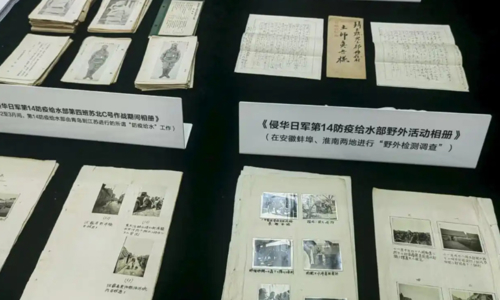
Though eight decades have passed, new evidence continues to surface, exposing atrocities committed by the IJA during its invasion of China-and many of these proofs are concealed within Japan itself.
For instance, in March, Japanese Communist Party member and House of Councillors member Taku Yamazoe publicly presented historical documents in the Diet proving that notorious Unit 731 had conducted live human experiments in China. These records had long been hidden in the National Institute for Defense Studies under Japan's Ministry of Defense. This marks the first time a sitting legislator has exposed such files in parliament, condemning Tokyo's decades-long systematic cover-up of war crimes committed in China.
"On the occasion of 80th anniversary, Japan is increasingly memorialize Hiroshima and Nagasaki - focusing solely on victimhood. Both policymaking and media still reject honest reckoning with wartime perpetration. So I raised these issues during NHK-televised Diet sessions precisely to awaken public consciousness," Yamazoe said in an exclusive interview with the Global Times in Tokyo.
"The atrocities committed by Unit 731 violated international law. While the Japanese government acknowledges the unit's existence, it repeatedly claims to 'lack detailed knowledge of its activities.' With most witnesses now deceased, verification has become increasingly difficult. I consider this stance by the government to be profoundly disingenuous," Yamazoe said.
RELATED ARTICLES