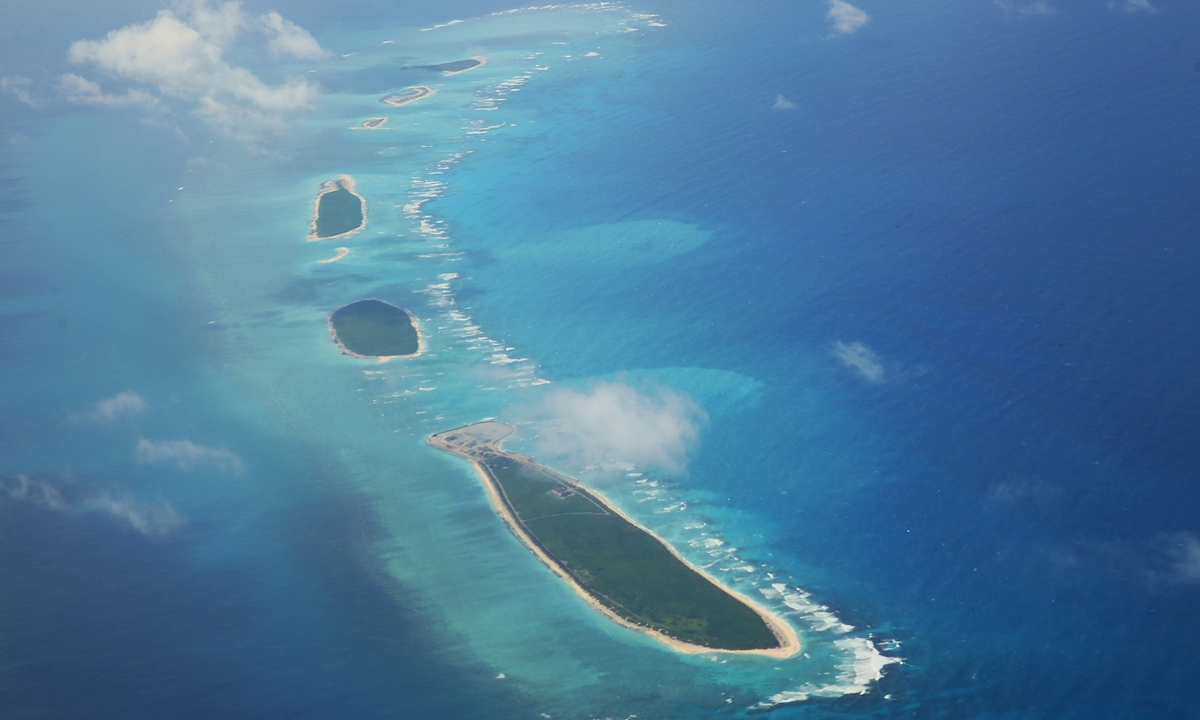
South China Sea Photo: VCG
According to the Newsweek report, four Indian Navy warships visited Manila Port on Saturday, followed by maritime cooperation activities with the Philippine Navy from Monday to Friday in the South China Sea. This marks the first joint naval drill between the two countries since 2021. Coinciding with the military activities, Philippine President Ferdinand Marcos Jr will visit India during the same period - a visit that aligns perfectly with the timing of the joint exercises.
Bilateral ties between India and the Philippines have grown increasingly close under the Marcos administration. In 2023, the Philippines became the first foreign country to take delivery of India's BrahMos supersonic cruise missiles as part of its military modernization program.
In April of this year, Philippine Defense Secretary Gilberto Teodoro announced the arrival of a second batch of BrahMos supersonic cruise missiles produced in India. While it is natural for countries to develop normal bilateral ties, the military cooperation between India and the Philippines carries an obvious undertone of targeting China.
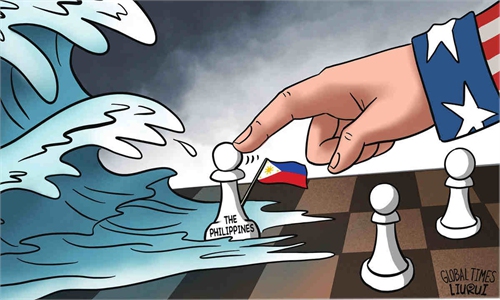
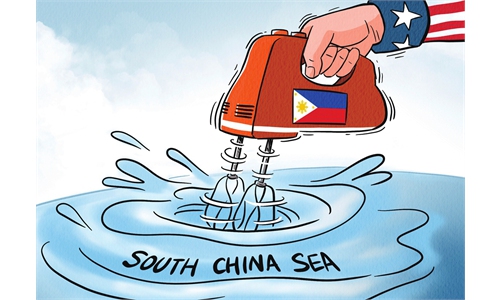
Since Marcos took office, the Philippines has shifted its South China Sea policy from dialogue to confrontation, actively courting extra-regional powers in an effort to "internationalize" the South China Sea issue as a way to constrain China. India, a key player in the US "Indo-Pacific Strategy," has been encouraged by Washington to enhance collaboration with Asian allies to counterbalance China. Following the lead of the US, Australia, Japan, Canada and France, India is now cooperating with the Philippines in the South China Sea under the banner of maritime security cooperation.
Although the governments of India and the Philippines still maintain a pretense of not targeting any third party, scholars and media from both sides have openly acknowledged that the drills are aimed at China. A Philippine scholar stated explicitly that "it truly builds up to the strategic clarity of pan "Indo-Pacific Strategy" where India and the Philippines are sending a strong message to China in the South China Sea."
Some Indian hawks are even advocating intervention in the South China Sea issue and the Taiwan question to counter China, and the Philippines appears to be their ideal point of entry. The India-Philippines naval drills are held near the sensitive waters around Huangyan Dao - India is surely well aware of the sensitivities.
Unlike India, which views friendly relations between its South Asian neighbors and third countries as threats, China treats all Asian countries with equality. China does not subscribe to an "Indian version of the Monroe Doctrine" in Asia, nor does it demand the same foreign policy from Southeast Asian nations, as India expects "India First" from its neighbors. China respects the Philippines and other ASEAN countries' diplomatic relations with the rest of the world.
Ultimately, India-Philippines military cooperation may not generate the desired effect. That's because India lacks the political will to confront China on the Philippines' behalf. India has many unresolved disputes with its own neighbors and serious domestic issues to address. The Philippines' hope to shift the power balance with China by buying Indian weapons and deepening defense ties with India is nothing but a desperate gamble.
India may welcome the trouble Manila stirs for China and voice support, but it will never risk its own interests to help the Philippines. In fact, India's real goal might simply be to showcase its military presence through joint drills and seize the opportunity to market its BrahMos missile. India must also consider the position of ASEAN, which is averse to external powers complicating the regional situation or dragging ASEAN countries into becoming pawns in a proxy conflict.
The frictions between China and the Philippines or between China and India are objective realities - some of which stem from historical or externally induced issues.
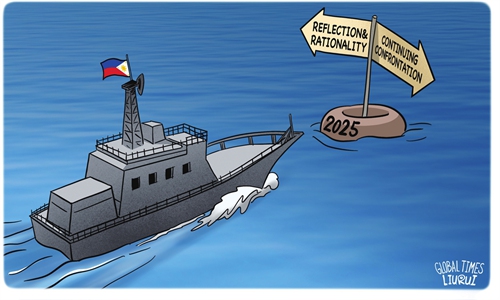
These disputes should be resolved through mutual respect and pragmatic dialogue, not through blind confrontation that hampers normal bilateral or multilateral relations. If someone hopes to open a "second front" to gain undue advantage or resolve issues by inflaming them, they will only create more trouble, and ultimately pay the price.
The author is a professor from the School of International Relations at Sichuan International Studies University. opinion@globaltimes.com.cn
RELATED ARTICLES