Large language model developed by Chinese researchers helps rescue in Myanmar earthquake
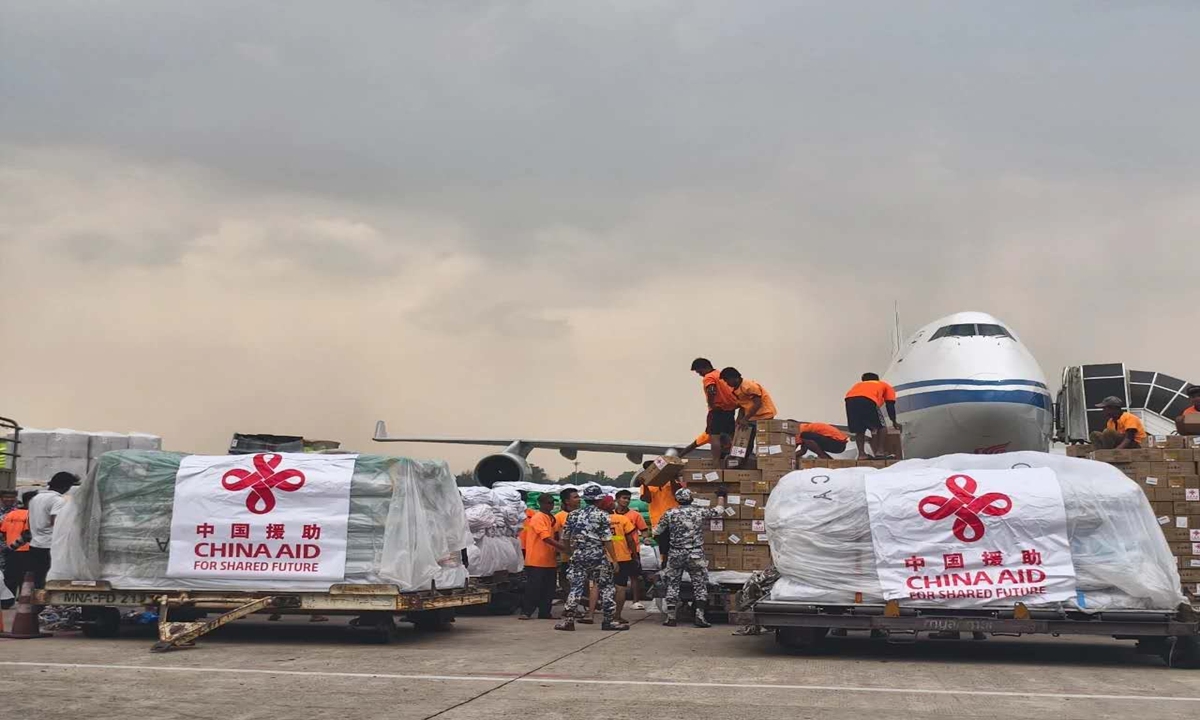
In response to the urgent needs of the earthquake-stricken population in Myanmar, China has been accelerating efforts in post-disaster resettlement, relief aid, water supply, and public health and epidemic prevention. Photo: Screenshot of Chinese Embassy in Myanmar WeChat account
A large language model developed by researchers from Beijing Language and Culture University (BLCU) was applied in rescue efforts following the devastating earthquake in Myanmar on March 28. It was recently included in "China's AI Solutions Benefiting the World (2025)" released by the 2025 World Artificial Intelligence Conference (WAIC) recently. It is reported that this marks the first application of China's large language model technology in international rescue operations.
Upon receiving a request from the Chinese rescue team, the National Emergency Language Service Corps with its secretariat based at BLCU immediately assembled a technical team to develop the "Chinese-Myanmar-English Translation System" to provide language support for frontline rescue operations, Han Lintao, the leader of the system's R&D team and associate professor at the School of English and Advanced Translation at BLCU, told China Education News.
Han said that leveraging DeepSeek's open-source large language model, the team utilized language corpus and technical resources from relevant research projects under the Ministry of Education and the National Language Commission.
According to the report, within just seven hours, Han's team delivered the first version of the system to the Chinese rescue team in Myanmar and distributed it widely to frontline disaster relief operations via relevant departments of the Ministry of Emergency Management.
The death toll from Myanmar's devastating 7.7-magnitude earthquake has risen to 3,706, Myanmar Now reported.
More than 600 people have used the platform, according to Yuyuantantian, a social media account affiliated with China Media Group.
Han explained that traditional translation methods often struggle to produce accurate results. To address this, his team integrated large language models with specialized rescue terminology and existing databases to build a translation system. This system significantly outperforms conventional translation tools in accuracy and effectively meets the communication needs of Chinese rescue teams on the ground in Myanmar.
Some online users praised the case for showcasing to the world China's technological strength, its genuine commitment to international aid, and the positive impact of language technology.
The system remained openly accessible online to serve the public's daily communication needs, according to China Education News.
Global Times
RELATED ARTICLES