How an EV revolution unfolded in the Himalayas
By Published: Aug 06, 2025 10:43 PM
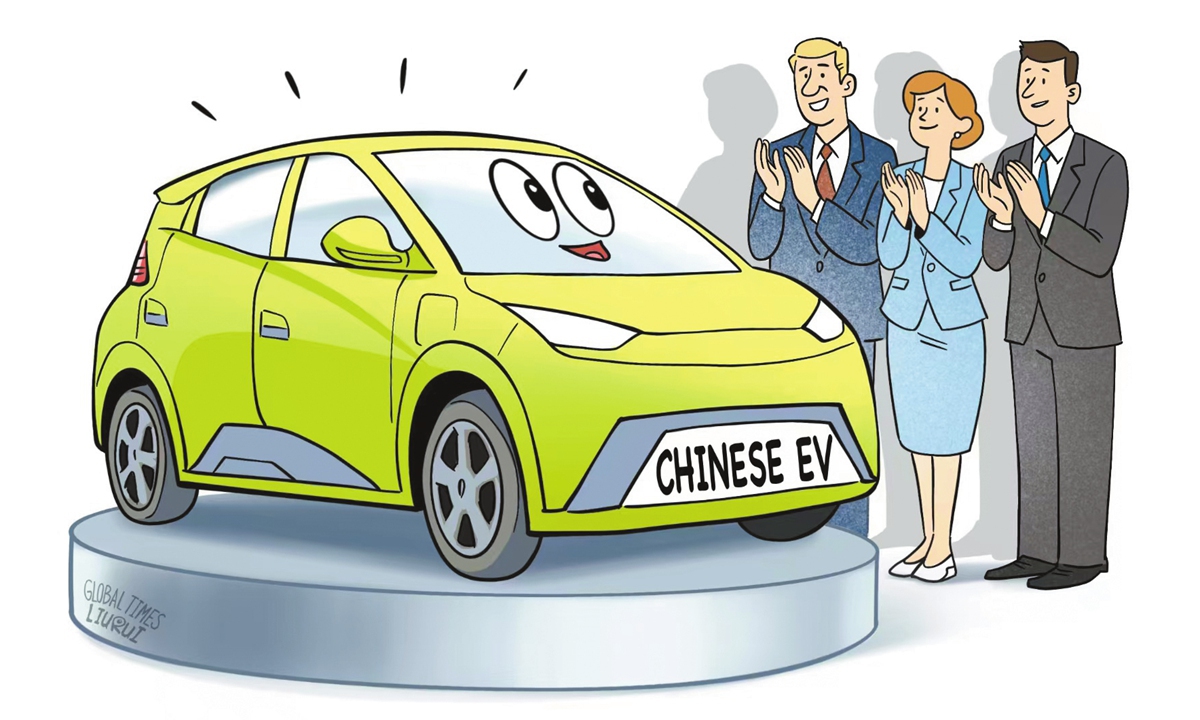
Illustration: Chen Xia/GT
Standing on the busy streets of Kathmandu, I observed electric vehicles weaving through the heavy traffic, a sight vastly different from what I witnessed during my first visit here a decade ago. In this capital city nestled among the Himalayan mountains, I had expected to see crowded streets filled with old gasoline-powered vehicles. But the reality is strikingly different. Along the streets, signs for Chinese electric vehicle brands were prominently displayed. An enthusiastic EV salesperson told me: "Now at least half the people who come to look at cars end up buying electric ones. Prices are reasonable, charging is convenient and the government offers significant tax incentives."
Nepal, a small mountainous nation with a population of nearly 30 million and a GDP per capita of around $1,400, has somehow transformed into an electric vehicle paradise in just five short years. How did this happen?
The rapid development of electric vehicles in Nepal is primarily driven by improvements in its electrical infrastructure. As the China-proposed Belt and Road Initiative progressed, China identified Nepal as a vital partner, with substantial investments flowing into Nepal's hydropower sector. Several Chinese companies participated in constructing multiple hydropower station projects.
Now, Nepal no longer faces electricity shortages. In the Kathmandu Valley, I spotted numerous charging stations. The government has installed 62 public charging stations nationwide, while hundreds more charging points have been built by private enterprises and households. All of this is built upon the stable power grid constructed with Chinese assistance.
A stable power supply forms the foundation for the adoption of electric vehicles. The government strategically implemented a differentiated tax policy: import taxes for electric cars are 40 percent, while gasoline vehicles face a steep 180 percent.
Suddenly, electric vehicles became much more affordable than their fuel-powered counterparts. Another pivotal episode occurred in 2015. That year, Nepal experienced a fuel supplies blockade from India. Previously, Nepal was almost entirely dependent on India for its energy supply.
Kathmandu was plunged into an energy crisis lasting several months. People queued for hours just to purchase a few liters of gasoline. This crisis prompted the Nepalese government to reassess national energy security and accelerate energy cooperation with China.
Five years ago, Nepal's electric vehicle market was virtually nonexistent. Today, it has reached a 76-percent market share and continues to grow.
Nepal now has more electric vehicle sales per capita than the US, with Chinese models capturing 80 percent of the market, marking a shift from India's decades-long dominance in the automotive sector.
In just five years, Chinese investments and manufacturers have significantly altered the development trajectory of this mountainous nation, which had long been constrained by Indian supply chains.
However, challenges still remain. I have noticed that public transportation electrification lags significantly behind. Most buses still run on diesel. Experts estimate that the Kathmandu Valley alone needs several hundred electric buses to meet demand. Chinese electric midi and full-sized buses have begun entering the market. Tariff instability is another concern. With frequent changes in Nepal's government, maintaining consistent tariff policies has become a focus of attention.
On the path to electrification in developing countries, Nepal has lit a beacon of hope. Some small- and medium-sized developing countries could begin deploying charging infrastructure to pave the way for the development of electric vehicles, provided they resolve their power supply issues. It is estimated that by 2050, the global vehicle fleet will grow by 1 billion vehicles, with the vast majority located in low- and middle-income countries. The extent to which these countries adopt electric vehicles may influence future levels of air pollution and carbon emissions.
While the world's attention focuses on Tesla and Europe's electrification process, a true revolution may be quietly unfolding at the foot of the Himalayas.
The author is a senior editor with the People's Daily and currently a senior fellow with the Chongyang Institute for Financial Studies at the Renmin University of China. dinggang@globaltimes.com.cn. Follow him on X @dinggangchina
RELATED ARTICLES