Testimony of history: Japanese historian calls for deep reflection on Japan's Unit 731 historical crime for reconciliation between China and Japan
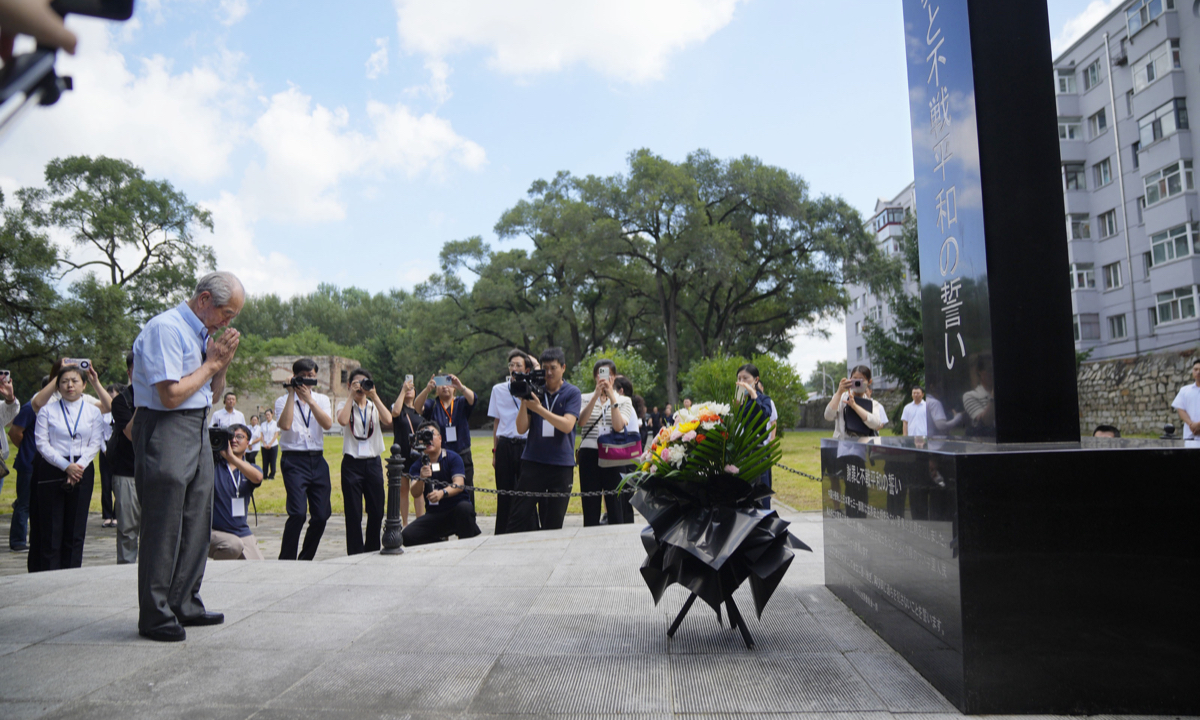
Hideo Shimizu, a former member of the Unit 731, expresses repentance on Aug 13, 2024 before the Apology and Peace Monument at the Museum of Evidence of War Crimes by the Japanese Army Unit 731 in Harbin. Photo: VCG
The year 2025 marks the 80th anniversary of the victory in the Chinese People's War of Resistance Against Japanese Aggression and the World Anti-Fascist War, yet the truth about Japan’s Unit 731, the notorious Japanese germ-warfare detachment during World War II, has yet to be fully revealed in Japan, Japanese historian Issei Hironaka pointed out, saying that many Japanese people remain unaware of this part of history, and some even downplay or deny the germ warfare crimes.
He expressed hope that the Japanese people can recognize their historical responsibility and engage in deep reflection, thereby promoting China-Japan relations and historical reconciliation.
Sinful purpose
While Unit 731, as well as related biological warfare units carrying out germ warfare on the Chinese front, has already been made clear in previous research, Hironaka, also an associate professor of modern Chinese history at Aichi Gakuin University, said he examined why germ warfare was used in Japan’s war against China.
Hironaka told the Global Times that the biological weapons were originally developed for wars in the Soviet Union rather than in China.
“However, they came to be used on the Chinese front when Japan tried to reduce its military presence there to reinforce forces for Soviet defense and southern expansion. By using biological weapons, Japan could maintain the front effectively with fewer troops. For Unit 731 and other biological warfare units aiming to develop biological weapons for wars in the Soviet Union, the Chinese front also served as a testing ground,” Hironaka said.
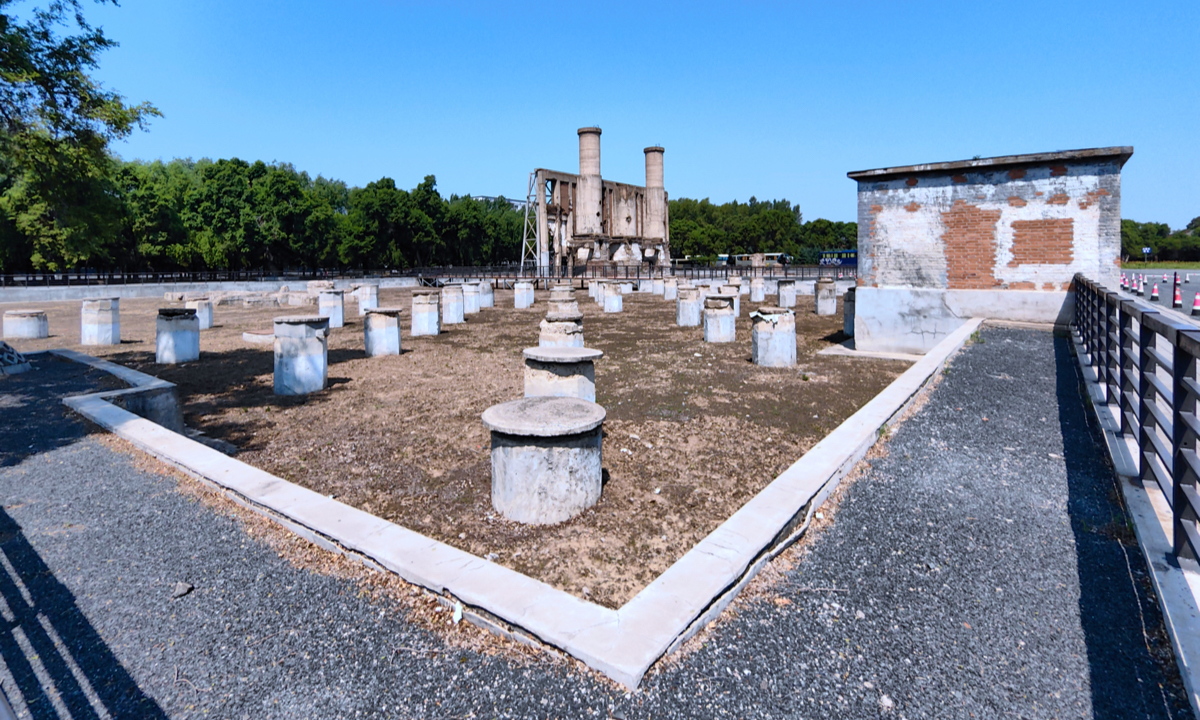
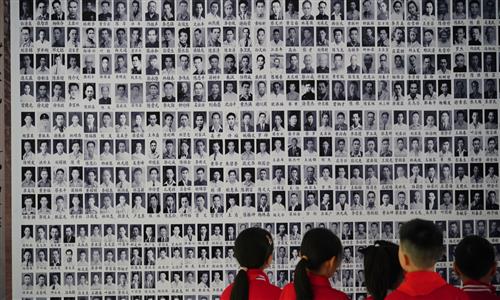
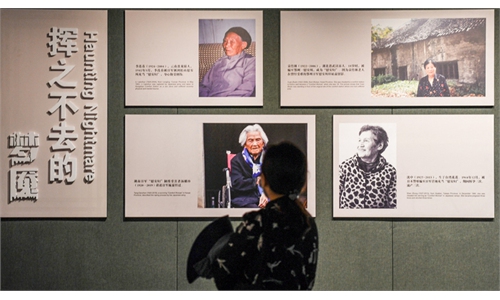
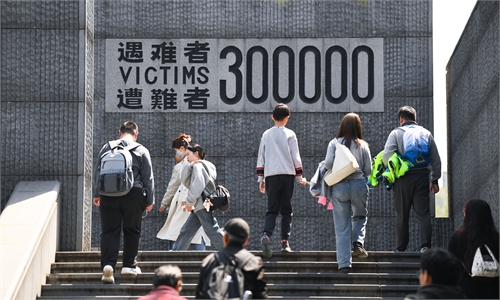
The Museum of Evidence of War Crimes by the Japanese Army Unit 731 in Harbin. Photo: VCG
The Japanese militarists secretly designated an area of 6.1 square kilometers in the Pingfang district of Harbin city in Northeast China’s Heilongjiang Province in 1936, establishing the world's largest biological warfare base, the Xinhua News Agency reported.
According to Xinhua, organized into eight departments, one special squad and three field experimental sites, Unit 731 had a complete criminal system ranging from live human experimentation to the development of biological weapons. The experimental materials were obtained through a process called “special transfer,” a nefarious scheme by Japanese militarists to bypass judicial procedures and send people to the unit for live experimentation.
According to Hironaka, over 3,000 people died from human experiments conducted by Unit 731 in Harbin (then known as Manchuria), but due to the scarcity of relevant historical materials, the number of deaths caused by germ warfare is still unclear across all parts of China and still needs to be investigated.
Hironaka said that germ warfare was not just used in battles. It was also carried out in cities inhabited by innocent civilians under the guise of experimentation. “For example, a cholera experiment was conducted in Beijing in 1943. At the time, Beijing had a population of 1.7 million, including Japanese residents. A slight misstep could have resulted in enormous civilian casualties,” he said.
Hironaka has put what he had found into his newly published book The Sino-Japanese War and Unit 731, wishing more Japanese people can know about Unit 731’s historical crimes.
“One of the biggest challenges while writing the book was the scarcity of primary sources on germ warfare. Unit 731 itself was a secret organization that had destroyed important documents before its defeat, resulting in a very limited amount of existing primary materials,” he said, adding that some key archives were provided to the US by individuals like Shiro Ishii, a core member of Unit 731, further exacerbating the lack of available information.
“This lack of material is an obstacle to conducting empirical research on germ warfare,” he said.
Lack of reflection
Despite limited primary sources, Hironaka said it is clear that the germ warfare conducted by the Japanese military amounted to a war crime. “However, after Japan was defeated in the war, key members of the biological warfare units, including Ishii, were granted immunity in exchange for handing over experimental data to the US. As a result, their responsibility for the war was left ambiguous, and the Japanese people have reached the present day without reflecting on what was wrong with germ warfare,” he said.
Hironaka said that in Japan, journalist Katsuichi Honda in the 1970s and best-selling author Seiichi Morimura in the 1980s were publishing books on germ warfare, which made the existence of Unit 731 widely known to the general public. However, since then, interest in the history of Unit 731 has waned, and the number of Japanese people who are unaware of this history has increased. Moreover, in Japan, Unit 731 is rarely covered in history classes in schools.
“Even today, there are opinions in Japan that justify the actions of Unit 731 or deny the existence of germ warfare. From the perspective of China, which suffered greatly, this indicates that Japan has not reflected on its past, which in turn negatively affects friendly relations between the two countries,” Hironaka noted.
On Sunday, it was announced that the war-themed Chinese film 731 Biochemical Revelations will be released on September 18 – the 94th anniversary of Japan's invasion of China, which foreshadowed World War II in Asia and made China the first country to resist fascism.
After the announcement, at least 3.9 million Chinese added the movie to their watch-list, according to data from China's ticketing platform Maoyan, ranking the first on the recent want-to-watch list.
Hironaka emphasized that the history of the germ warfare conducted by Unit 731, as a lesson on the disastrous consequences of war, should not be forgotten. “If Japanese people, who have forgotten the facts of the biological warfare waged by their military, come to recognize and reflect on that history of aggression, it may open a path toward improving China-Japan relations and resolving historical issues. That is what I hope for,” Hironaka said.
RELATED ARTICLES