Illustration: Xia Qing/GT
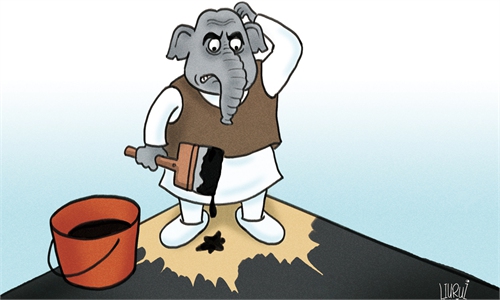
The US-India relationship is going through a rocky patch. On August 4, US President Donald Trump posted on Truth Social that "India is not only buying massive amounts of Russian Oil, they are then, for much of the Oil purchased, selling it on the Open Market for big profits… Because of this, I will be substantially raising the Tariff paid by India to the USA." This came just days after his announcement of a 50 percent tariff hike on Indian goods bound for the US.On one side is India, an emerging power striving to safeguard its strategic autonomy; on the other is the US, a traditional power accustomed to using economic leverage to reshape the global order. The two countries have long claimed to support each other strategically, cherishing the label of "natural allies," yet cracks at the strategic level are now visibly widening.
Their differences reflect the complexity of great-power competition amid profound changes in today's world order. Historically, India enjoyed a relatively relaxed strategic environment. During the Cold War, its "non-alignment" policy allowed it to navigate between the US and Soviet camps. After the Cold War, globalization surged, and India leveraged its strengths in the IT industry to gain greater room for maneuver on the global stage. In the first two decades of the 21st century, India thrived economically by engaging both East and West, while in diplomacy it hedged between North and South - securing itself more options for development.
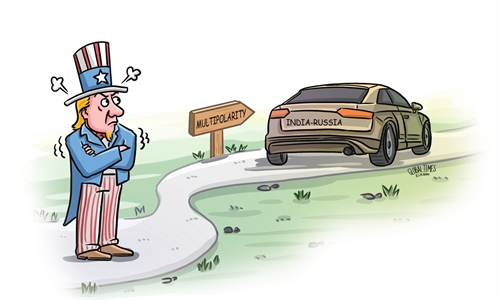
However, India's strategic room for maneuver has faced unprecedented constraints since the current US government assumed office. Washington has continued to advance its "Indo-Pacific Strategy," seeking to pull India more firmly into its China-containment orbit, ramping up military and security cooperation while steadily tightening the conditions of this strategic alignment. Meanwhile, Russia - India's long-standing supplier of arms and a key energy partner - remains an indispensable strategic pillar for New Delhi, despite being isolated and sanctioned by the West over the Ukraine crisis.
Unwilling to become a mere appendage of any major power, yet determined to safeguard its development interests in a complex global environment, India now finds its strategic leeway shrinking. Under US pressure, the once broad and smooth strategic waters have turned into a reef-strewn sea, where every nautical mile requires cautious navigation.
At present, the core frictions in India-US ties lie in two main areas. The first is the zero-sum battle over tariffs and market access - especially Washington's push to force India to open its agricultural market through tariff negotiations. The second is a "values-based clash" over policy toward Russia. For Washington, refusing to buy Russian energy is a political litmus test of siding with the US. For New Delhi, buying Russian oil is a matter of commercial pragmatism - vital for ensuring energy security and sustaining economic growth.
Behind these disputes is the collision between the US' hard-line approach of binding economics with politics and India's pragmatic stance of prioritizing economic interest.
The US-India relationship now stands at a critical juncture of deepening mistrust and growing strategic suspicion. Yet for Modi, ties with Washington remain a key pillar for boosting India's global stature and securing geopolitical benefits.
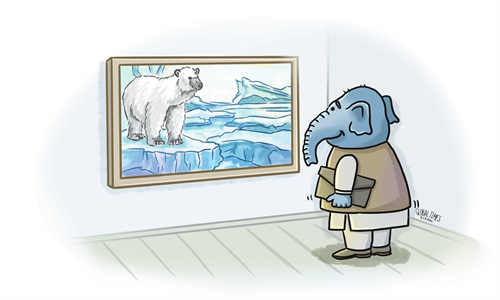
Facing US tariff blows externally and political criticism at home, Modi is likely to employ his trademark mix of iron fist and yoga - an art of sparring without breaking - balancing flexibility in appearance with firmness on core interests. This could mean citing that long-term contracts cannot be terminated overnight to resist halting Russian oil purchases, using defiance against US tariff threats to rally domestic support and reinforce India's image as a strategically autonomous power, or adjusting the mix of imports to modestly reduce reliance on Russian energy while maintaining necessary volumes. It could also mean avoiding outright confrontation with Washington by keeping talks alive - building on earlier cuts to tariffs on US goods such as bourbon whiskey, pledging deeper cooperation in energy and defense, and increasing purchases to ease American pressure in sensitive sectors like agriculture. Meanwhile, India may encourage its citizens to buy domestic goods and expand exports to Southeast Asia, Europe and other markets to dilute reliance on the US and hedge risks.
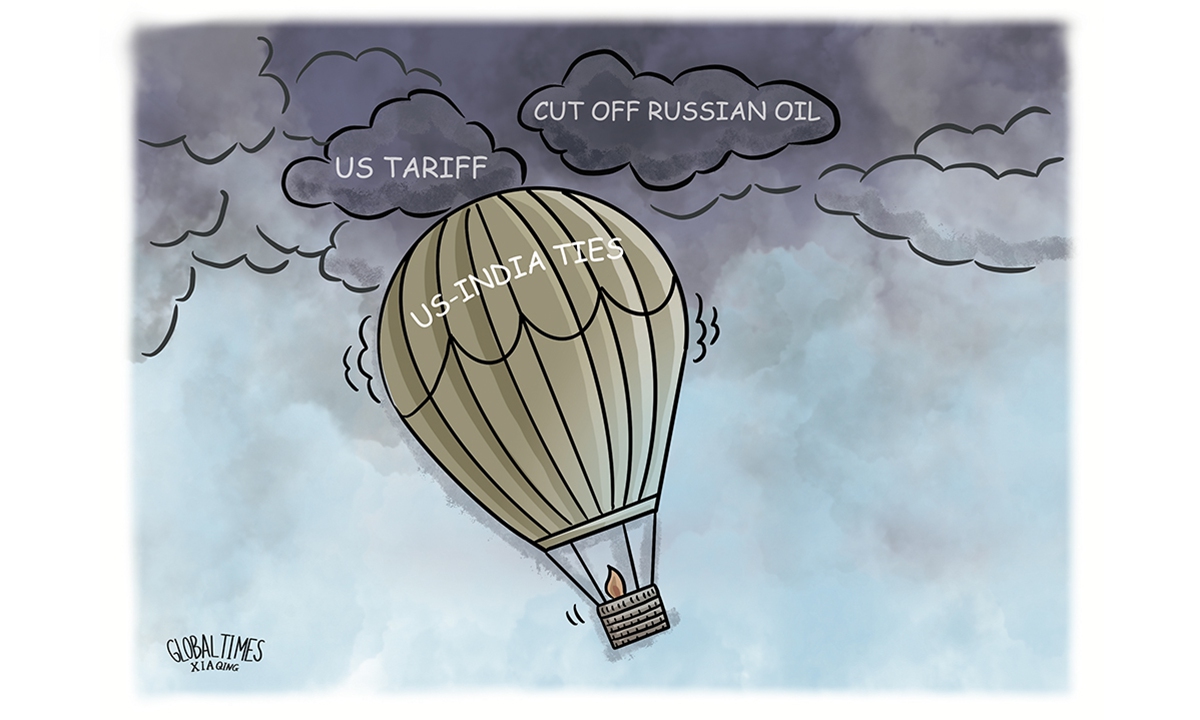
The US "tariff stick" and threats to India to "cut off Russian oil" have cast a heavy shadow over the next phase of India-US ties. It's foreseeable that frictions will intensify in the short term.
The author is the director of the research department at the National Strategy Institute at Tsinghua University. opinion@globaltimes.com.cn
RELATED ARTICLES