SCO is an organization that builds, connects, protects: Norov
Former secretary-general takes exclusive GT interview
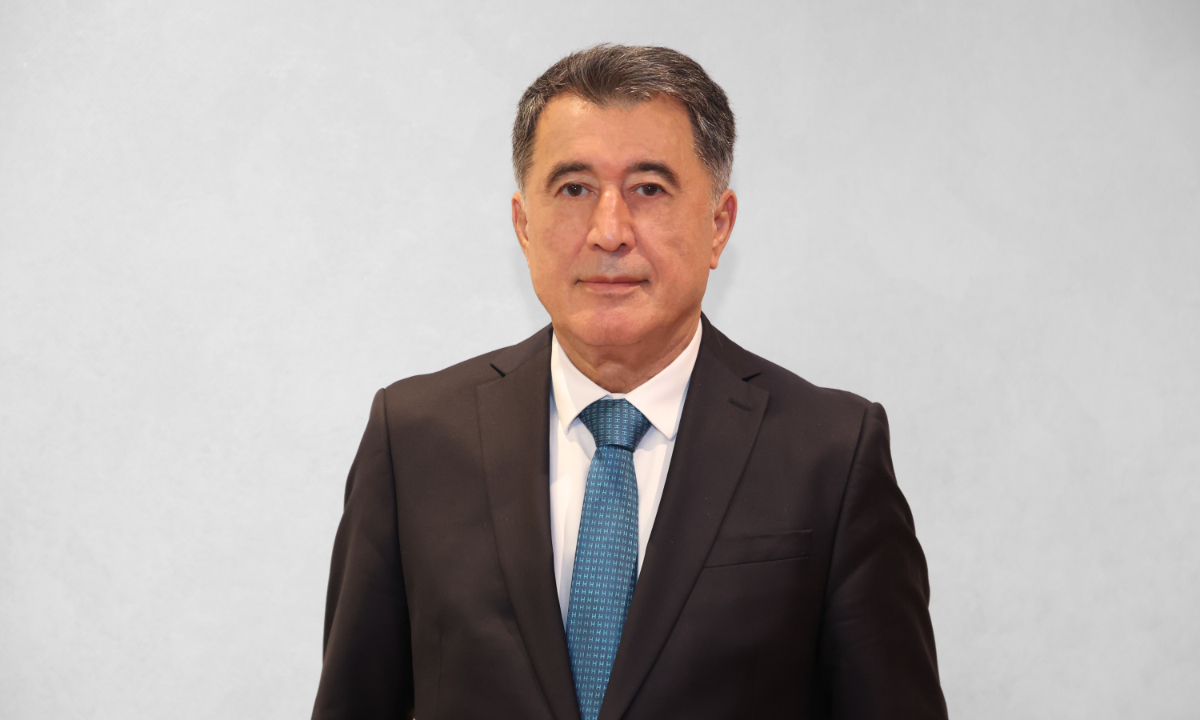
Vladimir Norov Photo: Courtesy of Vladimir Norov
Ahead of the Shanghai Cooperation Organization (SCO) Tianjin Summit scheduled for August 31 to September 1, former SCO secretary-general Vladimir Norov told the Global Times in an exclusive interview that the SCO is "not only a forum for discussions but also an organization that builds, connects and protects."
This year's summit is expected to bring together leaders from more than 20 countries and heads of 10 international organizations. Established in 2001 with six founding members, the SCO has since expanded into a "big family" of 26 states spanning Asia, Europe and Africa. Norov, who served as SCO secretary-general from 2019 to 2021 and is a former foreign minister of Uzbekistan, said he has witnessed the organization grow into a multidimensional and vibrant platform for interaction.
"Looking to the future, I am convinced: in the next decade, the SCO must go the path from a dialogue platform to a full-fledged mechanism of practical cooperation that brings tangible results to the citizens of the member states," he said.
Norov said that Tianjin, "a modern port metropolis, a symbol of connectivity and economic dynamism," provides an especially fitting venue to discuss the SCO's future. He highlighted three priority areas for cooperation - security, trade and connectivity, and the digital economy. On security, he stressed, "Today it requires not only traditional efforts against terrorism but also a systemic response to new challenges. We are talking about cyber threats, biosafety, outer space." He proposed building specific mechanisms such as an Integrated Trade Facilitation Program to reduce barriers and unlock the potential of SCO transport corridors.
Norov also underscored that the digital economy is "a sphere where SCO countries can not only catch up but also form their own development model," suggesting the adoption of a Digital Partnership Roadmap which would span e-commerce, fintech centers and joint research in AI and 5G.
Describing Tianjin as "not only the place of the summit but also a kind of laboratory for SCO initiatives," Norov said the city's ports, technoparks and innovation centers show how local resources can be transformed into regional projects. "If this summit leads to the launch of at least a couple of specific initiatives - whether joint cyber exercises or a Chinese electronic platform for SCO goods trade - it will become a real milestone," he noted.
Norov pointed to the need for "strategic unity and institutional development," saying, "The Organization will continue to grow, which means it needs to strengthen governance. Consensus and respect for sovereignty remain the foundation of the 'Shanghai Spirit,' but at the same time more transparent and operational decision-making procedures are needed." He emphasized the importance of advancing a Greater Eurasian Partnership by combining the potential of the SCO, the EAEU, and ASEAN, which would allow the bloc to integrate into global supply chains while preserving its identity.
Looking to economic cooperation, Norov said, "In the next 10 years, the SCO has a chance to create the foundations of a common economic space. These are not abstract plans, but practical steps: unification of customs rules, digitalization of trade, creation of 'green corridors' for freight transportation, and harmonization of electronic transaction standards." He added that more experts are noting the need to expand settlements in national currencies and study the role of central bank digital currencies in regional trade.
Norov placed innovation and human capital at the heart of future development. "[The] digital economy, green technologies and science should become the drivers of future SCO development. A special place here belongs to artificial intelligence. I am convinced that the Organization needs to adopt and implement a roadmap for the development of the AI ecosystem in the SCO space," he said, suggesting the creation of training centers, venture funds for startups, and regular forums and hackathons.
Reflecting on his tenure as secretary-general, Norov recalled that he has observed how the SCO established itself as a multidimensional and dynamic platform for interaction, and consistently strengthened its positions in three strategic areas in security, economy and cultural cooperation.
Commenting on recent expansions to the SCO, Norov noted that the accession of Iran in July 2023 and Belarus in July 2024 marked a new stage, expanding the organization's geographic reach "from the Persian Gulf to Eastern Europe" and boosting its geopolitical weight. "Expansion not only increases the number of members but also enriches the Organization with resources, geography, and experience," he said, while stressing that sustainability depends on new members gaining concrete benefits and existing members seeing their interests reinforced.
Ahead of the Tianjin Summit, China has already begun promoting related activities. The China Council for the Promotion of International Trade announced on Wednesday it would co-host a series of economic and trade events to consolidate consensus and outline new cooperation, including the China-Uzbekistan Trade, Economic and Investment Forum, the 8th China-Kazakhstan Entrepreneurs Committee and a high-level dialogue between China and Malaysia. The events aim to contribute to building a closer SCO community of a shared future, safeguard the stability of global industrial and supply chains, and promote world economic growth, according to the China Council for the Promotion of International Trade.
RELATED ARTICLES