Modi kicks off two-day visit to Japan, to attend SCO summit in China
By and Zhang Wanshi Published: Aug 29, 2025 03:22 PM

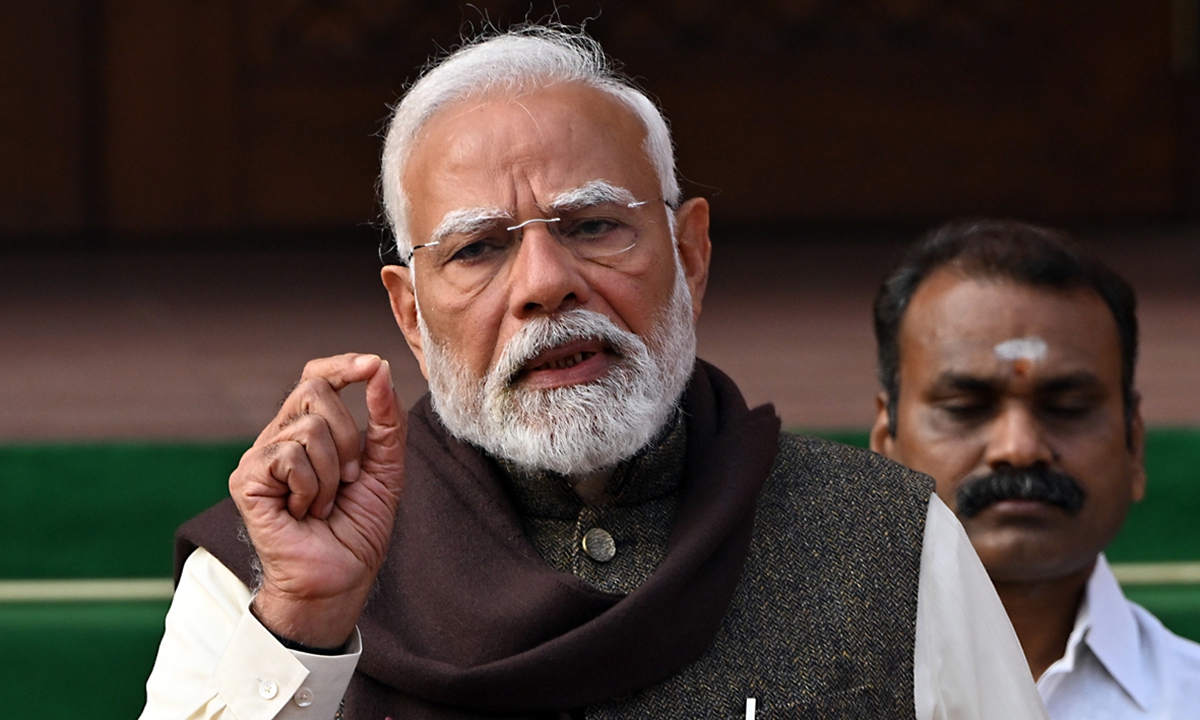
Narendra Modi Photo: VCG
Indian Prime Minister Narendra Modi reportedly arrived in Tokyo on a two-day official visit, his first standalone trip to Japan in nearly seven years and his first annual summit with Prime Minister Shigeru Ishiba. Following his Japan visit, Modi will travel to Tianjin, China, from August 31 to September 1 to attend the annual summit of the Shanghai Cooperation Organization (SCO), according to Indian media.
Before departure, Modi posted on X that "over the next few days, [I] will be in Japan and China to attend various bilateral and multilateral programmes." He mentioned that "in China, I will take part in the SCO Summit in Tianjin, a forum where India has always played an active and constructive role. India will keep working with SCO members to address various shared challenges."
"I am confident that my visits to Japan and China would further our national interests and priorities, and contribute to building fruitful cooperation in advancing regional and global peace, security, and sustainable development," Modi said, according to Indian Today.
"China welcomes Prime Minister Modi to China for the SCO Tianjin Summit. We believe that with the concerted effort of all parties, the Tianjin summit will be a gathering of solidarity, friendship and fruitful results, and the SCO will enter a new stage of high-quality development featuring greater solidarity, coordination, dynamism and productiveness," Chinese Foreign Ministry spokesperson Guo Jiakun previously said at a press conference on August 8.
Modi's statements, together with his attendance in the SCO Summit in Tianjin, signal India's intention to steer China-India relations back onto the track of cooperation, Qian Feng, director of the research department at the National Strategy Institute at Tsinghua University, told the Global Times on Friday.
With his upcoming visit to China, the expected engagements and outcomes between the two sides will not only add momentum to the steady improvement of bilateral relations, but also inject more stability into the regional environment, the expert noted. Amid today's uncertain international landscape, such steps will serve the interests of both countries, Qian added.
But the expert noted that India continues to maintain a balanced approach among major powers to maximize geopolitical and economic benefits. The Japan News reported on Wednesday that Japan and India are to express "serious concern" over the situation in the East and South China Seas amid China's maritime expansion, citing a draft joint statement to be announced at a meeting between Ishiba and Modi scheduled Friday.
Amid US trade and tariff pressures on Japan and India, both countries seek mutual support by deepening ties and enhancing geostrategic coordination, Qian said, adding that India still considers both Japan's perspectives and China's concerns, attempting to balance between the two sides, Qian said.
However, the expert highlighted practical steps such as direct flights, visa facilitation, and cultural exchanges align with the current state of China-India relations.
If implemented, these initiatives would add substantive content into bilateral ties and strengthen support for the sustained and healthy development of China-India relations, Qian added.
India-China direct flights, which stopped due to a pandemic and strife at the border, are also set to resume, according to Hindustan Times on Wednesday. Flight services could resume within a month and an announcement specifying the details is expected during Modi's visit to Tianjin on Sunday to attend the SCO summit, South China Morning Post reported on Thursday.
RELATED ARTICLES