'Divisions within transatlantic alliance widening' as White House reportedly accuses Europe of secretly undoing Ukraine conflict's end
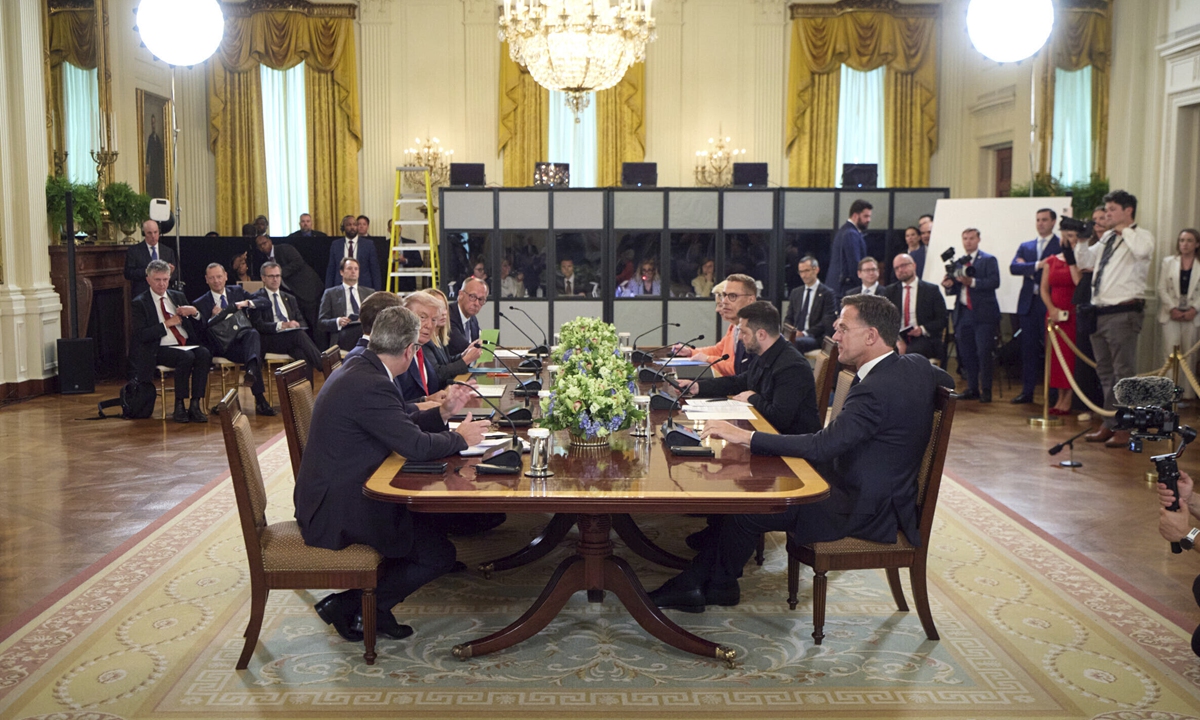
President Volodymyr Zelenskyy with five European heads of state and government at the Ukraine Summit on August 18, 2025, at the White House in Washington. Photo: VCG
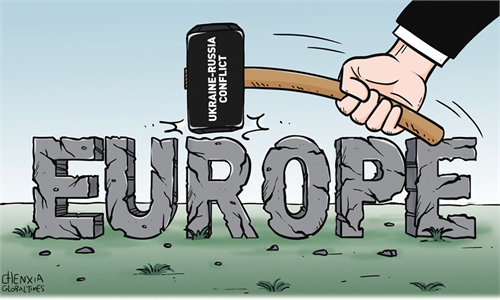
Senior White House officials believe some European leaders are publicly supporting US President Donald Trump's efforts to end the war in Ukraine, while quietly trying to undo behind-the-scenes progress since the Alaska summit, US media platform Axios reported in an exclusive scoop on Saturday local time.Chinese experts noted that divisions over the Ukraine crisis within the transatlantic alliance have been widening, as the US aims to avoid direct conflict with Russia, while European powers hope to enlist the US in their plan to defeat Russia and rebuild European security.
According to Axios, US officials are losing patience with European leaders, whom they claim are pushing Ukraine to hold out for unrealistic territorial concessions by Russia.
"The Europeans don't get to prolong this war and backdoor unreasonable expectations, while also expecting America to bear the cost," a top White House official told Axios. "If Europe wants to escalate this war, that will be up to them. But they will be hopelessly snatching defeat from the jaws of victory."
A senior White House official told Axios that Trump is seriously considering stepping back from the diplomatic efforts until one or both parties begin to show more flexibility. Some US officials have begun to see European leaders as a major obstacle, despite the fact that Trump held a friendly meeting with them and Zelensky less than two weeks ago.
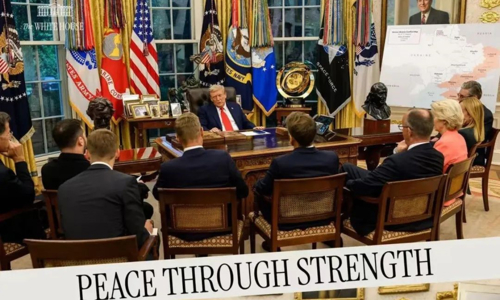
Trump and Russian President Vladimir Putin held face-to-face talks in Anchorage, Alaska, on August 15. Five days later, Trump hosted Ukrainian President Volodymyr Zelensky and then met with seven European leaders at the White House, with discussions centered on resolving the Ukraine crisis.
After his separate meetings with Putin and Zelensky this month, Trump said he was arranging face-to-face talks between the Russian and Ukrainian leaders and then he might meet with the two if necessary. But in a Daily Caller interview on Saturday local time, Trump expressed less confidence he will be able to arrange bilateral talks between Zelensky and Putin, CBS News reported.
According to the Atlantic, European officials say they have grown mystified by what exactly Putin promised the Americans behind closed doors, what US officials took away from their discussions with Moscow, and where that leaves the effort to achieve peace.
Meanwhile, despite facing accusations of prolonging Russia's war in Ukraine, the European Union will examine how to use frozen Russian assets to fund Ukraine's defence and reconstruction after the war but confiscating them now is not politically realistic, EU foreign policy chief Kaja Kallas said on Saturday, according to Reuters on Saturday.
Li Haidong, a professor at China Foreign Affairs University, told the Global Times that the EU's recent moves on Ukraine seem to aim at securing maximum US support and shape the crisis resolution to match Europe's plans.
"The US is focused on quickly limiting losses and redirecting resources and attention toward the Indo-Pacific and domestic priorities, while Europe, facing long-term risks such as proximity to the conflict, refugee flows, energy spillovers and security order challenges, prefers to stabilize the battlefield first before pursuing a sustainable peace framework," Li said.
While Washington focuses on maintaining stable relations with Russia, Europe's strategy may affect the trajectory of the Russia-Ukraine conflict and US-Russia relations, Li said.
This is not the first time the US and Europe have had differences over the issue. In February this year, US Vice President JD Vance launched a scalding attack on European democracies during his speech at the Munich Security Conference, saying that the greatest threat facing the continent was not from Russia and China, but "from within," the BBC reported.
The address was met by silence in the hall, and later denounced by several politicians at the conference. German Defence Minister Boris Pistorius said it was "not acceptable," according to the BBC.
"Rifts between the US and Europe remain manageable, but short-term frictions and disagreements are likely to increase, with conflicts over different issues and periodic tussles occurring more frequently," Li added.
RELATED ARTICLES