Illustration: Liu Rui/GT
Editor's Note:
The 80th anniversary of the victory in the Chinese People's War of Resistance against Japanese Aggression and the World Anti-Fascist War is both a solemn remembrance and a call to action for the promotion of peace. China's V-Day military parade in Beijing has demonstrated that the nation's rise as a global power is intricately linked to its commitment to establishing a just international order and fostering global peace. The Global Times gathers insights from five esteemed international scholars, whose perspectives converge on a unified message: The lessons of World War II (WWII) must never be forgotten and the hard-won peace must be safeguarded.
Zivadin Jovanovic, president of the Belgrade Forum for a World of Equals, who served as the minister of foreign affairs of the Federal Republic of Yugoslavia between 1998 and 2000
Marking the 80th anniversary of the victory over fascism in WWII serves as a vital global reminder that history must be remembered, well understood and fully respected in order to prevent its repetition, new unprecedented human suffering, and even annihilation of all humanity.
China's contribution to the victory over fascism is significant by all standards. Throughout WWII, brave Chinese fighters battled many Japanese fascist forces, thus contributing to the success of Allied forces on other fronts in Asia and beyond.
The military parade in Beijing has sent an unforgettable message from the great Chinese nation and its leadership in several directions: first, to pay the highest respect to history, including the heroes and victims of the liberation struggle; second, to demonstrate the capacity and readiness to defend freedom, sovereignty and territorial integrity; and third, to serve the interests of peace and stability both regionally and globally.
The presence of many world leaders and international guests made Beijing "the capital of the globe," thus confirming the growing respect for China's irreplaceable role in maintaining global peace and development, as well as in building a humanity-centered, democratic and multi-polar new world order.
Peter T.C. Chang, former deputy director of the Institute of China Studies at the University of Malaya and a research associate at the China-Malaysia Friendship Association
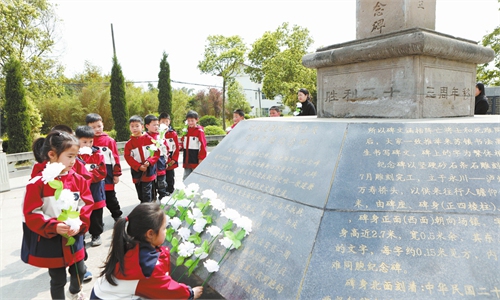
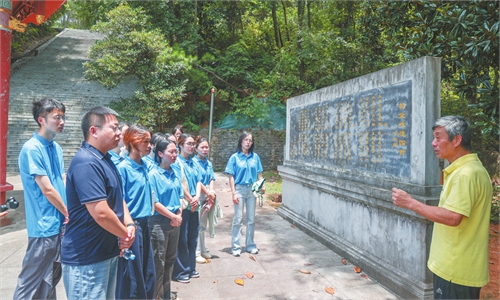
The gathering in Beijing, marking the 80th anniversary of the end of WWII, is more than just a commemoration - it is an opportunity for China, Southeast Asia and the wider world to remember, reflect and reaffirm our shared commitment to peace, accountability and a more just global future.
Commemorations like the one in Beijing offer an opportunity to reflect not only on how fascism was defeated but on how it first emerged. They remind us that the descent into global conflict began with insidious ideas: belief in racial supremacy, rising xenophobia, hyper-nationalism and a growing contempt for inclusive international norms.
The V-Day military parade is a powerful symbol of China's commitment to peace through strength. As a rising power, China continues to project stability and support a global order grounded in multilateralism and historical remembrance. Beijing's emphasis on peace signals not only a rejection of past aggression but also a forward-looking call for international cooperation.
For countries in the Global South, China's emergence as a force for peace is reflected in its successful efforts to bridge global divides and promote shared development.
Vladimir Petrovskiy, a research fellow at the Institute of China and Contemporary Asia of the Russian Academy of Sciences
After Chinese President Xi Jinping became the main guest at the Moscow parade on May 9, Russian President Vladimir Putin attended China's V-Day military parade in Beijing. This presents an opportunity for the peoples of our countries to recognize that we are celebrating a common victory in WWII.
Such commemorations also serve as reminders that the historical truth of WWII must be preserved and defended. Russian and Chinese scholars should work together to correct the historiography of WWII, which will help us combat attempts to falsify this war.
The true perception and collective memory of WWII form the basis for China's current efforts to promote global peace. Drawing on this historical experience, China has advanced four global initiatives that embody and extend its broader foreign policy doctrine, proclaimed by President Xi as a community with a shared future for humanity. Based on this understanding, China, in collaboration with other countries, will be able to shape a new, more just and balanced multipolar world and reform the global governance system.
Richard Overy, a distinguished British historian and an honorary research professor of history at the University of Exeter
China was among the first to actively fight against new imperialism and continued to resist it throughout the 1930s and into WWII. When we examine the war with Japan during WWII, we see that China held up Japanese ambitions. The Japanese sought to build an empire in China, but the Chinese were determined that they would not succeed.
Since the founding of the new republic in 1949, China has shown no evidence of aggressive intent. It is armed to defend itself against potential enemies, but clearly, it's not equipped to wage aggressive war or to establish a new empire.
I hope that people will listen to the words of the Chinese leadership. They seek peace in the world and do not want the ongoing wars. This is a voice that the West should pay more attention to.
Kin Phea, director general of the International Relations Institute of the Royal Academy of Cambodia
By memorializing its wartime sacrifices and contributions, China has positioned its expanding influence as an extension of the broader international endeavor to safeguard peace and uphold justice.
This notion of China as a "force for peace" reflects a nuanced, 21st-century conception of power, one grounded in cooperative security, multilateral engagement, and peaceful coexistence rather than hegemonic ambition. Beijing's active participation in UN peacekeeping operations, its development initiatives such as the Belt and Road Initiative, and its support for diplomatic mechanisms of conflict resolution underscore an attempt to channel its growing capabilities toward fostering international stability.
History teaches that peace is neither self-sustaining nor guaranteed; it demands constant vigilance, shared responsibility, and collective commitment. The enduring lessons of WWII affirm that global prosperity and stability are inseparable from a steadfast dedication to peace. In this regard, China's emergence as a peace-oriented actor underscores the continuing relevance of historical memory and the imperative of collaborative action to forge a more just international order.
RELATED ARTICLES