Northeast China Revolutionary Martyrs’ Memorial Hall: Hero's gun ignites spirit of Anti-Japanese United Army
By Li Tianyang, Li Guozheng and Published: Sep 04, 2025 12:27 AM

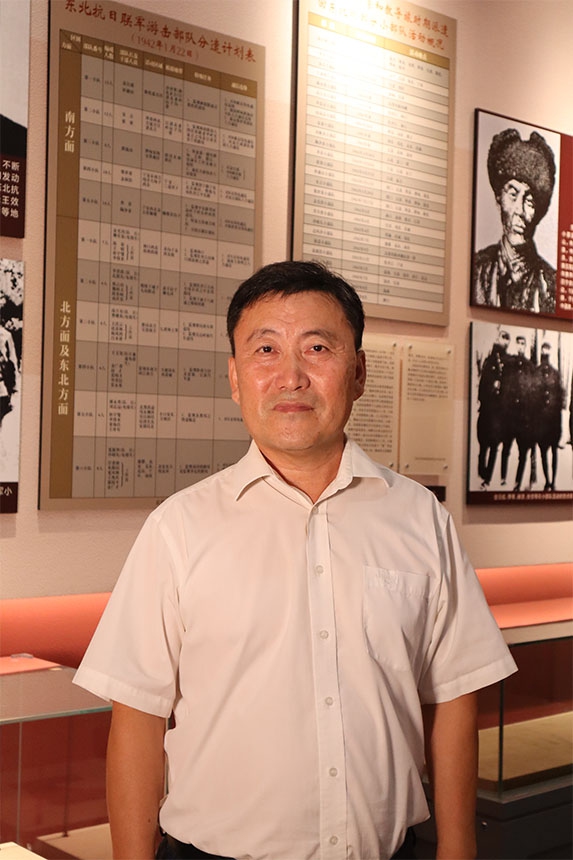
Liu Qiangmin, former director of the Northeast China Revolutionary Martyrs' Memorial Hall
Exhibited artifact: The pistol used by General Zhao Shangzhi before his death
Narrator: Liu Qiangmin, former director of the Northeast China Revolutionary Martyrs' Memorial Hall
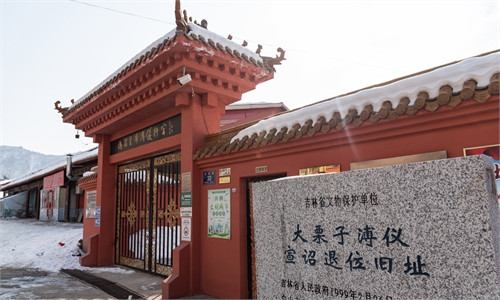
The Northeast China Revolutionary Martyrs' Memorial Hall, the first revolutionary memorial founded by the Communist Party of China (CPC), opened on October 10, 1948. Among its most significant artifacts is a pistol used by General Zhao Shangzhi, one of the founders and leaders of China's Northeast Anti-Japanese United Army, before he was martyred.
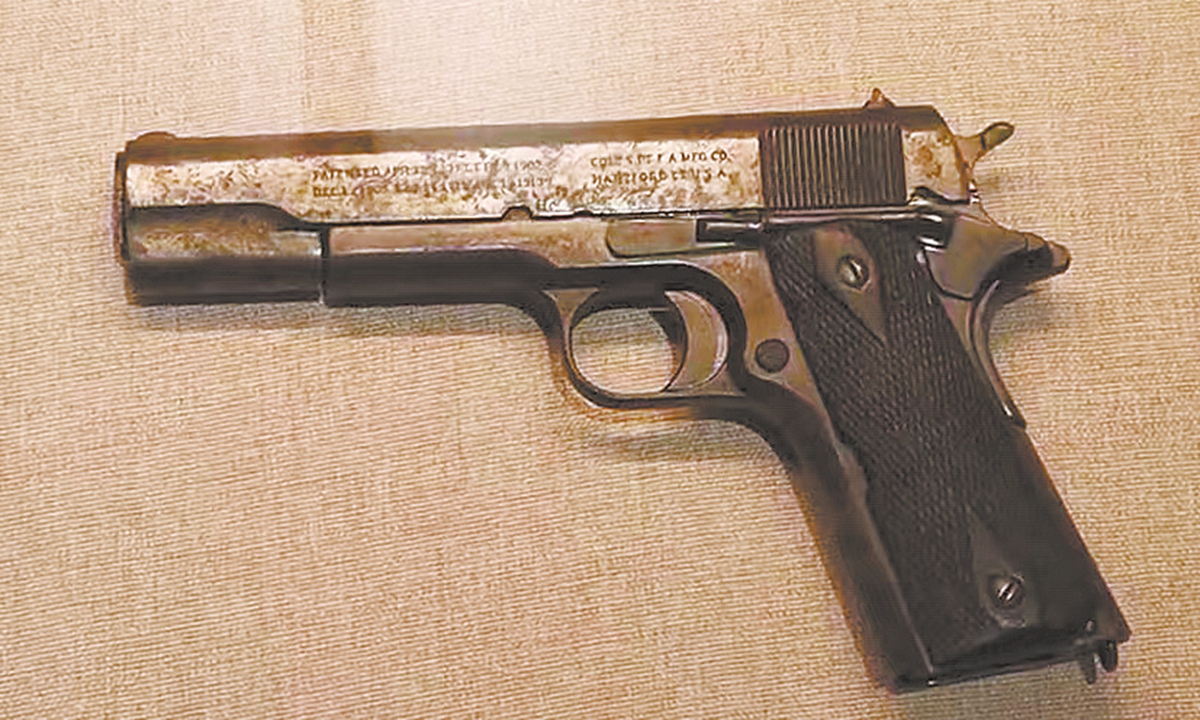
The pistol used by General Zhao Shangzhi before his death
'You are Chinese too. What right do you have to interrogate me?'
In 1941, Zhao led four fighters back from the Soviet Union to continue the resistance. The Japanese-backed puppet authorities launched a manhunt in northern Heli county (now northern Hegang in Heilongjiang Province). After a week without success, they sent agents Liu Deshan and Zhang Xiwei to infiltrate the resistance. On February 12, 1942, during an attack on the puppet police station in Xingshan county (now in Hegang), Zhang disclosed information about Zhao to the puppet police, and Liu shot Zhao by surprise.
Though Zhao immediately shot Liu Deshan in return, he was badly wounded and captured while covering his comrades' retreat. During interrogation, Zhao only declared: "You are also Chinese. What right do you have to interrogate me?" He remained silent and was killed eight hours later. Japanese puppet records noted: "Bandit chief Zhao Shangzhi maintained the dignity of a leader," attesting to his heroism.
After Zhao's death, his pistol was kept by Xingshan police. After liberation, it was recovered by public security forces and transferred to the Northeast China Revolutionary Martyrs' Memorial Hall in 1948. Notably, comrade Zhang Fengqi, who originally carried this US-made Colt M1911 pistol back from the Soviet Union and later gave it to Zhao, tearfully confirmed during a museum visit that it was indeed Zhao's final weapon.
The pistol is not only Zhao's last weapon but also a key relic of the later anti-Japanese struggle, reflecting the joint fight of the Northeast Anti-Japanese United Army and the Soviet Union against Japanese invaders. Around 1940, the resistance endured its hardest times, with the main force withdrawing to the Soviet Union. In 1942, the teaching brigade was formed there, trained, and later returned with the Soviet Red Army during its 1945 counteroffensive against the Japanese aggressors in Northeast China. Throughout, some fighters remained in China, conducting reconnaissance, sabotage, and supporting local forces, playing a vital role in the Soviet advance.
The only force to fight for 14 years
China's Northeast Anti-Japanese United Army, under leadership of the Communist Party of China, was a vital part of the resistance and the only force to fight for 14 years (1931-1945). Their adversity was beyond imagination: severe winters, summer pests, and above all, hunger - many soldiers had to eat bark and cotton to survive.
Some veteran soldiers recalled that it is hard for young people today to truly understand what hunger feels like. At first, your stomach burns; then you feel dizzy and anxious, unable to march or fight. At those moments, they would use bayonets to cut open their cotton coats, chew a tuft of cotton with saliva, and swallow it to ease the pangs of hunger. As veteran Ji Qing once said, "We called May the 'month of resurrection' because when the grass grew, we could pick wild vegetables to eat and would not starve to death."
In later years, the resistance nearly lost contact with the CPC Central Committee. With no information, leadership, or outside support, they endured isolation and hardship, sustained only by unbreakable faith and will.
Remember the great spirit of resistance
Fourteen years of struggle was possible thanks to strong CPC leadership and the exemplary role of its members. The resistance destroyed hundreds of thousands of enemy troops and strategically contained the Japanese aggressors, giving hope to the people of Northeast China that the land remained Chinese territory.
The spirit of the resistance is: unwavering faith in the CPC, national duty in times of peril, and heroic resolve to fight to the end. Zhao's sacrifice is the clearest example. These heroes had families and dreams, but gave up all for the nation. Today, this spirit translates into responsibility - not just slogans, but real contribution.
As we mark the 80th anniversary of victory and the 14 years of struggle, we must remember not only history, but also our own duty and responsibility. Though today's challenges differ, the spirit remains worth learning from.
RELATED ARTICLES