The Taihang Memorial Museum of the Eighth Route Army: A typewriter brings new China to the world
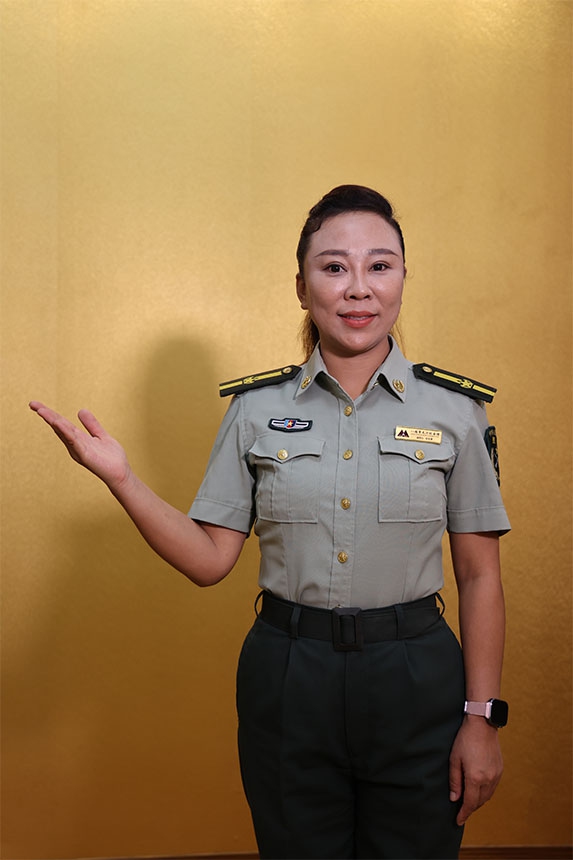
Tian Yuehui, deputy director of the Taihang Memorial Museum of the Eighth Route Army
Exhibited artifact: British journalist George Hogg's typewriter
Narrator: Tian Yuehui, deputy director of the Taihang Memorial Museum of the Eighth Route Army
Housed in the Taihang Memorial Museum of the Eighth Route Army is a weathered, rust-streaked English typewriter, a national first-class cultural relic. This typewriter stands as a powerful testament to the internationalist warrior and journalist George Hogg's time in China during the Chinese people's war of resistance. It not only bears witness to the Chinese people's arduous and heroic struggle but also embodies the British journalist's unwavering commitment to supporting China's fight using his pen as a weapon, sharing the internationalist sentiment of conveying the truth to the world. Moreover, it serves as a vivid symbol of the unity between the Chinese people and their international allies in the battle against fascist aggression.
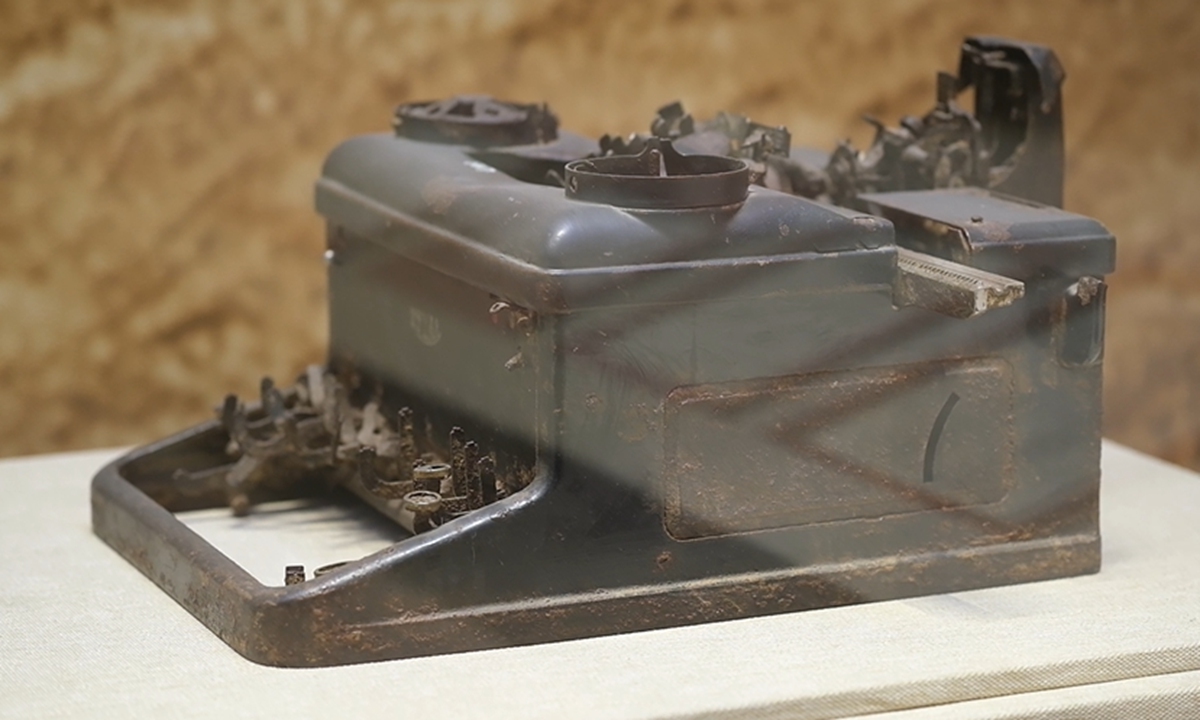
British journalist George Hogg's typewriter

George Hogg
'I see a new China'
The owner of this English typewriter, Hogg, was a graduate of the University of Oxford. In 1937, he arrived in China and witnessed firsthand the profound suffering inflicted upon the Chinese people by the Japanese aggressors. He saw countless refugees living, giving birth, and even dying on the streets amid displacement. Deeply shocked by these harrowing scenes, Hogg decided to stay in China and share the truth of the Chinese people's war of resistance with the world.
In 1938, Hogg became one of the first Western journalists to visit Yan'an. There, he observed how the Communist Party of China (CPC), like a magnet, drew passionate young people from across the country to the anti-Japanese frontlines in North China. In 1939, he followed these youths to the forefront of the resistance against Japanese aggression - the Eighth Route Army headquarters in Zhuanbi Village, Wutai County, where he was warmly received by Zhu De, commander-in-chief of the PLA.
After that, Hogg accompanied the Eighth Route Army through villages and towns, witnessed moving scenes of "fathers sending sons, wives sending husbands, and mothers urging their children to fight the Japanese." He saw that the villages were full of fighting spirit like military camps, and the villagers were training in the fields and streets like soldiers. Deeply moved, he used his typewriter to write praise for the Chinese people. In 1943, his book I Saw a New China was published in Boston, offering the world a clearer understanding of the true nature of China's resistance and the indomitable spirit of its people.
Caring for Chinese children in wartime
Although Hogg never married, he carried a profound internationalist spirit, adopting numerous homeless children displaced during the war in China. Together with his friend Louis Alley, he founded the Bailie School in Shuangshipu, Shaanxi Province, to provide these children with shelter and education, hoping to illuminate their futures with knowledge and care.
In 1944, as the war situation worsened, Hogg was forced to lead the children of Bailie School to relocate to Shandan in Gansu. The journey was fraught with blizzards and biting cold, and the harsh conditions led to Hogg contracting tetanus. Tragically, he passed away in Shandan at the age of 30. In his final moments, still concerned for the children and China's anti-fascist cause, he mustered his last strength to write, in trembling handwriting, "My all to the Bailie School." These brief words became an eternal testament to his internationalist spirit.
Inheriting the internationalist spirit
Hogg, alongside other Western journalists like Edgar Snow and Anna Louise Strong, who tirelessly advocated for China's resistance, exemplified the internationalist spirit of selfless dedication, boundless compassion, and a commitment to peace. This spirit is a vivid embodiment of the concept of a community with a shared future for mankind. In today's complex and turbulent international landscape, inheriting and promoting this internationalist spirit, strengthening unity and cooperation among nations, and collectively addressing global challenges are of profound significance. China is always ready to work hand in hand with people around the world to build a lasting peace, universal security, shared prosperity, and an open and inclusive, clean and beautiful world.
RELATED ARTICLES