Tengchong Museum: Sicheng Forbidden Bell, CEF jointly safeguard ‘lifeline’
By Li Tianyang and Published: Sep 04, 2025 12:47 AM

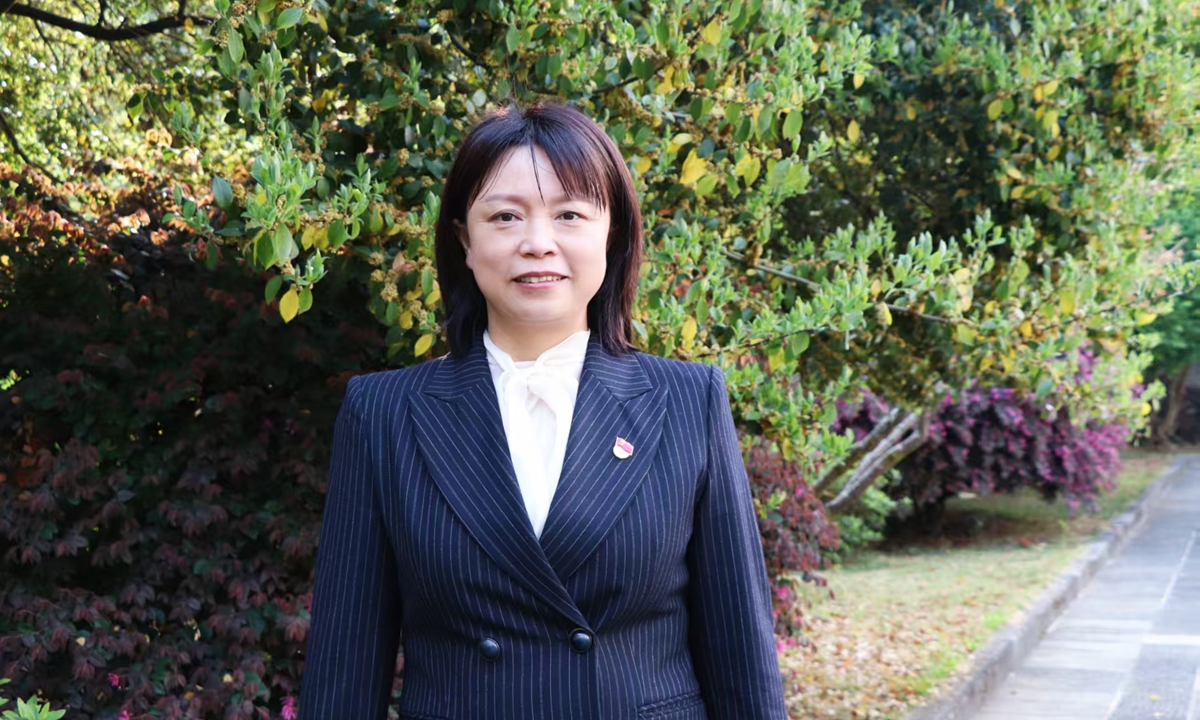
Yang Suhong, director of Tengchong Museum
Exhibited artifact: The Forbidden Bell of Tengchong Sicheng
Narrator: Yang Suhong, director of Tengchong Museum
The Chinese Expeditionary Force (CEF)'s war of resistance in Yunnan was an important part of the Chinese People's War of Resistance Against Japanese Aggression. After the war, the people of Tengchong built memorials and monuments to commemorate the CEF soldiers who sacrificed their lives to recapture Tengchong. These include the National Martyrs' Cemetery, the Memorial Tower of the 198th Division, and the Laifeng Mountain battle Site. The Forbidden Bell of Sicheng, housed in the Tengchong Museum, serves as a "witness" to the War of Resistance in western Yunnan, reminding people to remember history, keep the alarm sounding, and cherish peace.
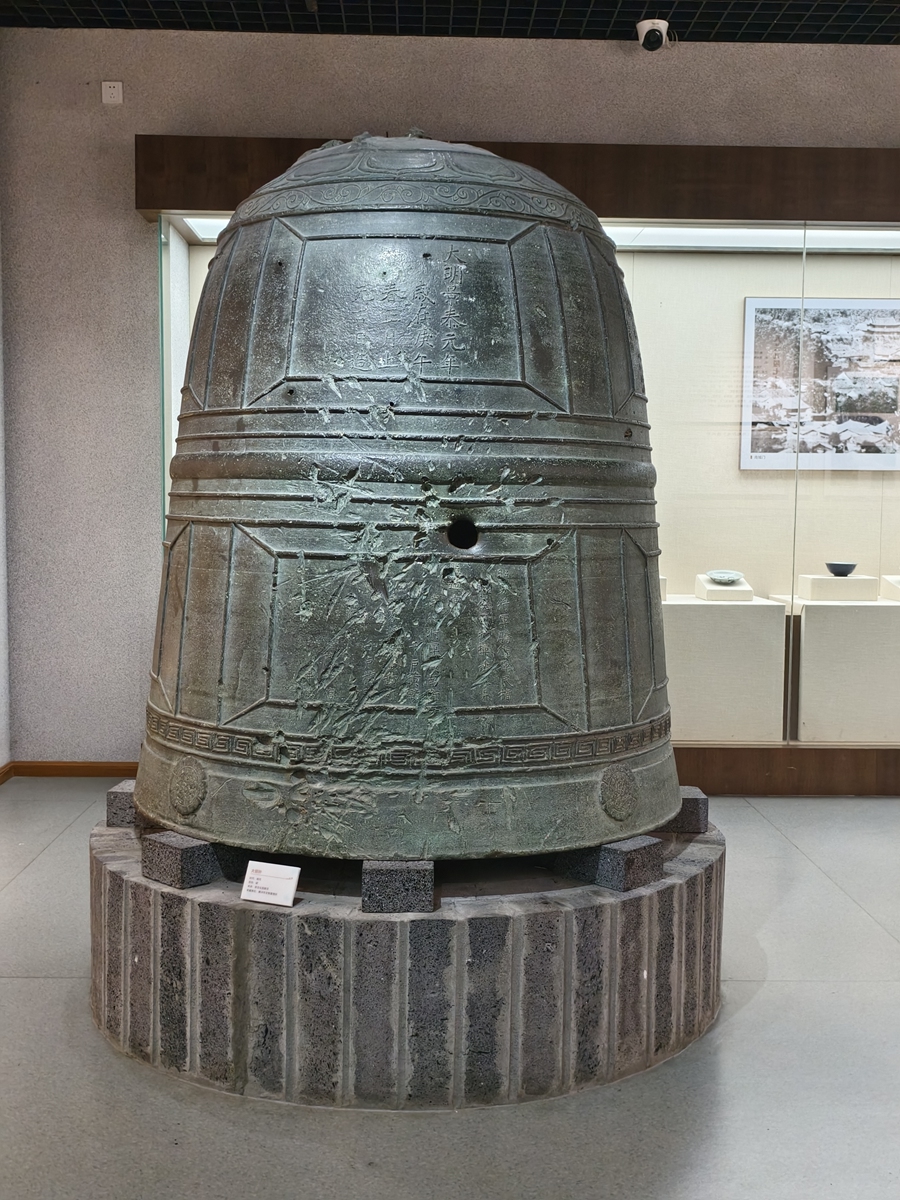
The Forbidden Bell of Tengchong Sicheng
Memories of blood and fire
The Forbidden Bell of Sicheng was cast in the first year of the Jingtai era of the Ming Dynasty (1450) to commemorate the construction of Tengchong's stone city, with a diameter of 140 centimeters, a height of 165 centimeters, and a weight of 1,820 kilograms. More than five centuries, this bronze bell has carried the historical memory of the Ming Dynasty's efforts to fortify the city and defend the borders. In the blood and fire of the modern war of resistance, its bullet-riddled bodies embodied the spiritual strength of the Chinese military and civilians to protect their country.
On May 10, 1942, Japanese aggressors marched into western Yunnan, seizing territory west of the Nu River and cutting off the Burma Road, the only international passage in the backfield of the Chinese people's war of resistance. Tengchong fell. For more than two years after that, the Japanese army built a large number of defensive fortifications in Tengchong Shicheng, used the city bell as a defensive bunker, and chiseled a 6 centimeter-diameter round hole under the waist of the bell as a shooting hole.
From late July to mid-September in 1944, the CEF's 20th Army Group, with support from American allies, launched a counterattack against the entrenched Japanese forces in Tengchong. This bloody battle lasted 47 days, becoming the most brutal urban combat of the war of resistance in western Yunnan. Japanese soldiers hid inside the bell, firing at troops through the port. In response, the CEF soldiers launched a fierce assault on the bell, ultimately killing the Japanese soldiers inside through intense vibrations. Dozens of CEF soldiers were lost during the siege of the bell.
On September 14, 1944, the CEF recaptured Tengchong. After the founding of the People's Republic of China, the bell was preserved by the local cultural relics management office and later placed on display in the exhibition hall of the Tengchong Museum.
Guarding the 'lifeline'
The CEF was a crucial component of the global anti-fascist effort, with its core mission being to protect the Burma Road, the "lifeline" for supplies. Beginning in 1942, the CEF fought in Burma, not only thwarting Japanese attempts to sever China's supply routes with allied nations but also tying down large enemy forces in Southeast Asia, alleviating pressure on Allied forces in the Pacific Theater. This made the CEF a key pillar of the eastern front in the global anti-fascist war. At the cost of over 100,000 soldiers' lives, the CEF reopened strategic routes, effectively supporting the global anti-fascist effort, underscoring the shared destiny of all nations.
Strategically, the CEF worked in close coordination with British and American forces: British troops defended southern Burma, the CEF focused on western Yunnan and northern Burma, and American forces provided air support and training, forming a tripartite system of defense and counteroffensive. Tactically, the American Flying Tigers provided air cover for the CEF and assisted in opening the China-India Road. Chinese and British forces supported each other in battles such as the Battle of Yenangyaung, jointly resisting Japanese advances and achieving coordinated operations across multiple branches and nations.
Key spiritual legacies
The spirit of the CEF can be summarized in three points. The first is patriotism rooted in "Country First" - tens of thousands of soldiers fought far from home to safeguard national sovereignty and dignity, demonstrating a strong sense of national responsibility.
The second is tenacious and unyielding resilience - despite harsh conditions and equipment disadvantages, the soldiers held their ground with sheer determination, as seen in hard-fought battles like the Battle of Songshan and the counterattack in Tengchong.
The third is the spirit of responsibility for "world peace." The CEF participated in the international anti-fascist struggle, sacrificing and contributing to the just cause of humanity resisting aggression, making it an integral part of the global anti-fascist spirit.
This year marks the 80th anniversary of the victory in the Chinese People's War of Resistance Against Japanese Aggression and the World Anti-Fascist War. This was the first complete victory in modern Chinese history over foreign invasion, a historic turning point at which the Chinese nation rose from severe crisis in modern times and embarked on a journey toward great rejuvenation, and a continuation of the great spirit of the whole-nation resistance led by the Communist Party of China (CPC).
This commemorative moment reminds us that we must firmly uphold the Party's overall leadership, defend the hard-won peace and development environment, and draw on the great spirit of the war of resistance to unite the nation for rejuvenation. On this new journey, we must resolutely safeguard national sovereignty, security, and development interests. We should vigorously promote the great spirit of the war of resistance, strive with determination, and contribute to building a strong nation and achieving national rejuvenation. Together with people around the world, we will write a new chapter of peace, development, and win-win cooperation in the new era.
RELATED ARTICLES