Bill Clinton in late 1990s predicted China would eventually replace US as 'biggest economy,' new book reveals
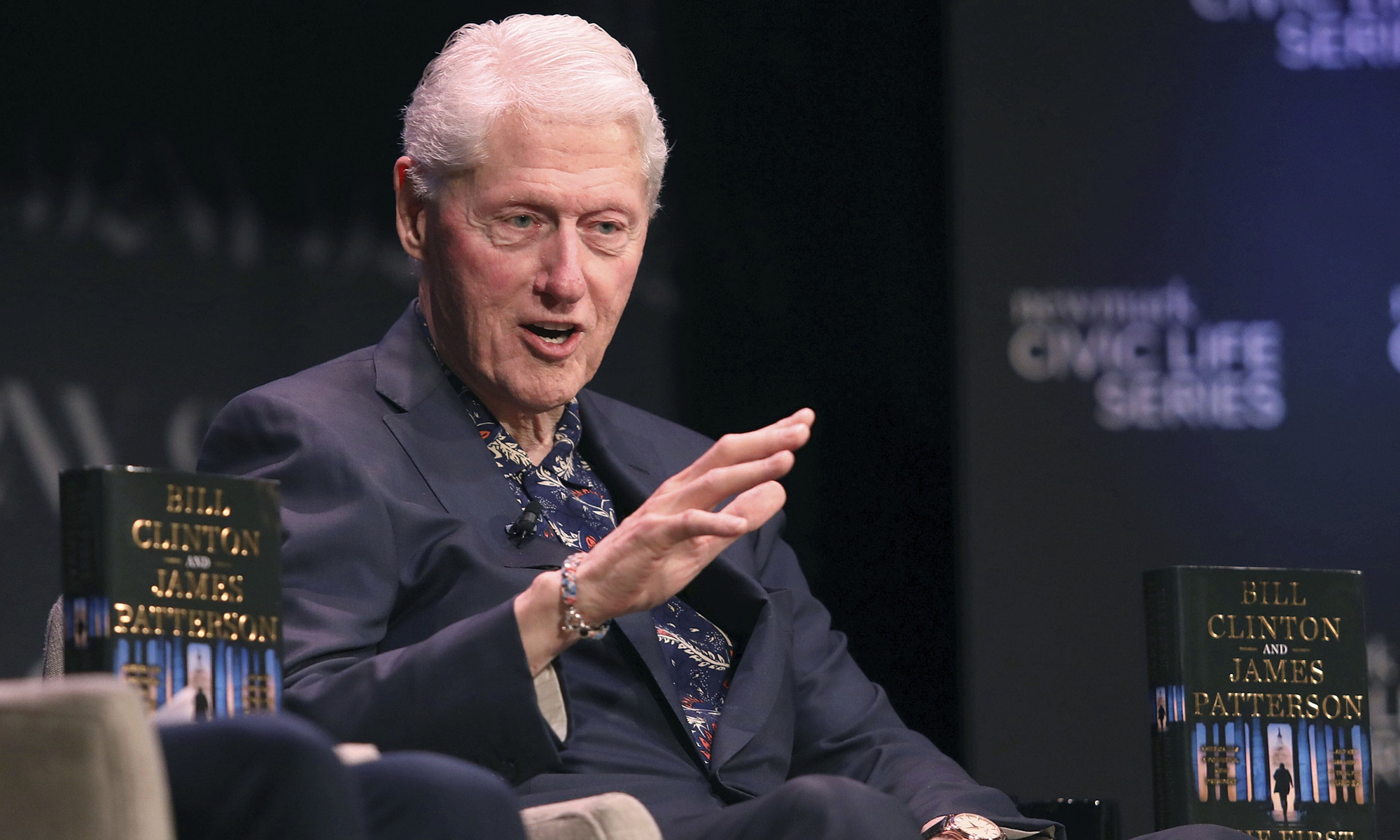
Former US president Bill Clinton Photo: VCG
Former US president Bill Clinton lamented the lack of "clear thinking about the upsides of globalization" and predicted China will become more open and inclusive, and eventually surpass the US as the world's largest economy. This was quoted in an excerpt of Washington Post columnist David J. Lynch's new book published on Tuesday.
In the book, Clinton reflects on globalization — described as the greatest engine of prosperity the world has ever seen—and how it veered off course during an interview in the winter of 2024, according to a Washington Post report on Friday, local time.
"It's gotten to be that there's not a lot of clear thinking about the upsides of globalization," Clinton said at the start of a 75-minute interview in his midtown Manhattan office, according to the report.
He acknowledged that "[globalization] events have not turned out as he had expected," and agreed that US leaders failed to provide the promised support for Americans left behind in a globalized world and underestimated the resentments brewing among the working class.
When asked about his expectations for China in the late 1990s as it prepared to join the global trading system, Clinton said during the interview, "I thought what I said. I thought they would gradually become more open and more inclusive…And I thought they would eventually replace us as the biggest economy in the world."
He added, "And my goal was to make sure that when that happens, it wouldn't be bad for us or dangerous for them." Reflecting on those expectations, Clinton noted, "I was much more hopeful."
As the 42nd president of the US — the leader of the world's largest economy and sole superpower — Clinton shepherded a historic North American trade deal through Congress and celebrated China's entry into the World Trade Organization.
Clinton highlighted the growing discontent among Americans amid the anti-globalization trend and pointed to the inaction of the Washington government.
The former US president stressed that long before Trump came on the scene, public discontent was evident. He noted that each aspect of globalization—trade, finance, technology, ideas, and people — raised difficult questions that Washington struggled to answer. "But sometimes, it [Washington] barely seemed to try," he remarked, according to the Washington Post's report.
The report also notes that those unable to thrive in what Clinton once called the "new economy" turned against trade, immigration, and change itself. However, he stressed that these individuals were merely "seething."
In recent years, the US government has gradually abandoned the open and inclusive economic system it once championed, shifting toward unilateralism and protectionism, particularly in its dealings with China.
Since the Trump administration took office, US policies of unilateral suppression and extreme pressure have escalated tensions in US-China relations, intensifying the trend of deglobalization, analysts said.
These unilateral measures have begun to backfire on the US. The US jobs market weakened further in August, raising fresh concerns about the health of the world's largest economy. Employers added just 22,000 jobs last month, fewer than expected, while the unemployment rate ticked up from 4.2 percent to 4.3 percent, according to the Labor Department, as reported by the BBC on Friday.
On September 4, preliminary data from the US Department of Commerce showed that the US trade deficit widened to $78.3 billion in July, a significant increase from the revised $59.1 billion deficit in June, driven by a notable rise in imports due to US sweeping tariffs. This figure also exceeded market expectations, China's state broadcaster CCTV News reported earlier.
Global Times
RELATED ARTICLES