Illustration: Liu Rui/GT
Japan and the Philippines have reportedly announced that they would enter negotiations over the export of frigates and air-defense radars, while the two countries' so-called Reciprocal Access Agreement (RAA) officially came into effect on Thursday. Notably, some Japanese media reports appear to suggest that the moves are aimed at China. This series of developments indicates that Tokyo and Manila are intensifying efforts to provoke China, engaging in a risky gamble that threatens regional stability.According to Nikkei, during a meeting between the Japanese defense minister and the Philippine defense secretary in Seoul on Tuesday, discussions took place about the potential transfer of secondhand frigates used by the Japanese Maritime Self-Defense Force. Abukuma-class destroyer escorts, a relatively old model that can "carry such weapons as torpedoes against submarines and missiles against ships," are among the leading candidates, Nikkei claimed.
Nikkei also asserted that the move is aimed at boosting Manila's defense capabilities amid "China's growing naval presence in the East and South China Seas." Meanwhile, the RAA serves as the legal basis for both countries' troops entering each other's territory for joint military exercises. In practice, although the agreement appears bilateral, it primarily strengthens Japan's military presence in the Philippines, Song Zhongping, a Chinese military affairs expert, told the Global Times.
While the actual result of the "cooperation" remains to be seen, the sinister intentions behind the moves require some attention. For a long time, Japan has attempted to treat the South China Sea as a leverage point, offering weapons and military cooperation to certain regional countries, including the Philippines, to bolster their capabilities to confront China. A key goal of Japan's approach is to stir instability in the region, so as to expand its arms sales to other countries.
According to Song, Japan's use of the Philippines is a way to open overseas markets for its defense exports. Notably, some Japanese media reports indicate that, beyond "recycling" retired vessels with the Philippines, Tokyo is also considering promoting Abukuma-class ships to Indonesia and Vietnam.
However, despite discussions of military "cooperation" between Japan and the Philippines, a profound irony persists. A brief glance at history makes the irony clear: 80 years ago, the Philippines was a victim of Japan's militarism driven by expansionist policies and imperialist ambitions; today, it is actually colluding with Japan in trying to sow trouble in the region.
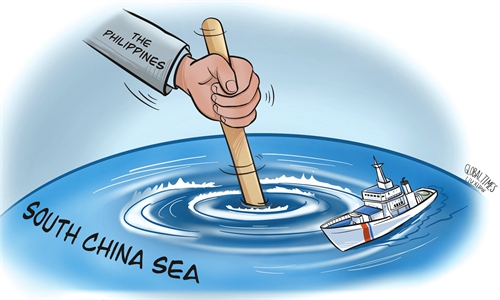
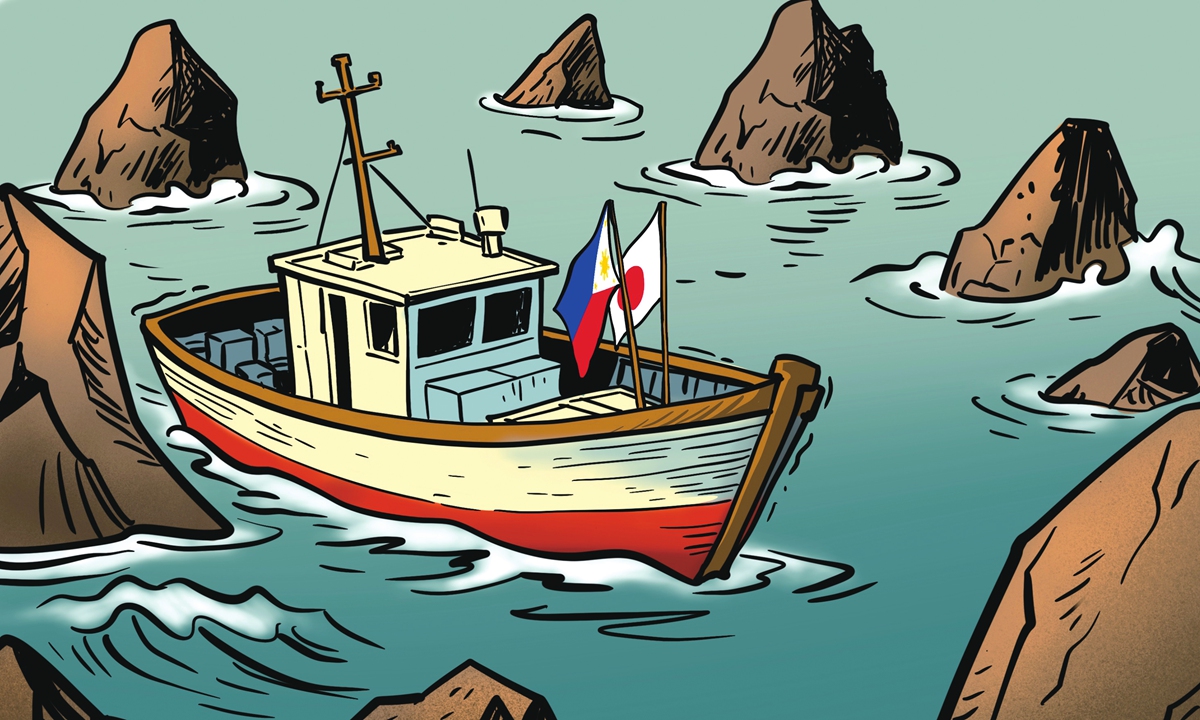
For the Philippines, which is seeking to rapidly strengthen its maritime military capability, Japan's retired Abukuma-class destroyer escorts are being imbued with new imagination - as if they could act as a "talisman" emboldening the country to further destabilize the South China Sea through increasingly provocative missions.
Japan-Philippines military "cooperation" is motivated not only by the desire to provoke China but also by close alignment with the US' "Indo-Pacific Strategy." Today, some so-called US allies, apart from Japan, are strengthening their "investment" in the Philippines' defense to varying degrees, including arms assistance and institutional coordination. Behind this apparent attempt lies a US-led strategic plan: to make the Philippines a forward pivot while sharing strategic risks among allies.
The growing military ties between Japan and the Philippines are a dangerous gamble for regional peace. The Philippines' overreliance on external powers seems to commit it entirely to a single path in the South China Sea, making it a forward pawn in the US' strategy. At the same time, Japan's persistence to link the South and East China Sea issues is further increasing the risks of regional confrontation. The so-called talisman that the Philippines believes it possesses is, for the region, nothing more than a hot potato - an even greater source of anxiety.
RELATED ARTICLES