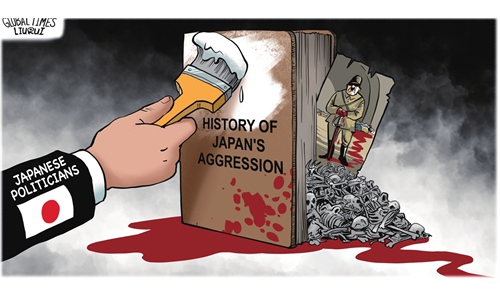
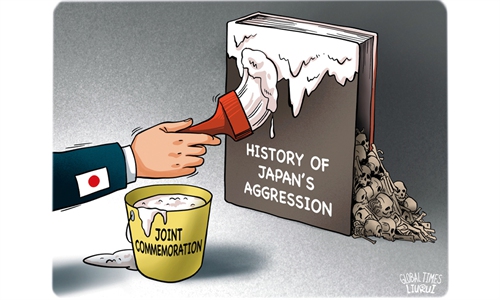
Without reflecting on its aggression history, Japan's 'anti-war' rhetoric remains empty words
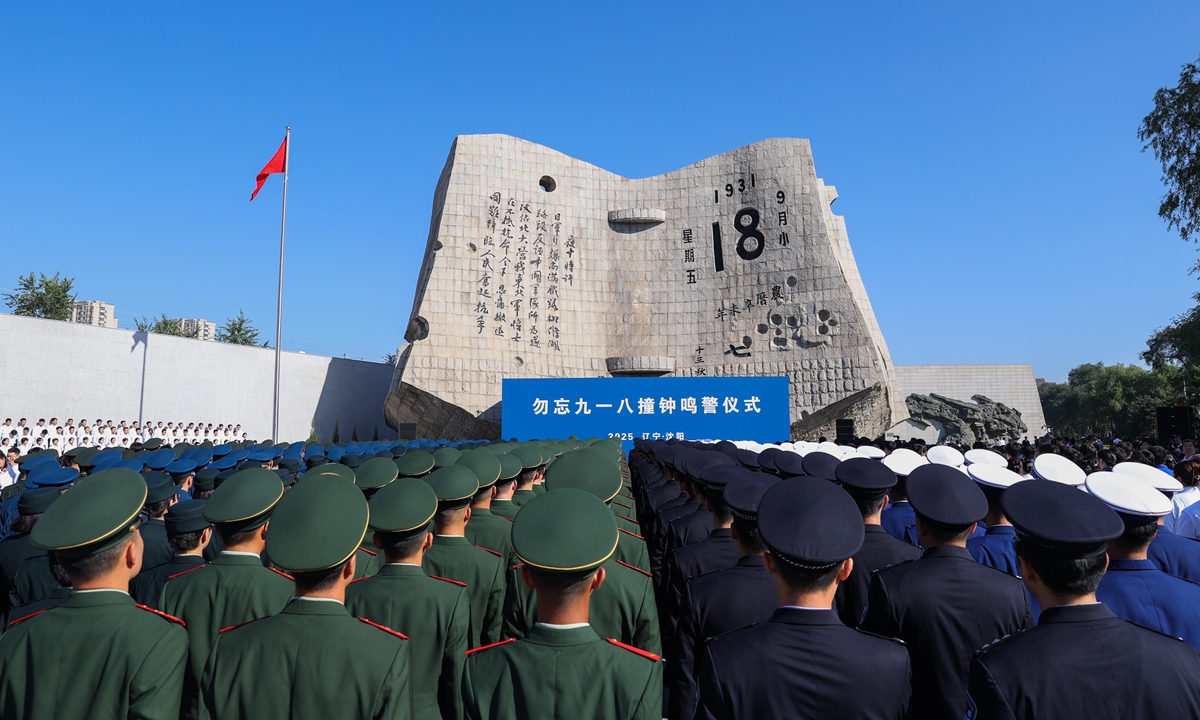
A ceremony is held to commemorate the 94th anniversary of the September 18 Incident that marked the start of Japan's invasion of China and the beginning of the Chinese People's War of Resistance against Japanese Aggression (1931-45) in Shenyang, Northeast China's Liaoning Province, on September 18, 2025. Photo: VCG
Thursday marks the 94th anniversary of the "September 18 Incident," yet Japan still lacks serious reflection on its history of aggression. Yin Jinqi, a lecturer at Party School of Beijing Municipal Committee of CPC and a PhD graduate from Peking University's Institute of Area Studies, has conducted fieldwork across Shizuoka, Ibaraki and Tokyo in Japan. After interviewing 12 war survivors, he observed that "anti-war sentiment" appears to be a consensus among Japanese. However, without reflection on its history of aggression and wartime atrocities, any anti-war rhetoric remains empty words.During his fieldwork, Ueno, who underwent suicide attack training, had an absurd view by attributing Japan's wartime atrocities to "inevitable consequences of war" and asserting that "death is inherent to warfare," thus concluding that war should simply stop.
Ueno's anti-war sentiment finds considerable resonance within Japan: Amid China's rapid development, anti-war sentiment is linked to anti-China sentiment, serving as the psychological foundation for Japanese right-wing's propagation of the "China threat theory." Meanwhile, this kind of anti-war sentiment aligns with the Japanese government's pacifist diplomatic rhetoric, serving as a tool for the government to shape its international image.
Yin believes that while the Japanese individuals he interviewed hold more complex and contradictory feelings about wartime history, mere lip service to anti-war slogans - without a sober understanding of the war's root causes and historical lessons - amounts to superficial emotional expression. Such posturing can't genuinely awaken a profound appreciation for peace.
RELATED ARTICLES