China’s sci-tech capabilities surge in 14th Five-Year Plan
Progress driven by top-level design, policy guidance: expert
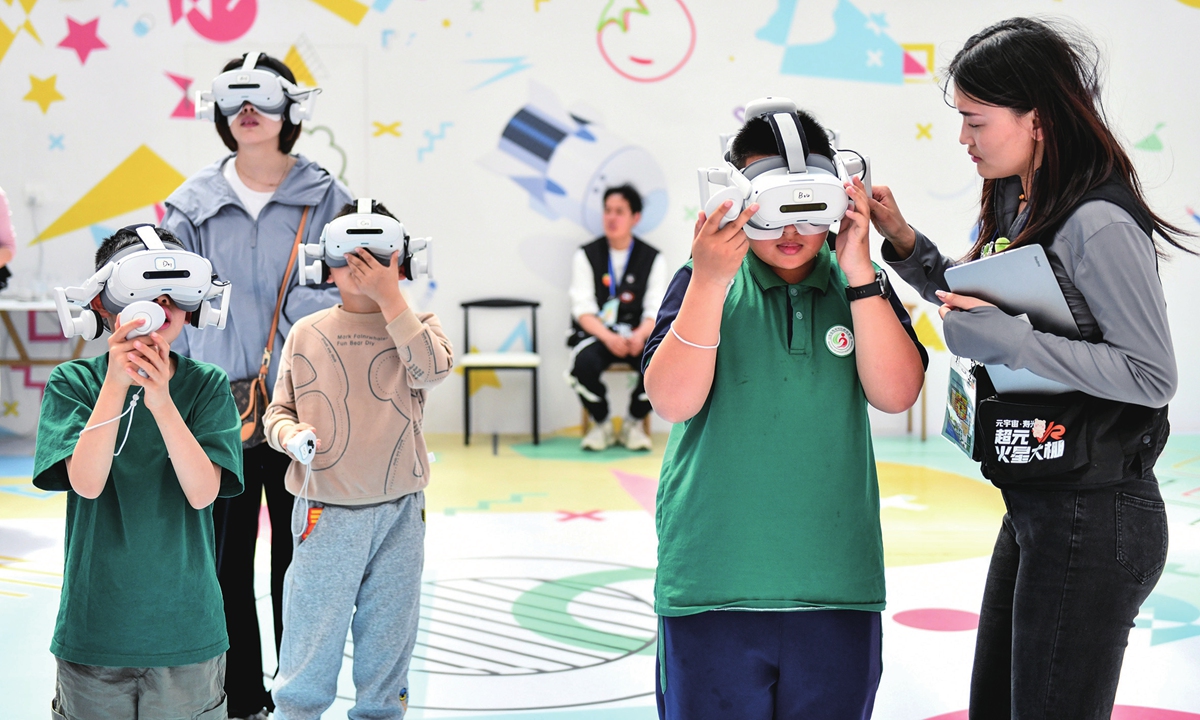
Visitors try on VR headsets at the VR Mars Pavilion, during the 26th China (Shouguang) International Vegetable Sci-Tech Fair in Shouguang, East China's Shandong Province, on April 20, 2025. Photos on this page: VCG
China's science and technology (sci-tech) capabilities surged remarkably during the 14th Five-Year Plan period (2021-25), with research and development (R&D) investment intensity surpassing the average level of EU member states, officials said on Thursday, while pledging to ramp up efforts for high-level sci-tech self-reliance.
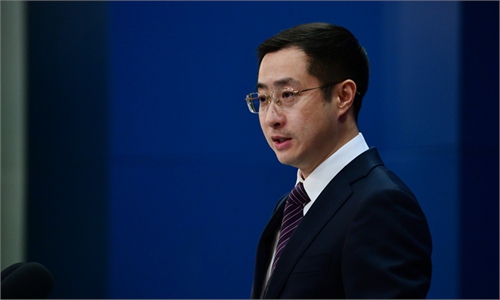
Yin Hejun, minister of science and technology, told a press conference that the period marks a milestone in China's sci-tech development, as the country's innovation capacity has steadily improved and the foundation for China to become a leading sci-tech power has been strengthened.
Investment in sci-tech has continued to grow. In 2024, nationwide R&D spending exceeded 3.6 trillion yuan ($495 billion), up 48 percent from 2020. R&D intensity reached 2.68 percent, surpassing the average level of EU countries, while the total number of R&D personnel ranked first in the world, the official said.
China's basic research capacity also advanced, with spending on basic research hitting 249.7 billion yuan in 2024, more than 70 percent higher than in 2020. Breakthroughs were made in areas such as quantum science, life sciences, material sciences and space exploration.
Yin further highlighted that China's strategic scientific and technological strength has been expanding, as the research capabilities of national research institutions and top research universities improved and leading tech enterprises grew rapidly.
China's comprehensive national innovation capacity rose from 14th globally in 2020 to 10th in 2024, marking the first time China entered the top 10, according to the World Intellectual Property Organization's (WIPO) Global Innovation Index released on Tuesday.
The minister also pointed to the strong momentum of regional sci-tech innovation. "International innovation centers in Beijing, Shanghai and the Guangdong-Hong Kong-Macao Greater Bay Area are playing an increasingly prominent role in driving nationwide innovation," Yin said.
According to the WIPO's 2025 Innovation Cluster Ranking, the Shenzhen-Hong Kong-Guangzhou cluster ranked first globally. China alone is home to 24 of the world's top 100 innovation clusters, the report noted.
China has also accelerated the integration of sci-tech and industrial innovation, Yin said. Last year, 524 companies from the Chinese mainland entered the list of the world's top 2,000 industrial R&D investors, accounting for 26.2 percent of the total. The number of high-tech enterprises exceeded 500,000, up 83 percent from 2020.
The remarkable progress stems from China's top-level design and policy guidance in building an innovation-oriented country, Hu Qimu, deputy secretary-general of the Forum 50 for Digital-Real Economies Integration, said, adding that "China has pushed forward comprehensive innovation across multiple fronts, which is the key driver behind its achievements."
The government has also prioritized talent cultivation by adjusting academic disciplines and setting up talent awards and funds, thereby enhancing overall research capabilities, Hu added.
Over the past five years, the coordination of sci-tech policies has been further strengthened, with greater synergy with fiscal, financial, industrial, educational, and talent policies, Yin stated.
Talent support policies have encouraged young researchers to take the lead, according to the minister. Data from the ministry showed that more than 80 percent of participants in the country's key R&D programs are under 45 years old.
On the financial side, authorities have rolled out measures to expand sci-tech financing channels. In 2025 alone, loans supporting sci-tech innovation and technological upgrading are expected to reach 800 billion yuan.
One major highlight has been breakthroughs in tackling "bottleneck" technologies and applications. "AI, the Internet of Things and big data technologies are empowering industry upgrades toward smart manufacturing. China accounts for more than 40 percent of the world's 'lighthouse factories,' the highest share globally," Yin said.
The 2024 and 2025 Government Work Reports both emphasized the "AI Plus" initiative, pledging to effectively combine digital technologies with China's manufacturing and market strengths. In August, China published guidelines on deeply implementing the initiative, by strengthening AI supportive infrastructure and accelerating the integration of AI technology across economic and social domains.
"These efforts have delivered concrete outcomes," Hu said, noting that China has moved from catching up to keeping pace and, even taking the lead in some fields such as telecommunications.
Lin Xin, vice minister of science and technology, stressed the irreplaceable role of regional innovation in building China's sci-tech strength. Targeted policies have been implemented to develop Beijing, Shanghai, and the Greater Bay Area as international innovation hubs. "These three centers are strengthening their leading advantages in fields like aerospace and optoelectronics," Lin noted.
The Chinese government called last year for expediting high-level sci-tech self-reliance to realize the strategic goal of building a strong country in science and technology by 2035.
The next five years will be crucial in realizing this goal, Yin said, pledging moves such as strengthening original and pioneering research, promoting the deeper integration of sci-tech and industrial innovation, and building an open innovation ecosystem with global competitiveness to ensure decisive progress in building China's sci-tech strength.
RELATED ARTICLES