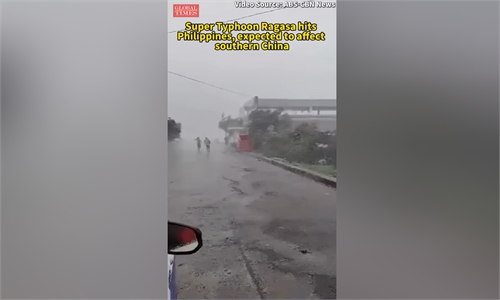
China activates Level II disaster emergency response as Ragasa, 2025’s most powerful typhoon, approaches coastal areas
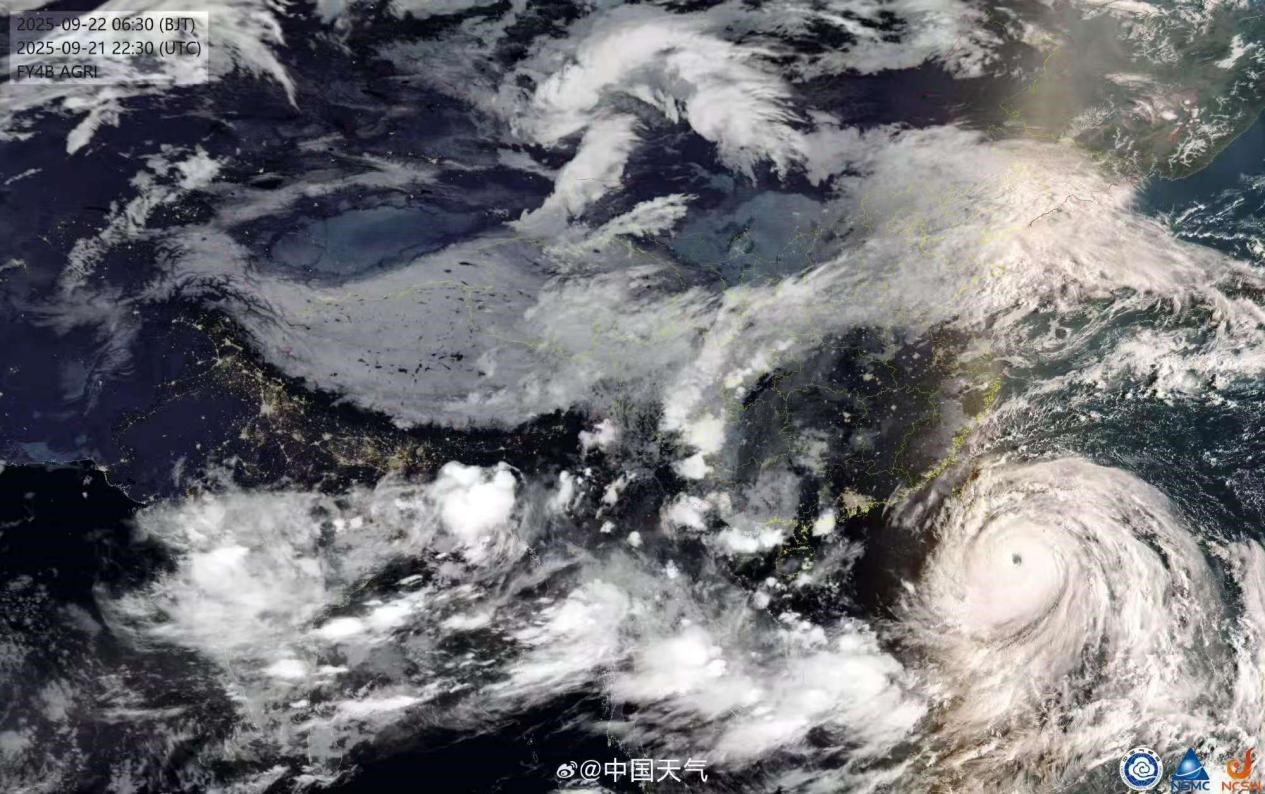
Satellite Imagery of Typhoon Ragasa Photo:Weather China
China Meteorological Administration has activated the Level II emergency response for major meteorological disasters as Typhoon Ragasa is approaching, CCTV News reported on Monday.
Ma Jun, director of the Institute of Public and Environmental Affairs, told the Global Times that Ragasa is the strongest typhoon of the year so far and could become one of the most severe one in recent years. He noted that the typhoon is massive, with a gale-force wind circle covering an area larger than Guangdong Province, potentially causing widespread impacts.
The 18th typhoon of this year, Ragasa was located 570 kilometers northeast of Manila, the Philippines, at 8 am on Monday. The maximum wind force near its center surpassed Level 17, reaching 62 meters per second. It is moving westward at a speed of approximately 20-25 kilometers per hour and is expected to enter the northeastern waters of the South China Sea in the early hours of Tuesday.
It is predicted that from September 23 to 26, moderate to heavy rain will hit most parts of Guangdong, central and southern Guangxi, southern Fujian, southern Jiangxi, southern Hunan, eastern Yunnan and Hainan Island. Some areas will experience downpours, with extremely heavy rain in local regions.
Winds of Level 10-11 will successively affect waters including the Bashi Channel, Taiwan Straits, northern South China Sea, Qiongzhou Straits and Beibu Gulf, as well as the coastal areas of South China. Winds of Level 14-17 will blow in the nearby waters or areas where the typhoon center passes, with gusts exceeding Level 17, CCTV reported.
Ma warned that the storm carries considerable uncertainty, with the risk of multiple landfalls or skimming along coastal areas. Its wind field may repeatedly batter certain regions, compounding the challenges of disaster relief and recovery.
Several coastal cities in Guangdong — including Yangjiang, Jiangmen, Zhuhai, Shantou, and Zhongshan — have recently announced or signaled the implementation of suspensions measures of classes, work, production, transport and business operations. On Monday, the Hong Kong Observatory issued the No. 1 standby signal and announced that all schools will be closed on Tuesday and Wednesday. The Macao Meteorological and Geophysical Bureau also said Monday it would issue the No. 1 typhoon signal, CMG Radio The Greater Bay reported.
Besides, China Railway Guangzhou Group will suspend high-speed and regular trains in Guangdong from Tuesday noon, with services gradually reduced as the typhoon advances. All trains across the province will be halted on Wednesday.
As of Monday noon in South China's Fujian Province, 50 ferry routes, 146 vessels and all "Mini Three Links" services have been suspended, while 95 offshore projects were halted and 261 vessels relocated. The Fujian Maritime Safety Administration has activated a Level II emergency response and issued strengthened sea warnings.
The Guangdong provincial flood control, drought relief and wind prevention headquarters has also upgraded the typhoon emergency response from Level IV to Level II, according to a statement released by local authorities on Monday.
The statement noted that according to monitoring and forecasts from meteorological, hydrological and marine authorities, Ragasa has intensified into a super typhoon and is gradually moving toward the coastal areas of Guangdong. It will bring severe impacts of strong winds, heavy rains, storm surges and high waves to the province within 48 hours.
China's National Meteorological Center continued to issue a typhoon yellow warning at 10 am on Monday. Earlier, according to a report by Guangming Online, Ragasa features a huge size and will bring wide-ranging impacts of strong winds and heavy rains. It is quite similar to Typhoon Mangkhut in 2018 and Typhoon Saola in 2023, with its disaster-causing risk possibly approaching that of Mangkhut and its destructive power likely to surpass that of this year's Typhoon Vipa and Typhoon Saola in 2023. There is no ruling out the possibility that the typhoon warning signal will be upgraded to red.
Local authorities in Guangdong also issued a reminder that Ragasa is extremely strong, with a large wind circle, and exhibits extreme characteristics. Affected by Ragasa, severe wind and rain will hit the coastal waters and land areas of Guangdong from September 23 to 25, requiring preparations for catastrophic disaster prevention in advance.
Ma suggested that residents secure doors and windows, stock emergency supplies, guard against flooding and storm surges, evacuate unsafe areas, avoid dangerous structures and stay alert to lightning and electrical hazards.
RELATED ARTICLES