Chinese FM mourns PKU professor Yu Kongjian’s plane crash death; Brazilian President offers condolences
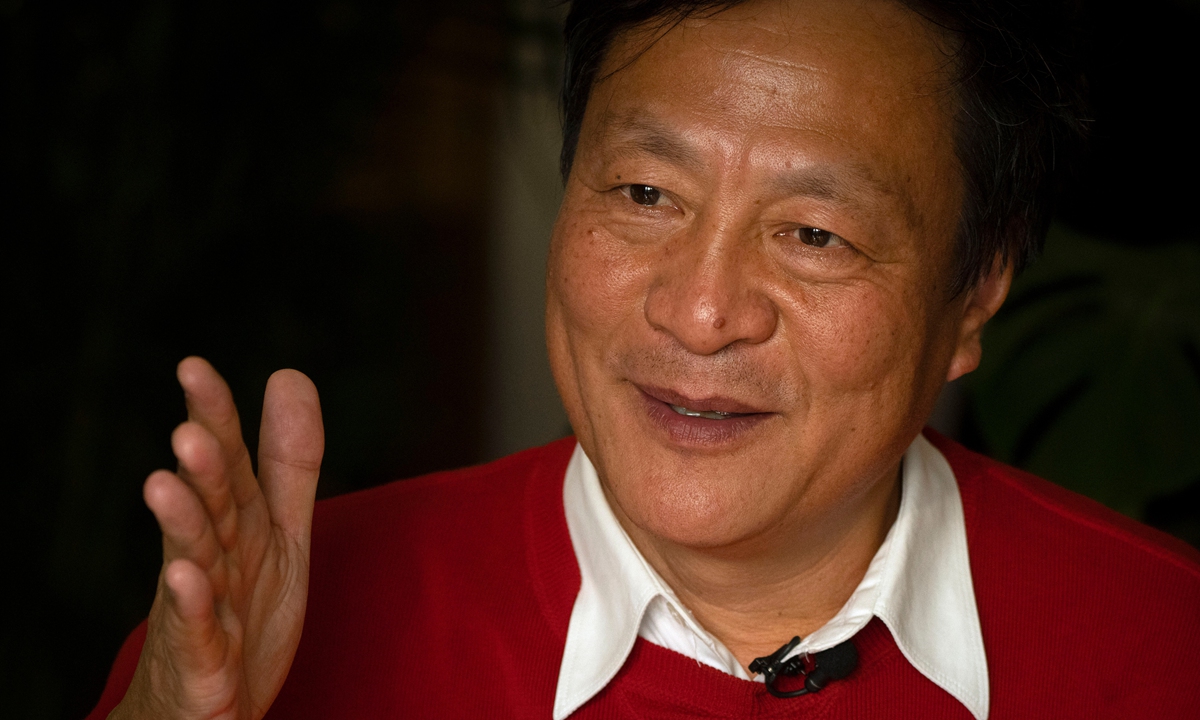
Architect Yu Kongjian speaks during an interview at his firm's office in Beijing, Oct. 21, 2022.?Photo: VCG
Chinese landscape architect Yu Kongjian, who was also dean and professor at Peking University's College of Architecture and Landscape Architecture, died in a plane crash on Tuesday in the Brazilian wetlands of Mato Grosso do Sul state. Brazilian President Luiz Inacio Lula da Silva sent his condolences, calling him "a global reference with the sponge cities which combine quality of life and environmental protection."Yu, 62, gained global relevance as a landscape architect and urban planner after the Chinese government adopted his concept of "sponge cities" using nature-based solutions to absorb and retain water instead of concrete infrastructure to channel it away, according to Reuters.
Brazilian authorities confirmed that Yu and three other people, the pilot and two local filmmakers, were killed when the aircraft they were travelling in crashed in a rural area near the town of Aquidauana, in the Pantanal wetlands, the report said.
"It was with sadness and dismay that I received the news of the plane crash," President Luiz Inacio Lula da Silva said in a statement.
"In times of climate change, Kongjian Yu became a global reference with the sponge cities which combine quality of life and environmental protection," he added.
The Vice President of Brazil also posted on X that, "I received with sadness the news of the crash of an airplane in the Pantanal, which claimed the lives of Chinese architect and urbanist Kongjian Yu, filmmakers Luiz Fernando Feres da Cunha Ferraz and Rubens Crispim Jr. Professor Yu became renowned for creating the concept of sponge cities, with notable contributions to sustainable urbanism, the preservation of biodiversity, and the protection of the planet."
His legacy will continue to inspire all those dedicated to the ecological cause. My deepest condolences to Yu's family and the Chinese people, as well as to the friends and relatives of the filmmakers and pilot Marcelo Pereira de Barros, the vice president said.
Yu was featured in the opening program of the Sao Paulo International Architecture Biennale last week. Newspaper Estadao reported that he then joined a trip with filmmakers shooting a documentary about his work.
Answering a question regarding the Chinese architect who unfortunately died in a plane crash in Brazil, Chinese Foreign Ministry spokesperson Guo Jiakun said on Thursday that we extend deep condolences over the passing of Professor Yu. "Our heart goes out to his family. China's Embassy in Brazil will continue to assist in handling relevant matters," Guo said.
On September 18, according to the news website of Peking University, Forbes released the "2025 Sustainability Leaders" list, recognizing 50 individuals with global influence in climate action and green transformation. Professor Yu was selected, becoming the only Chinese scholar representative on the list.
According to Peking University, Yu was born on May 12, 1963, in Jinhua, East China's Zhejiang Province. He is the founding dean of the College of Architecture and Landscape Architecture at Peking University and a fellow of the American Academy of Arts and Sciences. He is renowned for proposing the "sponge city" concept, which has been applied in thousands of cases both domestically and internationally.
Drawing wisdom from ancient philosophies like Taoism, the Sponge City concept in fact embodies harmony and reconciliation with nature, which was put into practice in flood management in China thousands of years ago. The notion is not just a fundamental rethink of flood control. Rather, it's a revolutionary integration of ancient Chinese wisdom with modern urban planning and management, Chinese media reported.
Global Times
RELATED ARTICLES