European media should abandon narrow-minded perspectives on CATL's battery joint venture in Spain
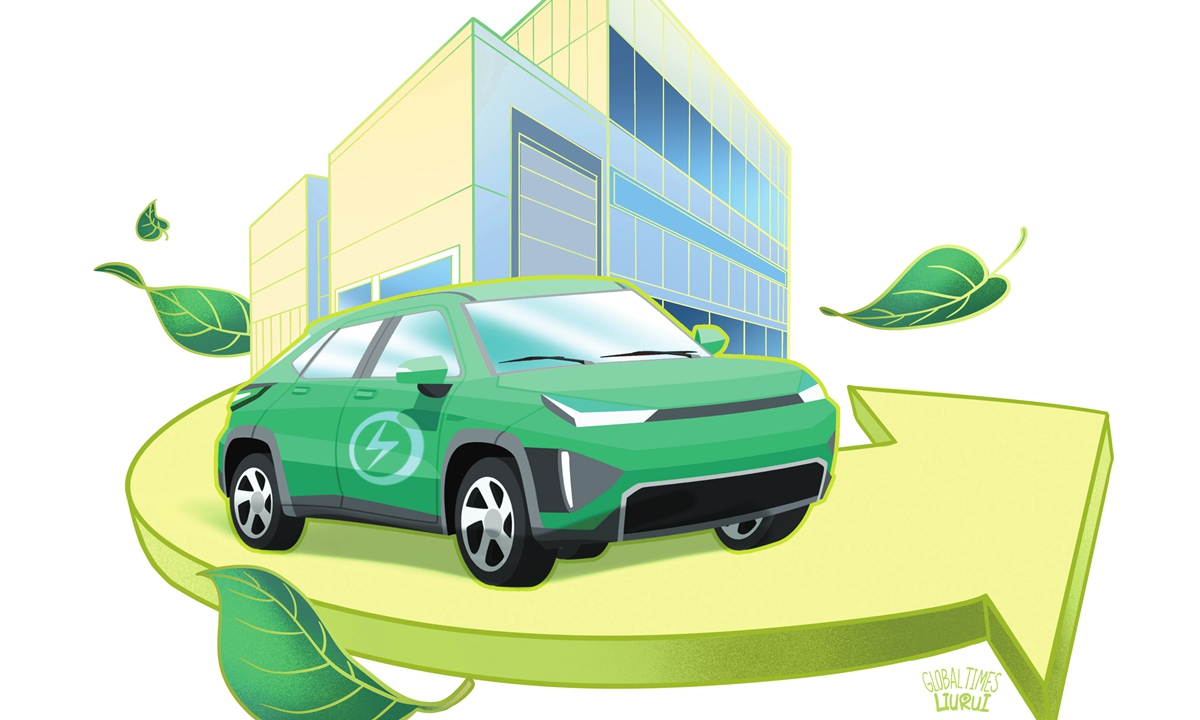
Illustration: Liu Rui/GT
The British media outlet Financial Times reported on Saturday that Chinese company CATL, one of the world's most advanced battery makers, plans to send 2,000 workers to build a battery plant in Spain in a joint venture with the multinational auto company Stellantis. Such cooperation highlights the emerging trend of China-Europe green industrial chain collaboration and the deepening integration between the two sides in the new energy industry. However, the report hyped China's so-called attempt to "lock in European independence on its technology," warned about "Europe's future vulnerability to China," and amplified voices calling the project "a huge risk" for Spain. This situation exposes the contradictory mind-set and short-sighted strategic outlook of certain European forces in the context of new energy cooperation, revealing their excessive worries about the deepening of cooperation in both technology and labor within the green industry chain.
Where do those unwarranted concerns originate? Gao Jian, director of the Center for British Studies at Shanghai International Studies University, told the Global Times on Sunday that these worries reflect a sense of "anxiety" among certain European factions regarding China's rise in the green industry. "China is at the forefront of the global industrial production chain, especially in the new energy sector. However, some European elements continue to perceive China through an ideological lens, which hampers their ability to accept this reality." Moreover, some European media outlets have politicized ordinary business collaborations, driven by zero-sum thinking and geopolitical anxieties, while neglecting the fundamental principles of globalization, market dynamics, and mutually beneficial cooperation.
CATL is a global leader in new energy innovative technologies. The battery plant it is building in Spain in collaboration with Stellantis will create local jobs, promote the development of related industries, and provide high-quality, high-performance power batteries for Europe's new energy vehicle industry. How can such a mutually beneficial cooperation be seen as a "huge risk"?
Jia Weilie, a professor at the Institute for Sustainability of Huzhou University and a researcher at the Budapest Centre for Long-term Sustainability, told the Global Times on Sunday that as Chinese companies in the green industrial chain deepen their cooperation with European countries, they not only boost local employment, but also benefit Europe's industrial chain and aid the continent's green transformation.
CATL is bringing state-of-the-art battery manufacturing technology to European countries of Germany, Hungary and Spain. Additionally, China's Gotion High Tech and its Slovak partner have signed a memorandum to build an EV battery plant in Slovakia. These new energy technology companies are providing localized supply chain support for European automakers, mobilizing upstream and downstream supporting industries and generating significant economic and social benefits.
China has become an indispensable partner in the global and European green transition, and there is broad room for cooperation between the two sides in the field of new energy. Politicizing and securitizing such cooperation not only violates economic principles but also runs counter to the global trend of green development.
The joint venture between China and Spain, based on deep political mutual trust, is a landmark step in China-Europe cooperation within the green industrial chain. China consistently upholds the principles that endorse technological innovation and inclusive cooperation, and is committed to promoting high-quality green development and sustainable global progress. Hopefully, some European politicians and media can stop playing the role of "anxiety mongers" and abandon their narrow-minded perspectives. This mentality is detrimental to the long-term development of Europe's new energy industry and will ultimately hinder Europe's opportunities for new energy development.
RELATED ARTICLES