Chinese foreign minister to visit Italy and Switzerland, maintaining high-frequency China-EU exchanges: expert
Chinese Foreign Ministry
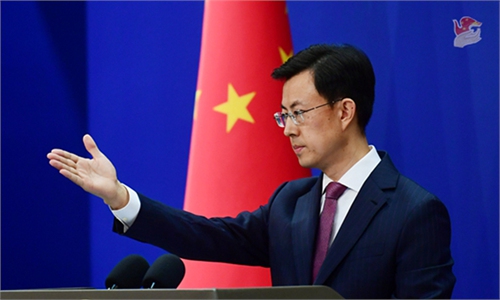
At the invitation of Italy's Deputy Prime Minister and Minister of Foreign Affairs and International Cooperation Antonio Tajani and Swiss Federal Councillor and Foreign Minister Ignazio Cassis, from October 7 to 12, Member of the Political Bureau of the CPC Central Committee and Chinese Foreign Minister Wang Yi will visit Italy and hold the 12th Joint Meeting of the China-Italy Government Committee and then travel to Switzerland and hold the 4th round of China-Switzerland Foreign Ministers' Strategic Dialogue, Chinese Foreign Ministry spokesperson announced on Sunday.This European trip marks Wang's latest visit following the conclusion of his tour to Austria, Slovenia, and Poland in Central and Eastern Europe from September 12 to 16.
An expert said that the visit represents a continuation of efforts to maintain high-frequency engagement, aligning with the growing momentum of cooperation between China and European countries.
Cui Hongjian, a professor at the Academy of Regional and Global Governance at Beijing Foreign Studies University, told the Global Times on Sunday that for the visit to Italy, the two sides are expected to focus more on pragmatic areas, thereby advancing comprehensive collaboration.
Italy has tried to stay in Beijing's good books - consistently highlighting the merits of Chinese firms and investment in Europe, Reuters reported on Sunday.
In September, Italy's deputy prime minister Matteo Salvini, in an interview with Chinese media, said that China and Italy have great potential for cooperation in a wide range of areas, including infrastructure development, technological innovation, economic and cultural exchanges, Xinhua News Agency reported.
After visiting Italy, Wang then will travel to Switzerland and hold the 4th round of China-Switzerland Foreign Ministers' Strategic Dialogue, according to the spokesperson.
The year 2025 marks the 75th anniversary of the establishment of diplomatic relations between China and Switzerland. The two sides should celebrate this milestone appropriately and jointly organize a series of events, including the "China-Switzerland Year of Culture and Tourism," while strengthening cooperation in science, technology, education, humanities, and other fields to further facilitate people-to-people exchanges, Wang said on April 24, 2025, during his meeting with Swiss Federal Councillor and Foreign Minister Ignazio Cassis in Beijing.
The atmosphere of bilateral cooperation is positive and forward-looking, Cui said, adding that China and Switzerland have long been at the forefront of China-Europe cooperation in areas such as free trade and investment.
Cui said that as a non- European Union (EU) member state, Switzerland enjoys greater flexibility in dialogue and cooperation. China will seize this opportunity to advance China-Switzerland collaboration, creating an exemplary model - to demonstrate the tangible benefits of cooperation to EU member states and other European countries, thereby inspiring similar initiatives, he added.
The Chinese foreign minister also visited Europe in late June and early July. Cui noted that in the first half of the year, interactions between China and European countries primarily focused on reviewing past experiences. In the second half, there is a need to translate these lessons into practical solutions through concrete cooperation, ensuring the steady development of China-Europe relations and emphasizing the alignment of mutual interests.
Frequent interactions also help address the cognitive biases of some politicians within European countries, easing hesitation toward cooperation with China due to various factors, Cui said.
In tackling global challenges such as geopolitical conflicts and economic headwinds, China and European countries can also provide solutions through dialogue and cooperation, said Cui. By fulfilling their responsibilities as major global actors, they can leverage the constructive role of China-Europe collaboration to promote global stability.
RELATED ARTICLES