Renovation of ancient murals and colored sculptures prohibited: National Cultural Heritage Administration
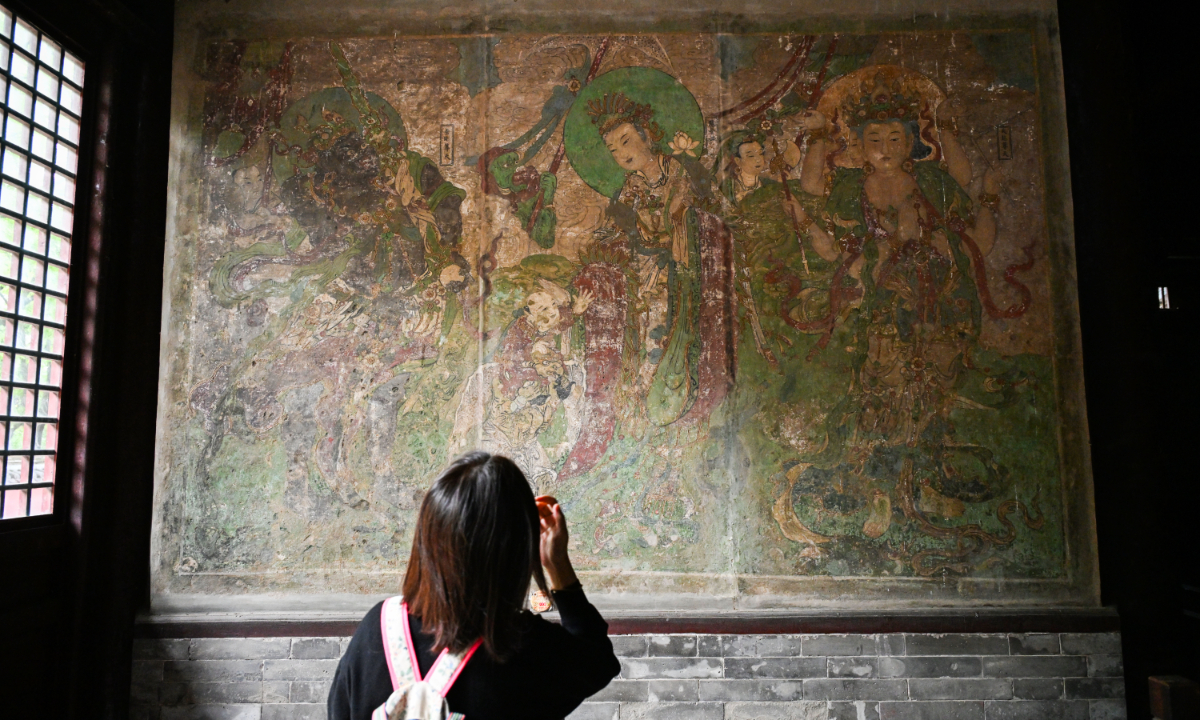
A tourist visits Longxing Temple, taking a look at an ancient mural, in Shijiazhuang, North China’s Hebei Province, on August 24, 2025. Photo: VCG
All colored paintings and lime sculptures created before 1911 should be conserved in situ using scientific methods, and the renovation of ancient murals and colored sculptures is strictly prohibited, according to a notice the National Cultural Heritage Administration released Thursday, aiming to strengthen full process management of cultural relics restoration projects.
For cultural heritage buildings that are in poor condition or have not undergone repairs for many years, the local relevant departments should proactively carry out on site inspections, and promptly carry out repairs. The relevant units or persons responsible for cultural heritage buildings should ensure protection and repair work is coordinated and repair work with security, fire and lightning protection measures, interior alterations, displays and exhibitions, and other projects, to avoid repeated disturbance, according to the notice.
In principle, restoration should not seek to return a building to one specific historical period; instead, components, forms, and historical information from each period that are valuable and characteristic of their era should be identified, assessed, and preserved, the notice said.
The relevant departments should preserve the historical patina of wall surfaces and it is not appropriate to wholly repaint ancient pagodas. The responsible designer must coordinate the overall exterior appearance in the repair of heritage buildings. Where old and new treatments coexist, such as repainting, the designer should take the lead in proposing technical measures to ensure harmony between the two, according to the notice.
During repairs, the National Cultural Heritage Administration encourages full photographic documentation and digital recording throughout each project. Contractors must strictly limit the scope and intensity of intervention, and study and adhere to traditional materials and craftsmanship techniques, according to the notice.
The administration will raise the share of priority projects in approvals for nationally designated key cultural relics protection units, designating World Cultural Heritage sites, murals and colored sculptures, and conservation works that involve major national strategies, strong public interest, or high technical difficulty will be given priority and stronger funding support, the notice said.
Also, the administration encourages universities and vocational colleges in developing disciplines related to heritage buildings, and train talent across the full chain — from research and design to construction, conservation, and management, according to the notice.
Global Times
RELATED ARTICLES