The world has never been more eager to understand ‘What is China’: Global Times editorial
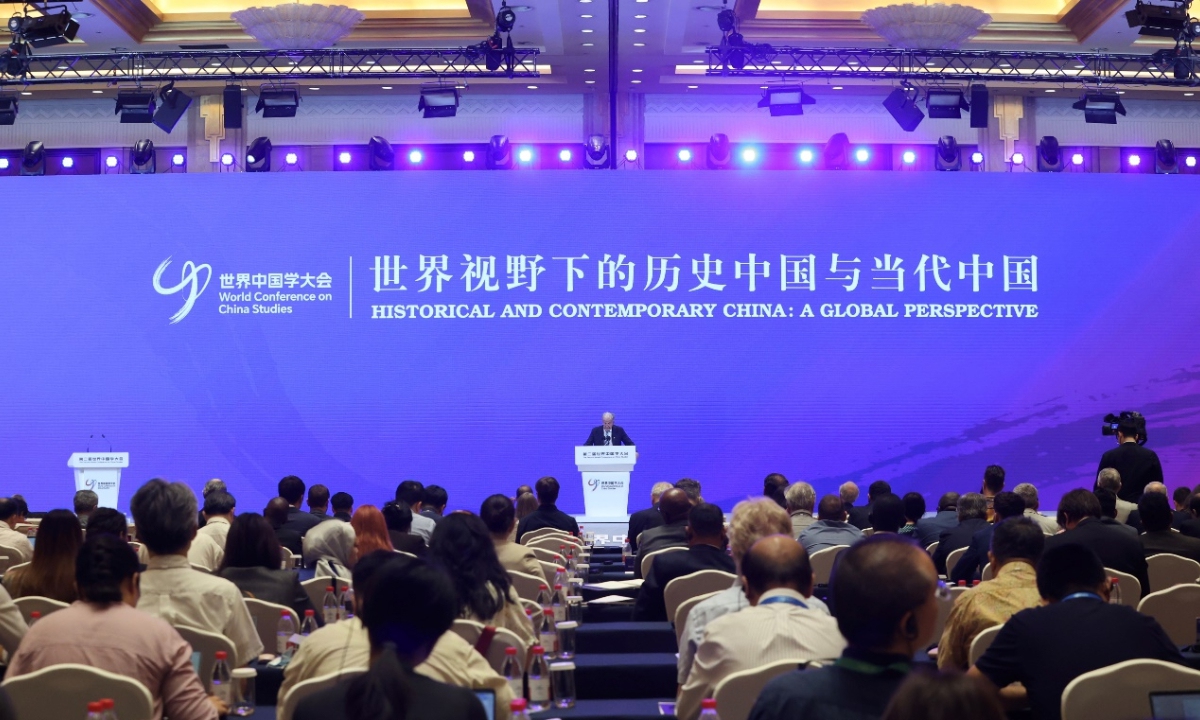
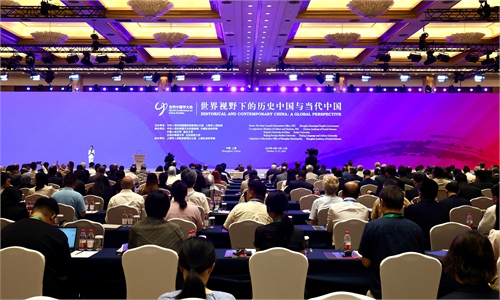
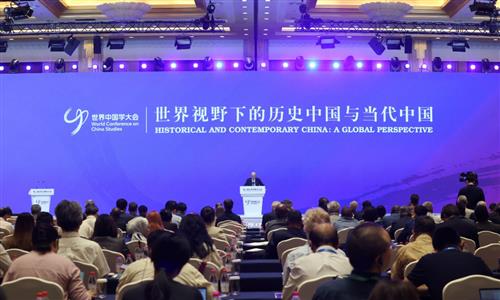
The second World Conference on China Studies kicked off in East China's Shanghai on Tuesday with the theme "Historical and Contemporary China: A Global Perspective."
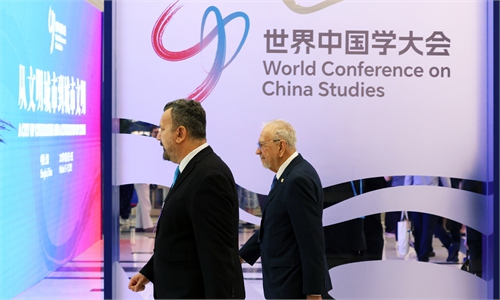
On October 14, the Second World Conference on China Studies opened in Shanghai. Under the theme "Historical and Contemporary China: A Global Perspective," the conference brought together around 500 guests from more than 50 countries and regions to discuss China's history, present, and future. At a time when economic globalization is facing headwinds and dialogue among civilizations is under strain, the international community's interest in China is growing stronger than ever, China's international influence, appeal, and power to shape are continuously growing - the world has never been more eager to understand China.
In 2023, President Xi Jinping sent a congratulatory letter to the World Conference on China Studies - Shanghai Forum, pointing out that "China Studies are not only the studies of historical China, but also the studies of contemporary China." This statement illustrates the significance of China Studies and provides vital guidance for promoting mutual learning among civilizations and advancing the global development of China Studies.
This year's conference includes a plenary forum and five parallel forums covering key dimensions of China Studies. From an academic perspective, the discussions bridge historical and contemporary China, reflecting an integrated civilizational vision and conveying to the world China's growing awareness and effort in building its own knowledge system in the new era.
The global rise of China Studies reflects that the world's demand for - and approach to - understanding China is undergoing profound changes. Traditional Sinology focused mainly on historical China, treating texts and ancient civilization as its central objects of study. China Studies, by contrast, expand the scope from "historical China" to "contemporary China," shifting the focus from "China of documents" to "China in practice," and from a view of China as the "other" to seeing China as a subject in its own right. Behind this transformation lies a historic shift in China's relationship with the world. Today, China is not merely an object of academic inquiry, but a path and method toward modernization. In a time of deep reconfiguration in the global order, China has become a "magnetically attractive country." The rise of China Studies shows that the world is rediscovering, understanding, and learning from China. The rediscovery and comprehension are no longer confined to an "Orientalist" gaze of the other, but grounded in equal-dialogue and mutual learning among civilizations.
Throughout history, every global power has needed to establish its own system of thought to guide its understanding of the external world. Looking back at world history, Western Europe, Russia, and the US all developed distinct knowledge systems and constructed their own subjectivities during their respective rises to prominence in the modern era. For example, American studies began to develop during World War II and matured in the 1960s, marked by the emergence of modernization theory. With modernization theory as its cornerstone, the US gained a theoretical framework for self-understanding and self-expression, upon which it built its own system of knowledge.
The civilizational subjectivity of China Studies lies in the fact that China's development cannot be adequately explained within the existing Western theoretical frameworks. To truly understand China, one must grasp the unique genes of Chinese civilization. Historian Arnold Toynbee once marveled that among more than 20 civilizations that have appeared in the 6,000 years of human history, only Chinese civilization has endured without interruption. Xi Jinping, general secretary of the Communist Party of China Central Committee, has profoundly summarized five outstanding characteristics of Chinese civilization - continuity, innovation, unity, inclusiveness, and peaceful nature. These interrelated qualities are the key to understanding China and the foundation of its cultural confidence. The practice of Chinese modernization demonstrates that modernization does not equate to Westernization; rather, civilizational diversity is the fundamental form of human development. Only by breaking free from the confines of a single narrative can one truly understand China's constructive role in shaping the world from a pluralistic perspective.
As a comprehensive field that transcends traditional Sinology and area-based China Studies, global China Studies carry the core mission of reconstructing the world's cognitive framework of China. This expansion of academic discipline bears strong contemporary relevance: under the Western-centered system of knowledge production, biased perceptions have long led to serious misunderstandings. For instance, the passage of the US' Chinese Exclusion Act in the 19th century was closely tied to distorted representations of China. Today, global China Studies, through interdisciplinary approaches and a global vision, provide the international community with an objective framework for understanding China and are gradually correcting the cognitive biases created by the old "hegemony-knowledge" structure.
As a living example of civilizational dialogue, the World Conference on China Studies itself vividly embodies the mutual learning and exchange among civilizations. Its ongoing success demonstrates China's determination to engage with the world with greater openness and confidence, and to participate in the construction of the global knowledge system. At this critical juncture in human development, the conference's spirit of openness and inclusiveness is especially valuable. Chinese modernization has created a new form of human civilization and is expanding the vast horizons of human progress with this fresh civilizational paradigm.
RELATED ARTICLES