US threatens to end cooking oil business with China over soybean purchases; expert says unreasonable threats will only harm US farmers

A soybean farmer inspects a soybean field ready for harvesting at his family's farms in Cordova, Maryland, the US, on October 10, 2025.
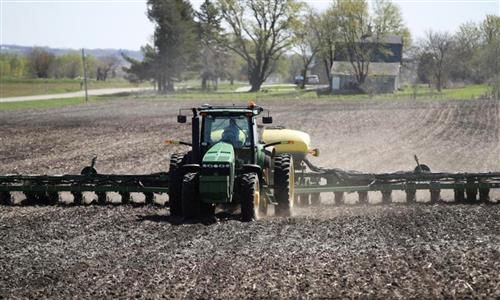
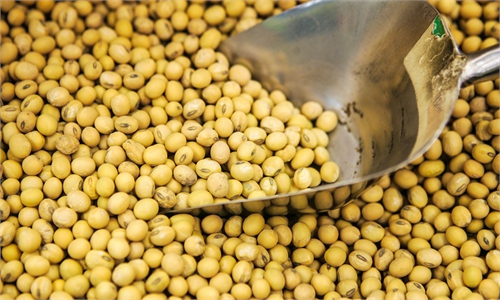
The US government is reportedly considering "terminating business with China having to do with Cooking Oil" in retaliation for China's action of not purchasing US soybeans, a move that could further escalate tensions in already fraught China-US trade relations. A Chinese expert said steep tariffs initiated by the US are to blame for the current state of bilateral relations, and that Washington's unreasonable restrictions and threats will not resolve problems but will only harm US farmers.
China is committing an "economically hostile act" by "purposefully not buying our Soybeans, and causing difficulty for our Soybean Farmers," the US president wrote in a Truth Social post, CNBC reported on Tuesday (US time).
Ending business with China in cooking oil and "other elements of trade" is possible forms of "retribution" that the US government may be weighing, he claimed, noting that "as an example, we can easily produce Cooking Oil ourselves, we don't need to purchase it from China," according to the US media report.
"Amid mounting domestic pressure, the US government keeps ratcheting up threats of trade restrictions against China. However, it is exactly the US government's such unreasonable measures, especially steep tariffs, that have caused losses on US farms," Li Yong, a senior research fellow at the China Association of International Trade, told the Global Times on Wednesday.
As for China's purchase of US soybeans, there is also market factor, Li said, noting that soybeans from countries like Brazil is cheaper with good quality and thus some Chinese importers tend to diversify import sources.
In August, the American Soybean Association urged the US government to secure a deal with China to reopen this vital market for US soybeans, stressing that US soybean farmers cannot survive a prolonged trade dispute with their largest customer, according to the association's website.
China has historically imported more than 60 percent of the world's soybean supplies, with the US once serving as its top source. But retaliatory tariffs now make US soybeans 20 percent more expensive than South American supplies, and China has turned to Brazil, which has expanded production to meet demand, according to the association.
On September 22, Li Chenggang, China's international trade representative with the Ministry of Commerce and vice minister of commerce, met with a delegation of political and business leaders from the US Midwest, exchanging views on China-US economic and trade relations and sub-national cooperation, according to a statement on the ministry's website.
The US Midwest is a key region for US agriculture and manufacturing and has close trade ties with China. The communication and interactions between the Chinese side and US political and business circles from the region reflects a broad willingness at the local level to engage in bilateral economic cooperation, Chinese analysts said.
As for the US government's threat to terminate used-cooking-oil business with China, Ma Wenfeng, a senior analyst at the Beijing Orient Agribusiness Consultancy, told the Global Times on Wednesday that the material, which is used to produce renewable diesel, is in high demand in other countries and regions as well, noting that China's exports of used cooking oil to Europe have increased in recent years.
While the US continues to target China with trade policies, China has been focused on managing its own affairs well, Chen Fengying, a research fellow at the Beijing-based China Institutes of Contemporary International Relations, told the Global Times on Wednesday, highlighting China's diversification of trade with other partners.
According to data released by the General Administration of Customs on Monday, China's goods trade with Belt and Road partner countries totaled 17.37 trillion yuan ($2.44 trillion) in the first three quarters, 6.2 percent higher than a year earlier. Trade with ASEAN, Latin America, Africa and Central Asia grew by 9.6 percent, 3.9 percent, 19.5 percent and 16.7 percent year on year, respectively, while trade with other economies in the Asia-Pacific Economic Cooperation increased by 2 percent.
Li noted that recent US restrictions and crackdowns against China and Chinese companies, including blacklisting more Chinese firms, imposing port fess on Chinese vessels and threatening to impose additional 100 percent tariffs, have undermined bilateral economic and trade cooperation.
"The US side cannot seek talks on one hand while threatening to introduce new restrictive measures on the other. This is not the right way to get along with China," a spokesperson for China's Ministry of Commerce said on Tuesday.
"China's position concerning tariff or trade wars has been consistent - if forced to fight, China will fight to the end, and for talks, the door is open," the spokesperson said.
China urges the US side to correct its wrongdoings as soon as possible, demonstrate sincerity in trade talks, work with China in the same direction, take the important consensuses reached by the two heads of state during their phone calls as guidance, safeguard hard-won consultation results, continue to leverage the China-US economic and trade consultation mechanism, address each other's concerns and properly manage differences through dialogue and consultation, and promote the healthy, stable and sustainable development of bilateral economic and trade relations, the spokesperson said.
RELATED ARTICLES