US' talking about dialogue while resorting to intimidation not 'the right way to deal with China', Chinese FM on US trade rep's tariff threat claims
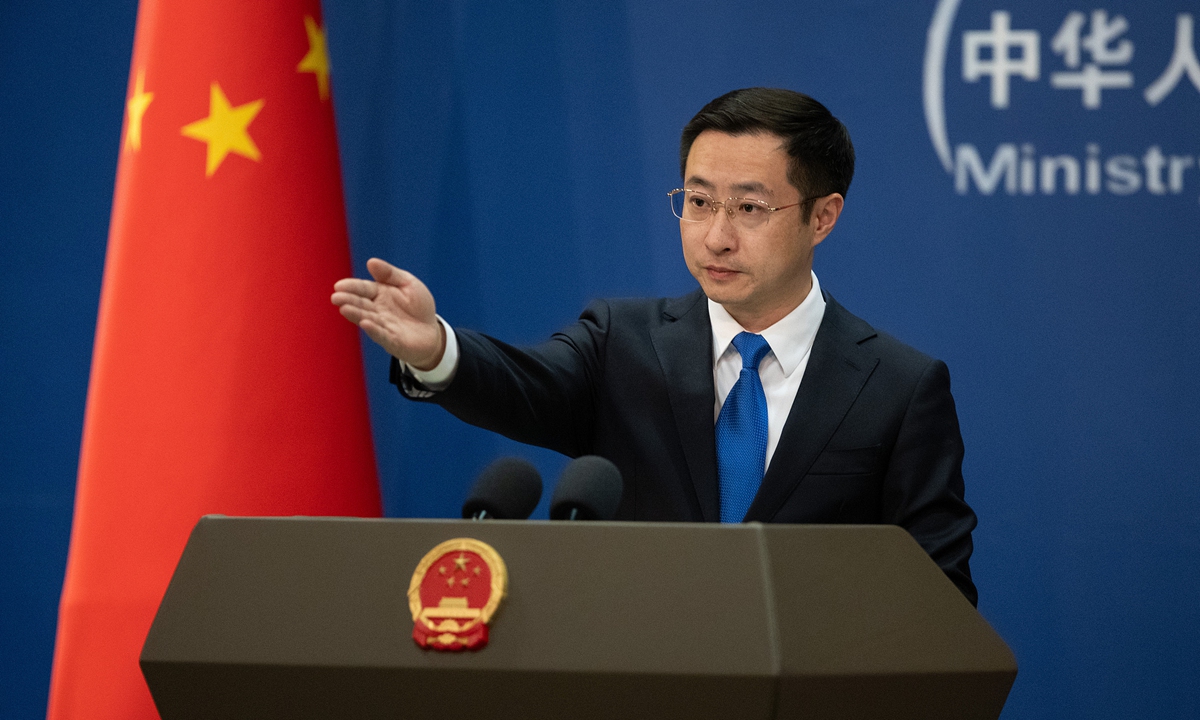
Photo: China's Foreign Ministry spokesperson Lin Jian
Chinese Foreign Ministry on Wednesday reiterated China's position on export controls of rare earths, and slammed the US side for talking about dialogue while simultaneously resorting to threats and intimidation, which it said is not the right way to deal with China, urging the US to correct its mistakes and resolve relevant issues through dialogue.
Spokesperson Lin Jian made the remarks at Wednesday's press conference in response to US Trade Representative Jamieson Greer's claims that it depended on China whether additional 100 percent tariffs on its exports to the US kick in on November 1 or sooner, and that Chinese officials made contradictory statements on latest rare-earth export restrictions.
Relevant Chinese authorities have already clarified the country's position on export controls of rare earths, Lin said, noting that China's implementation of such controls in accordance with the law aims at better safeguarding regional and global peace and stability, fulfilling non-proliferation and other international obligations, which is consistent with international practices.
"China's position has been consistent and crystal clear," Lin stressed.
"The US side talks about dialogue while simultaneously resorting to threats and intimidation, imposing high tariffs, and introducing new restrictive measures. This is not the right way to deal with China. We urge the US to promptly correct its mistakes and resolve relevant issues through dialogue and consultation on the basis of equality, mutual respect, and reciprocity," Lin added.
US Trade Representative Jamieson Greer told CNBC Tuesday local time that the US administration could still slap China with 100 percent tariffs on November 1 or sooner, "depending on China's next move in a dispute over rare earths."
He said accused Chinese officials of making contradictory statements during the Oct 13 meeting about the purpose of the restrictions, Reuters reported.
A Chinese expert slammed the US' double standards, saying that US should reflect on its own problems instead of indulging in baseless and malicious hype.
"The US' tariff threats are pure blackmail. They continues to cling to its habitual, misguided mindset - arrogantly blaming others for problems while refusing to make any adjustments itself," He Weiwen, a senior fellow at the Center for China and Globalization, told the Global Times on Wednesday.
In addition, US Treasury Secretary Scott Bessent has accused China of "trying to hurt the world's economy," Financial Times reported on Tuesday.
He Weiwen said that the US should reflect on its own problems instead of indulging in baseless, malicious hype.
A spokesperson from China's Ministry of Commerce said on Sunday that for a long time, the US has been overstretching the concept of national security, abusing export control, taking discriminatory actions against China, and imposing unilateral long-arm jurisdiction measures on various products including semiconductor equipment and chips. The US Commerce Control List (CCL) covers over 3,000 items, whereas China's Export Control List of Dual-use Items only covers about 900. The US has long imposed the "de minimis" rule for export controls, with a lowest threshold of 0 percent.
These measures of the US side have seriously harmed the legitimate and lawful rights and interests of companies, severely disrupted the international economic and trade order, and gravely undermined the security and stability of global industrial and supply chains, the spokesperson noted.
He Weiwen said that, by contrast, China's measures on rare earths target only military goods and products that could be diverted to defense industries or terrorist groups, aiming to safeguard national security and global peace. Normal trade in civilian products remains unaffected, in full compliance with WTO rules and open to international scrutiny.
RELATED ARTICLES