China's green, innovation-driven path forges greater global cooperation, shared prosperity, and stability in uncertain times
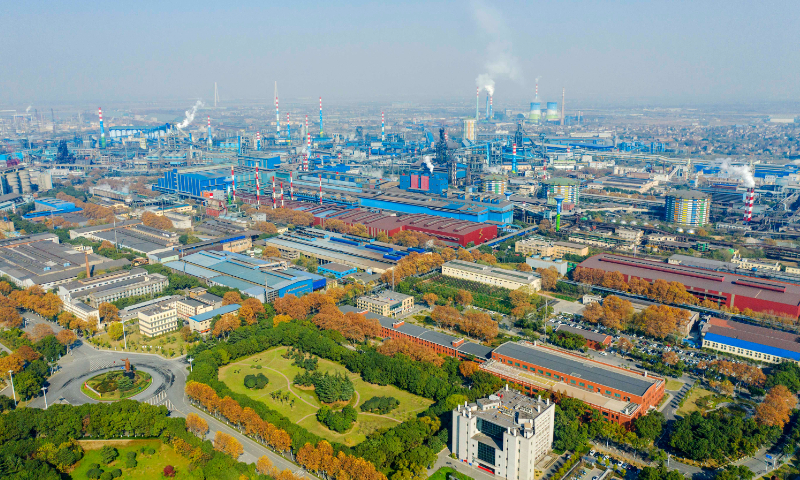
An aerial view of a green and intelligent steel mill of China Baowu Steel Group Corp in Wuhan, Central China's Hubei Province File photo: VCG
The guiding concepts integrated into China's development philosophy, featuring innovative, coordinated, green, open and shared development, clearly define the direction the country has followed since 2015 and, more decisively, since the concepts' inclusion in China's Constitution in 2018. The deepening of this strategy, emphasizing growth, technological advancement, and a balanced relationship between domestic and external markets, represents the natural evolution of the Chinese model.
Over the past years, especially the 14th Five-Year Plan (2021-25) period, China's economy stabilized, income distribution improved, and both urbanization and access to new technologies expanded at an unprecedented pace. What makes this trajectory particularly noteworthy is the country's commitment to green and sustainable development and shared prosperity with other countries. This orientation has opened new avenues for international cooperation, broadened expectations for sustainable growth, and reduced global uncertainty in these challenging times.
In line with this vision, China's recently adopted 15th Five-Year Plan (2026-30) called to fully and faithfully apply the new development philosophy on all fronts, urging greater self-reliance and strength in science and technology and pledging to accelerate the green transition in all areas of economic and social development. Over the past decade, China has become a global leader in renewable energy investment, electric mobility, and green technology innovation, setting an example for developing countries seeking to balance growth and sustainability.
This commitment underscores the broader hallmark of China's rise: rapid and profound technological development on the global stage. In a relatively short period, the country has achieved a quantum leap in competitiveness, supported by robust infrastructure, vast economies of scale, a diversified manufacturing base, relentless innovation driven by productivity, and well-defined economic policies. Competition, especially with the US, has also served as a powerful catalyst.
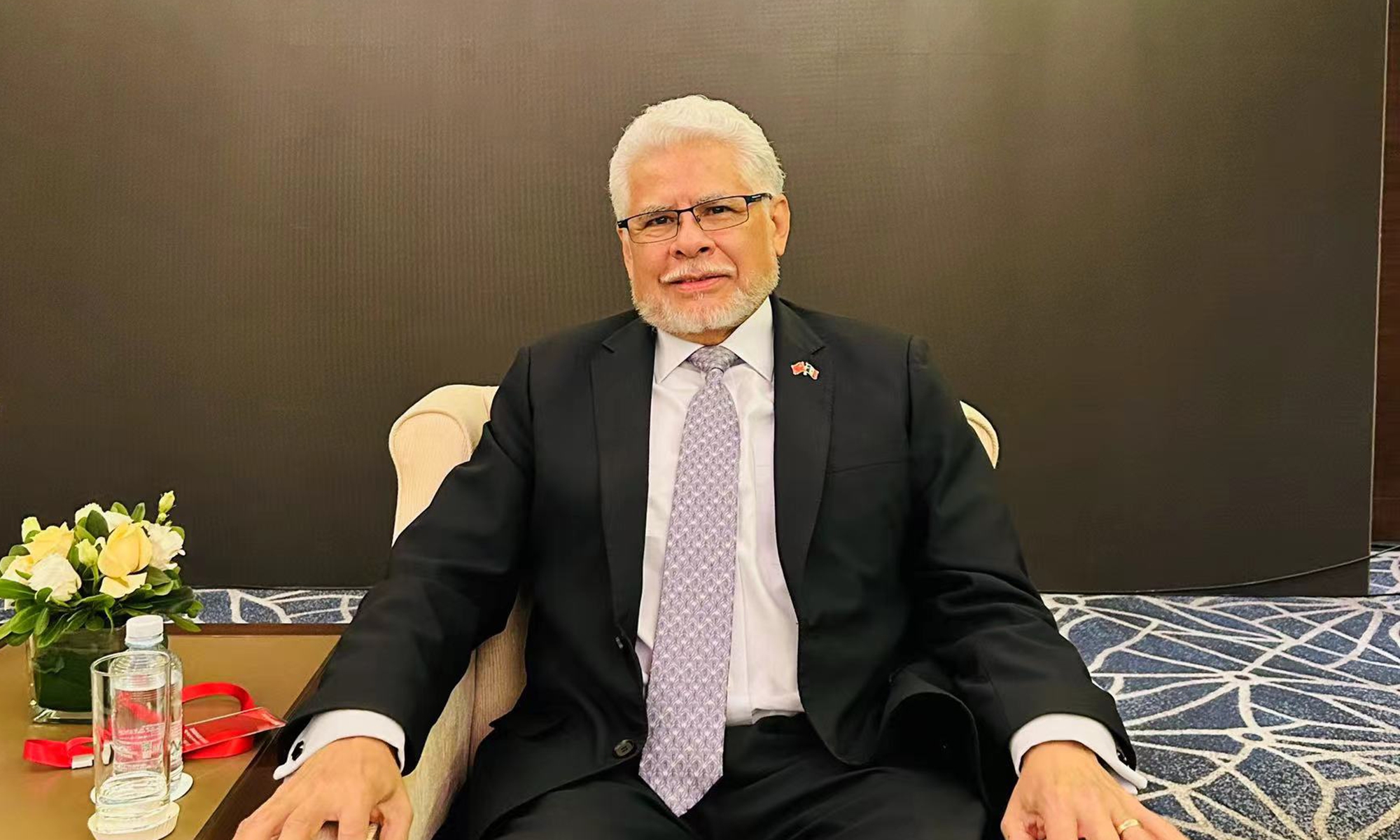
Jose Luis Bernal Photo: Courtesy of Bernal
Bilateral ties such as those between Mexico and China offer concrete examples of constructive engagement. Over the past 25 years, both sides have worked steadily to deepen their bilateral relationship, which was elevated to a comprehensive strategic partnership in 2013. Significant progress has been achieved in political dialogue, high-level visits, sectoral cooperation, trade, investment, and social and cultural exchanges. Today, China is Mexico's second-largest trading partner, with bilateral trade surpassing $130 billion last year, up 12.46 percent year-on-year.
These figures reflect strong production linkages between both economies, driven by Mexico's strategic location, competitive advantages, and the ongoing global realignment of supply chains. Key sectors include textiles, electronics, auto parts, mining, aerospace, pharmaceuticals, and new technologies. Among the highlights, new-energy vehicle manufacturing, green energy generation, alongside mineral mining and refining, stand out as the most promising areas for bilateral cooperation.
For both countries, it is essential to safeguard these achievements and identify new ways to sustain and expand the mutual benefits of cooperation, especially as global economic and technological transformations accelerate. In this new era of intensified competition and fragmentation, sustainable growth and shared prosperity can only be achieved through expanding markets, sharing opportunities, deepening cooperation, and forging new forms of strategic alliances.
This process is already visible in the broader relations between China and Latin America. Although the China-proposed Belt and Road Initiative (BRI) did not originally include the region, over 20 Latin American and Caribbean countries have since joined the framework. Trade between China and Latin America has grown about 34 times in two decades - from $15 billion in 2001 to nearly $520 billion in 2024. Chinese investment in the region has reached $270 billion by the first quarter of 2025, primarily in infrastructure, energy, and primary industries, supported by official financing.
Two factors explain these trends: Latin America's strategic resources and economic reforms seeking diversified partnerships, as well as the strong complementarity between China's industrial strengths and Latin America's development needs. Together, these foundations point to a long-term partnership based on mutual benefits.
Reinforcing this momentum, China's 15th Five-Year Plan pledges to open China wider and pursue high-quality Belt and Road cooperation, paving the way for fostering greater collaboration with the BRI partner countries, including those in Latin America, on green development, sustainability, and innovative technologies.
Since its inception twelve years ago, the Belt and Road Initiative has catalyzed growth across the Global South, with more than 150 countries now participating. Combined with China's active role in global governance - through the RCEP, BRICS+, the Forum on China-Africa Cooperation, and new financial institutions - these efforts have positioned China as an increasingly central actor in global development.
Today, the question of whether to pursue integration or decoupling has become existential for many countries amid securitized economic relations and shifting geopolitical alignments. To expand opportunities in the Mexico-China relationship, it is crucial to maintain a high-level political dialogue, update the institutional framework, explore new opportunities while avoiding conflict-prone sectors, and strengthen cooperation in trade, investment, education, culture, and tourism.
Given the deep interdependence of the world economy, it is also vital to recognize the many linkages connecting Mexico, China, the US, and Canada - linkages that can generate shared and sustained benefits. The challenge lies in fostering a shared understanding that ensures mutual gains and in implementing concrete joint actions on trade, environmental protection, and investment.
The time has come to develop new forms of communication that preserve what has already been achieved and open the door to a new era of understanding and cooperation. It may not be easy, but it is possible and necessary.
The author is a former ambassador of Mexico to China, member of the Mexican Council on Foreign Relations and of Diplomats Without Borders.
RELATED ARTICLES