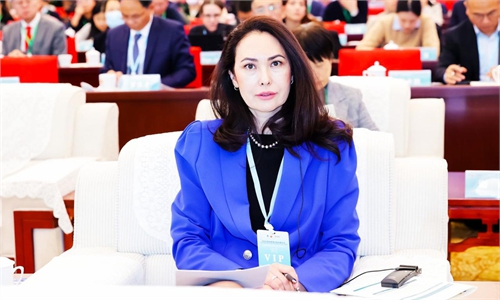
‘The eight-rules decision is a necessary yardstick for parties worldwide to draw vital lessons from’
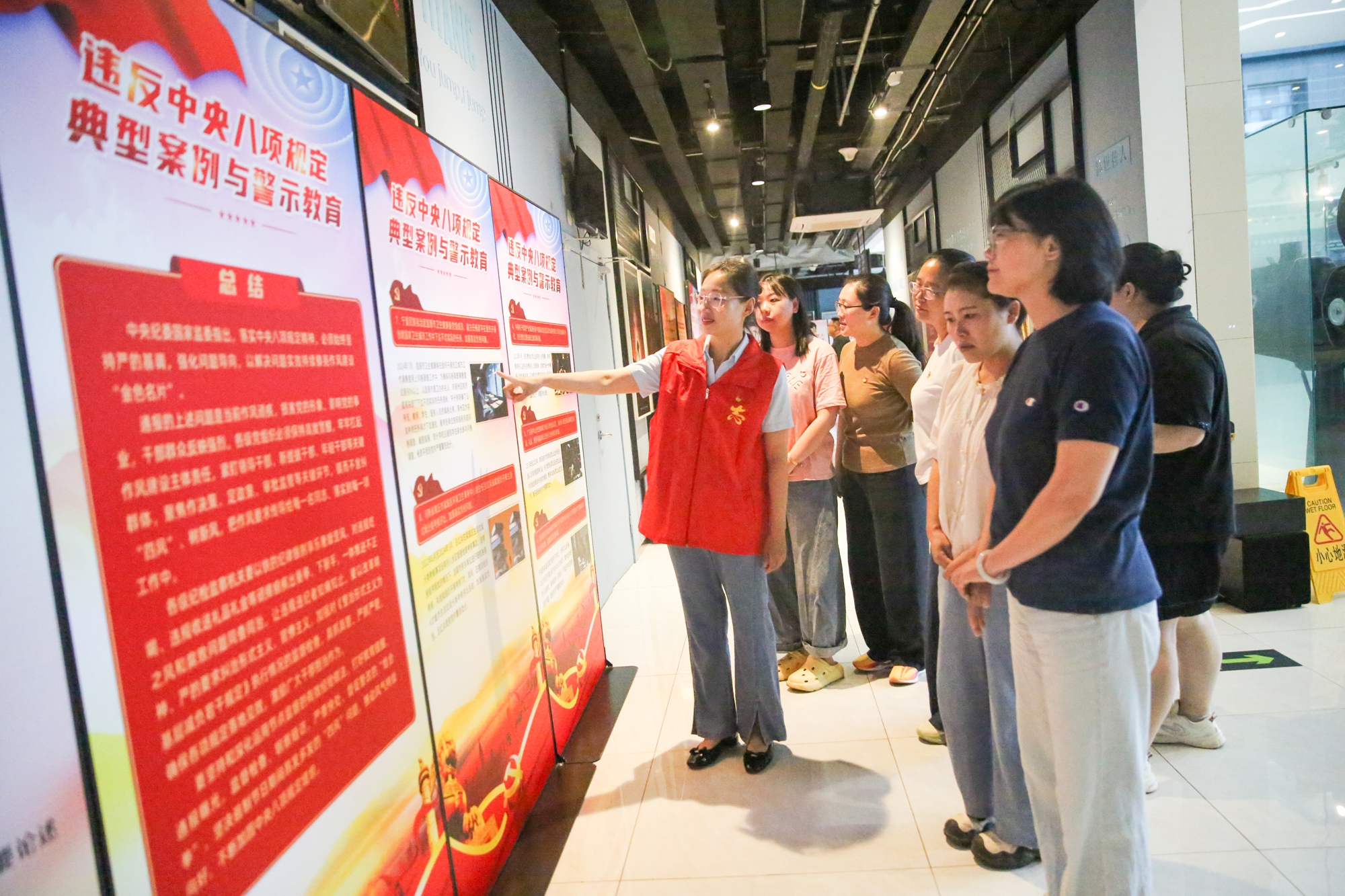
CPC members learn about the eight-rules decision in Nantong, East China's Jiangsu Province on August 5, 2025. Photo: VCG
Editor's Note:Since its introduction in 2012, the eight-rules decision has not only become a "golden hallmark" of the efforts of the Communist Party of China (CPC) to improve Party conduct in the new era, but it has also served as a mobilization order for Party members to uphold credibility with concrete actions, stay clean and dedicated in their work, and create new achievements. The Global Times invites experts and scholars from around the world to discuss the efficacy, global significance of the eight-rules decision and the examples it sets for ruling parties in other countries, especially those in the Global South. In the second article of the series, Global Times (GT) reporter Liu Xuandi interviewed Tichaona Zindoga (Zindoga), founder and director of the think tank Ruzivo Media and Resource Center in Zimbabwe. Zindoga shared his insights on the global implications of the eight-rules decision from the perspective of an African observer.
GT: In 2012, the eight-rules decision was introduced, marking the beginning of the CPC's decade-long commitment and persistent efforts to improving its work conduct. Which key terms or concepts from the CPC's past decade of work conduct reform have left a strong impression on you?
Zindoga: What has deeply impressed me is the comprehensive focus of the eight-rules decision on improving the work style, conduct and attitude of the CPC's officials by enforcing strict guidelines to bring the Party closer to the people and build trust. The decision also cements China's global leadership in fighting corruption - specifically targeting officials' abuse of privileges. It discourages hedonism and extravagant practices manifested in lavish parties, receptions and ceremonies as well as gifts. Furthermore, it curbs the abuse of official vehicles that is both ostentatious and disruptive to the daily lives of the people, thereby preventing the erosion of connection with the public. From an organizational perspective, the decision's drive to cut bureaucratism, formalism and excessive paperwork is a wonderful initiative that has not only had tangible outcomes such as the reduction of waiting times at government service centers, but has also changed rigidity in work style.
GT: The eight-rules decision is not merely a document. It has been translated into concrete actions. According to the CPC Central Commission for Discipline Inspection, by September 2025, the monthly data reports on violations of the decision had been published for 144 consecutive months. In your view, what qualities does such determination demonstrate in the CPC?
Zindoga: The CPC has demonstrated immense pragmatism that stems from its scientific approach to governance. A key attribute of the CPC is its capacity to self-reflect and self-correction, which is the basis of its policies and actions. The fact that the implementation of the eight-rules decision has been followed through with reports and actions - including the investigation and punishment of "Four Malfeasances" cases - demonstrates the CPC's careful, methodical and well-structured approach to governance. The decision is intended to cure deep-seated organizational and societal problems, not to serve as a convenient scapegoat for punishing a few individuals. It further demonstrates the CPC's determination to uproot evils and foster a healthy bureaucracy within the Party.
GT: Western political parties once questioned the CPC's capacity to maintain long-term vitality through self-renewal. However, the CPC has broken the historical cycle of rise and fall and maintained enduring vitality for over a century. How does the CPC's approach to governance differ from Western political party models, and what are its advantages?
Zindoga: What stands out is how the CPC, under successive leaderships, has continuously reflected on the successes and failures in terms of policies and ideological interpretation. This self-evaluation has allowed the CPC to self-correct, readjust and refine its trajectory. It is anchored in political party stability, which has translated into national stability, enabling the Party to achieve sustained milestones and progress. The adoption of the concept of "socialism with Chinese characteristics" has been a key ingredient in the Party's vitality from the start, grounded in the recognition of the primacy of local condition and emphasis on "seeking truth from facts." The CPC's approach to governance has not suffered disruption, in contrast to the frequent disturbances seen in many Western systems.
GT: You once wrote that "the issues identified and addressed by the CPC are universal, reflecting broader challenges in governance." Could you elaborate on what kind of universal challenges the CPC aims to address through the eight-rules decision? Could the CPC's experience provide insights for political party reform in other countries, especially for nations in the Global South?
Zindoga: The Global South countries, especially in Africa, look to the CPC for inspiration because of historical and ideological ties. Zimbabwe's ruling ZANU-PF party, for example, enjoys close fraternal bonds with the CPC and is modeled along similar lines organizationally and structurally. Some of the challenges identified and solved by the eight-rules decision exist today: bureaucratism, formalism, corruption, waste, hedonism, lavish parties, excessive paperwork, elaborate ceremonies, and long meetings. Therefore, the eight-rules decision is a necessary yardstick for parties worldwide to draw vital lessons from, which could even be extrapolated to Western parties. This reflects the power and universality of the Chinese approach. If countries in the Global South need to develop, they should take a leaf out of China's book, which encourages these countries to seek their own modernization paths suited to local conditions.
GT: As you see it, what are the reasons behind the widespread international recognition of the governance model championed by the CPC?
Zindoga: China's governance has become a reference point for many countries principally because it has demonstrated that a country can achieve success without following Western models. China's governance model affirms the relevance and efficacy of the CPC's approach to socialism whose main base - in my view - lies in recognizing local conditions. The CPC has been a pragmatic and studious organization, and its success is attributable to putting the people first.
GT: What is the significance of strengthening ideological and civilizational exchanges among political parties in the Global South? Looking back at the exchanges between China and Africa in recent years, do you believe this has brought new insights to African political parties and national governance?
Zindoga: The idea of mutual learning between Chinese and African civilizations has been long overdue. Therefore, it is a welcome development that the 2024 Forum on China-Africa Cooperation named the partnership initiative for mutual learning between civilizations as one of 10 partnership actions. Moreover, the Global Civilization Initiative advocates for cooperation rather than a "clash of civilizations," which the West has held as natural and inevitable. It is imperative that political parties, academic institutions, media and think tanks between Africa and China learn from each other. The learning should be two-way to foster understanding as the basis of cooperation, respect and progress. At the same time, the capacity of African think tanks needs to be enhanced and supported so that they can work more effectively in an environment where resources are scarce.
RELATED ARTICLES