A peek into the world's only 'panda retirement home'
Pandas lovingly cared for as they age
By Published: Nov 06, 2025 06:02 PM

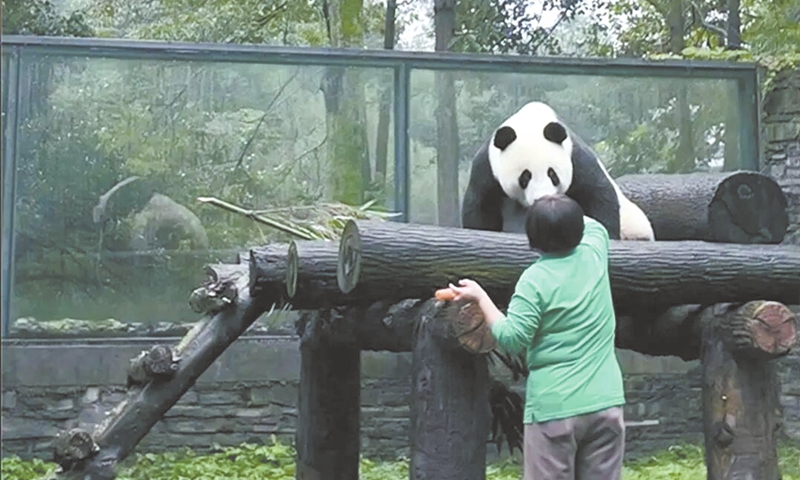
Bai Yun, a 34-year-old giant panda who lived in the US for 23 years, enjoys a meal after returning with honor to her homeland at the "panda retirement home." Photo: CCRCGP
A retirement home isn't just for humans anymore. In China, aging pandas now have a home of their own - the world's first and only "panda retirement home."
A winding bamboo grove leading to the wellness area gives visitors the sense that time itself has slowed down.
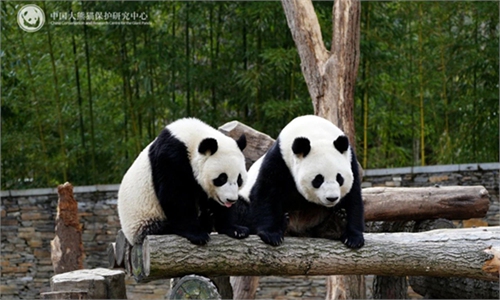
At the Dujiangyan base of the China Conservation and Research Center for Giant Panda (CCRCGP), 10 elderly giant pandas live with an average age of nearly 30 - roughly 100 in human years.
Time has left its mark on them: Some have whitening fur around their characteristic black eye patches; others have worn-down teeth that can no longer bite through bamboo shoots; and still others have looser muscles and are growing thinner. Many suffer, to varying degrees, from age-related ailments such as high blood pressure and cataracts. Yet, they calmly extend their furry paws for routine procedures like blood draws and blood pressure checks. At this unique facility, they are lovingly cared for as they grow old.
Each panda follows a carefully tailored meal plan: Some have their medicine tucked inside steamed corn buns; others, who turn up their noses at the buns, are coaxed with extra bowls of milk; and there are those who receive a dose of vitamins stirred into their daily drink. Behind every routine lies weeks of quiet experimentation, patient observation and painstaking care, the center told the Global Times.
Xu Yalin, who works for the retirement home, has cared for the pandas for 29 years. She has looked after giant pandas at every stage of life - from newborn cubs to today's panda "grandpas and grandmas." She says her life has intertwined with theirs. "I guess I'm growing old with the pandas," she says with a smile. "Seeing them eat well and sleep soundly - that's what makes me happiest."
The keepers' attentive, all-encompassing care
Everyone working in the panda retirement home can list the quirks and habits of each resident.
Giant panda Qiao Yuan, 33, is the only one in the home who refuses to eat steamed corn buns. She prefers a bowl of milk in the summer and a special bowl of congee in the winter.
Hai Zi, 31, once lived in the wild and holds the record as the oldest known panda mother. Now affectionately called "Grandma Hai," she has a sensitive stomach and weak teeth, so her bamboo must be peeled for her every day.
Ying Ping, 29, doesn't have much of an appetite and dislikes bamboo leaves and stalks. After some trial and error, her keepers found a solution - they finely chop the leaves and mix them with carrots and apples.
Some of the pandas have worn-down teeth and can only eat bamboo leaves; others eat bamboo shoots with the husks removed, or only the tender tops.
Unlike the slow, leisurely pace of their panda "grandpas and grandmas," a keeper's day is packed from dawn to dusk, with four feedings, administering medicine and daily checkups. Although the enclosures are only about a hundred meters apart, keeper Xu Yalin says she still walks nearly 20,000 steps each day.
"'Elderly panda' is a category defined by humans," Deng Linhua, a veterinarian at the China Conservation and Research Center for the Giant Panda, explained to the Global Times. "Generally, pandas over 20 years old are considered elderly, but that doesn't mean every panda moves into the wellness area at that age. It really depends on their individual health condition and whether they need more intensive, specialized care," Deng said.
"When a panda doesn't feel well, it'll start to whimper softly," said keeper Xu Yalin, adding that "it's just like when an elderly person gets sick - no energy, a tired expression. That's when we call the vet for a full check-up."
Beyond careful daily observation, data recording is equally crucial. In the panda's retirement home, keepers record each panda's weight and bowel movements daily, and measure blood pressure twice a week, according to the center.
Most residents here suffer, to varying degrees, from age-related conditions such as hypertension and cataracts, along with individual ailments.
Administering medicine to creatures with such an acute sense of smell is no small feat.
Xu and her colleagues have experimented tirelessly to find ways to disguise the taste. Some pills are hidden inside carrots, others in steamed corn buns coated with honey and a few are mixed into chopped apples. Each panda requires its own formula - and the only method that works is patience: try, observe, adjust, repeat.
"Our first task every morning is to wake each panda up and prepare its medicine," Xu said. "Only after confirming that they're all doing well can we say our day has truly begun."
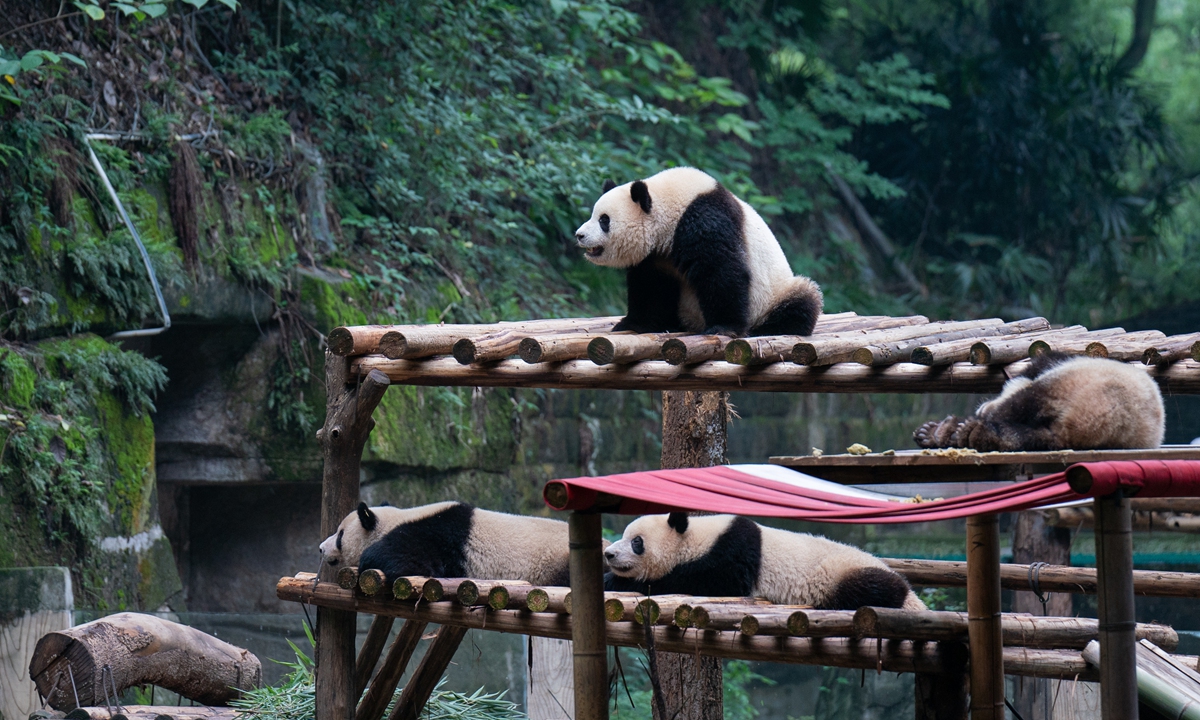
Giant pandas take a rest at a zoo in Southwest China's Chongqing. Photo: VCG
Write the story of time
In August 2023, 31-year-old Ying Ying passed away despite the team's best efforts. Keeper Wang Yanfang was by her side until the very end. "Of course, it was heartbreaking," she said softly. "But Ying Ying was one of the rare long-lived pandas. She was rescued from the wild and lived peacefully in captivity. Her genes live on - and so does her story."
Veterinarian Deng Linhua, who has spent two decades treating pandas, said "every keeper and vet feels emotional ups and downs when a panda passes. But over time, professionalism takes over. It's a mix of deep regret and renewed determination."
He told the Global Times that as panda care and disease prevention improve, pandas are living longer - but that also brings new medical challenges. "With longer lifespans come more complex illnesses. That's our next frontier. Only through deeper research and better medical care can we reduce their suffering and help them live healthier lives," Deng said.
For Xu and her team, the quiet joy of their work often comes in small moments - a panda's appetite returning, a health indicator rising back to normal. They take turns on 24-hour shifts, watching sick pandas through the night.
Then, when winter arrives and the sun spills gently over the bamboo groves, the elderly pandas climb their wooden platforms, stretch their paws and hum contentedly in the warm light. "That's when we feel the happiest," Xu said. "Every moment with them is a blessing. We're writing the story of time together."
RELATED ARTICLES