Respiratory infections surge among children as flu intensifies, rhinovirus circulates in China
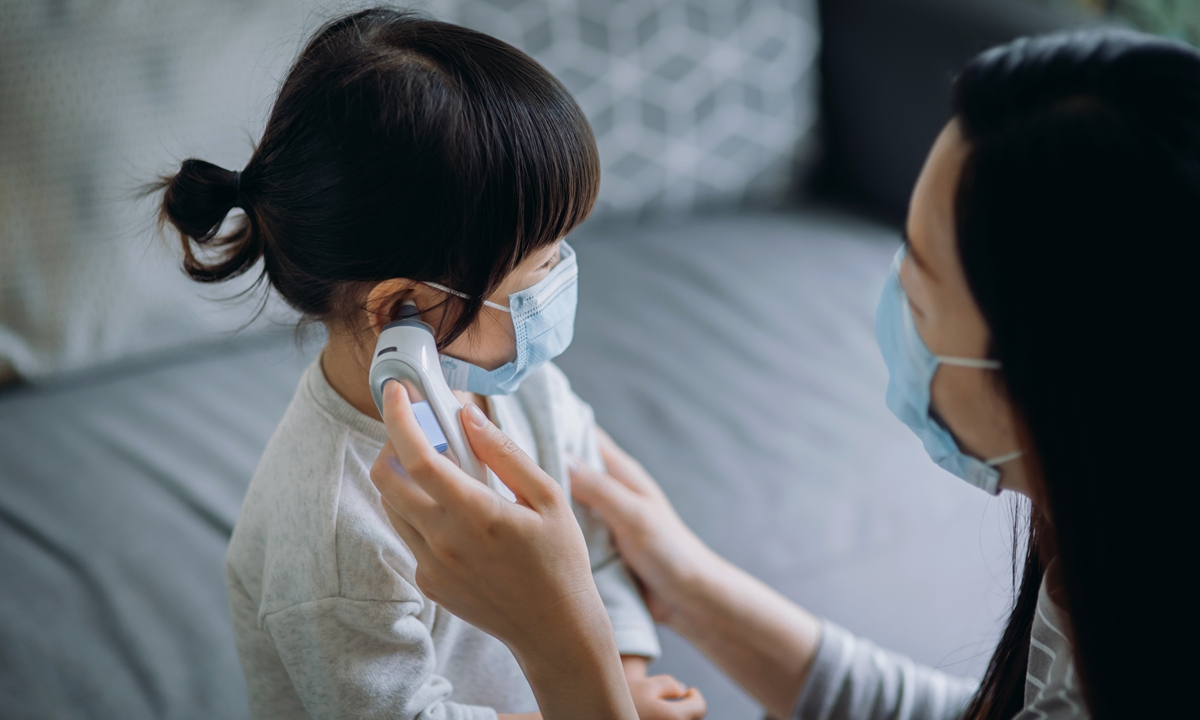
A mother checks her sick daughter's temperature with an electronic thermometer. Photo: VCG
Hospitals across China are reporting a significant increase in respiratory cases among children, coinciding with the autumn-winter peak season for such illnesses.
Recent national sentinel surveillance data from the Chinese Center for Disease Control and Prevention (China CDC) indicates that influenza is now the predominant pathogen, detected in 17.5 percent of positive respiratory samples from patients with influenza-like illness, while human rhinovirus is also circulating at high levels, the Guangming Daily reported on Sunday.
According to the report, human rhinovirus (HRV), a single-stranded RNA virus, is a leading cause of the common cold. It is responsible for 30 percent to 50 percent of acute upper respiratory infections in children. HRV circulates year-round, spreading via respiratory droplets and contact with contaminated surfaces. While anyone can be infected, children under three are especially vulnerable.
Although respiratory viruses share common symptoms like fever, cough, and runny nose, they have distinct characteristics.
Gong Pihua, deputy chief physician of the department of pulmonary and critical care medicine at Peking University People's Hospital, told the Guangming Daily that influenza often involves more severe systemic symptoms, while rhinovirus typically presents as a mild cold with prominent nasal congestion and sneezing.
While HRV usually causes a self-limiting cold in adults, resolving within 7-10 days, it poses greater risks to infants, the elderly, and immunocompromised individuals. Potential complications include bronchitis, pneumonia, exacerbations of chronic lung diseases, and secondary infections like sinusitis or otitis media. Children may experience more severe symptoms, sometimes accompanied by vomiting or diarrhea, Guangming Daily reported.
Global Times
RELATED ARTICLES