China maintains moderately loose monetary policy to keep liquidity ample: PBOC Q3 report
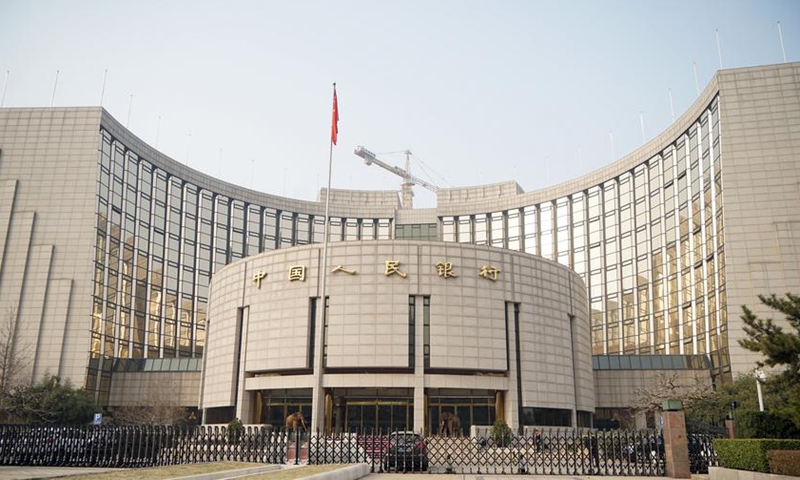
The picture shows a view of the People's Bank of China. (Photo: Xinhua)
China's central bank released its monetary policy report for the third quarter of 2025 on Tuesday, saying it adopted a moderately loose monetary policy and maintained ample liquidity.
The report noted that China's economy has continued to make steady progress this year despite pressure, with high-quality development delivering solid outcomes and major indicators remaining broadly stable, underscoring the economy's strong resilience and vitality. GDP grew 5.2 percent year-on-year in the first three quarters.
According to the report, the People's Bank of China (PBOC) maintained a moderately loose monetary policy and ample liquidity, using a mix of quantitative, price-based and structural tools to create a supportive monetary and financial environment for the economy's continued recovery and the stable operation of financial markets.
The report says the central bank will guide reasonable growth in money and credit, using open-market operations, the medium-term lending facility and re-lending and rediscount tools to keep liquidity ample while ensuring that financial institutions meet the effective financing needs of the real economy and improve the efficiency of capital allocation. It will also work to lower overall financing costs by strengthening the market-based interest-rate framework, enhancing policy transmission and encouraging deposit and lending rates to move lower.
The report notes that credit structure will be further optimized, with effective use of the 500-billion-yuan ($69.4 billion) re-lending facility for consumption and elderly care services and the newly added quota for sci-tech innovation and technological upgrading, alongside risk-sharing tools for sci-tech bonds, to support consumption recovery, innovation and other key areas of domestic demand.
The central bank will also maintain the basic stability of the renminbi, giving full play to the market's decisive role in exchange-rate formation while using a mix of measures to stabilize expectations under complex conditions.
According to the report, China will continue to strengthen financial risk prevention, address risks in key areas in an orderly manner and improve mechanisms for monitoring and early warning.
The report said the effects of countercyclical monetary policy adjustments are becoming increasingly evident.
It noted that financial aggregates continued to grow at a reasonable pace, with the outstanding stock of total social financing and M2 rising 8.7 percent and 8.4 percent year-on-year at the end of September, and renminbi loans reaching 270.4 trillion yuan. Borrowing costs remained low, with average rates on newly issued corporate loans and mortgages down by about 40 and 25 basis points year-on-year in September. The credit structure improved, and the renminbi stayed broadly stable at a reasonable and balanced level, with the yuan central parity rate appreciating 1.2 percent against the US dollar from the end of last year.
The report also outlined the monetary policy priorities for the coming period.
The report said the PBOC will continue to maintain a moderately loose monetary policy, using a mix of tools to keep liquidity ample and ensure that credit and money supply growth stay in line with economic and price objectives. It will improve the monetary policy framework and strengthen policy transmission, giving more weight to supporting a reasonable pickup in prices.
The central bank will refine the interest-rate mechanism, enhance policy rate guidance, strengthen execution and oversight, lower banks' funding costs and help bring down overall financing costs. It will also make fuller use of both aggregate and structural tools to boost innovation, consumption, small businesses and foreign trade.
The report said China will keep the yuan broadly stable at a reasonable and balanced level under a managed floating regime, guide expectations and guard against excessive fluctuations, while further enhancing macroprudential and financial-stability capabilities.
Global Times
RELATED ARTICLES