Notion of civilization central tenet of international ties
By Published: Nov 13, 2025 09:42 PM

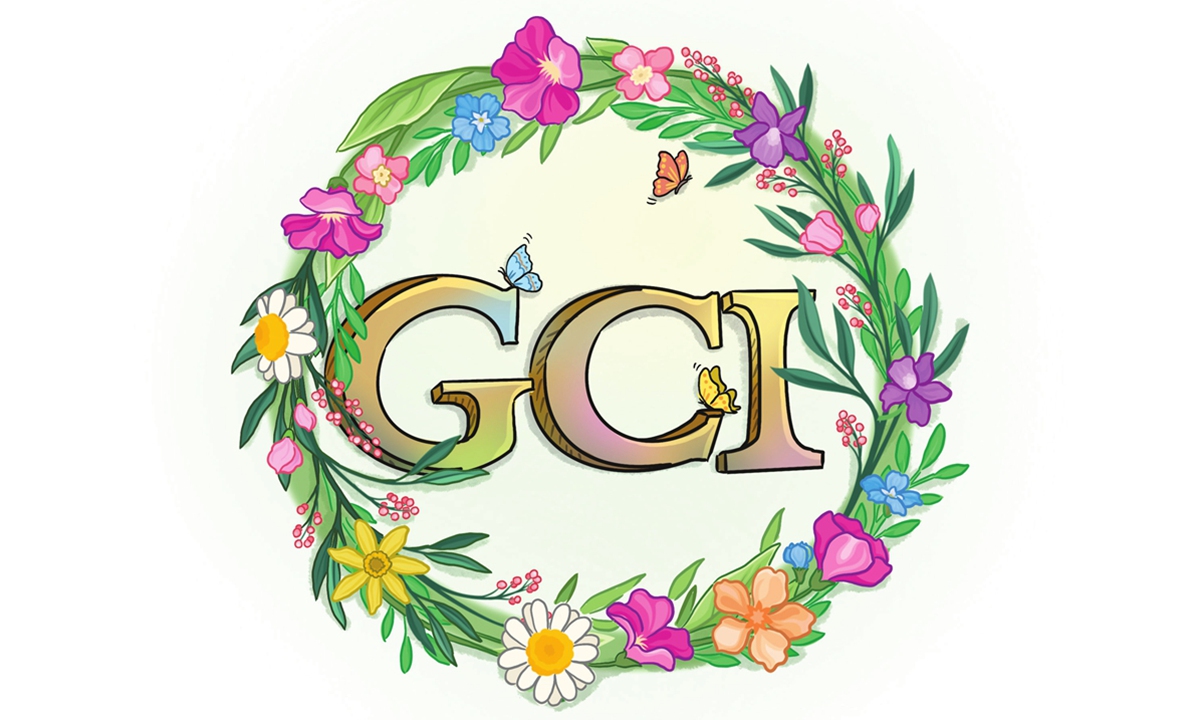
Illustration: Xia Qing/Global Times
Ever since the Peace of Westphalia in 1648, the international order has been based on the nation-state. It was a European invention that spread across the world as a result of European expansion. The post-1945 US-dominated order is the latest and most advanced iteration. Until the post-1945 period, much of the world was colonized and did not qualify as nation-states, and was therefore excluded from the international system. Most of the Global South fell into this category. Until the late 19th century, China, as a civilization-state, stood outside the nation-state system. However, as it grew steadily weaker, it finally submitted and began to acquire some features of a nation-state, though it was to remain very distinct from other nation-states.
China is a hybrid, part nation-state and part civilization-state, the latter continuing to be its primary identity, as reflected in its governance, society and culture. In international affairs, it has acted mainly as a nation-state. But in the last decade or so, China's initiatives, notably Belt and Road Initiative (BRI) and the four global initiatives, have broken new ground and belong, I would argue, more to its civilizational tradition.
China is increasingly assuming the mantle of global leader - the biggest contributor to global economic growth, the de facto leader of the developing world, the unrivaled leader in green technology and the green transition, and rapidly emerging as the global leader in technology.
The rise of China and the Global South are already serving to change the nature of the international system. To put it another way, the features of a new world order are already visible and present in the declining old one.
A crucial feature of China's new institutions is that they are for, in partnership with, and on behalf of the Global South. They seek to create new kinds of relationship between China and the developing countries, and between the developing countries. For example, the BRI fosters new bilateral relationships with China but also at the same time enables new forms of regional cooperation. If we want to imagine new forms of governance in the future - national, bilateral, multilateral and regional - the BRI provides the most fertile soil, because it is constituted on the basis of the relationship between China and the Global South, which is the core relationship of the future.
It should be emphasized that we are now moving away from the template of the post-1945 international system. Its subject was the developed countries, in the first instance the classic nation-states of North America and Western Europe. The newly liberated states, of course, themselves became nation-states, but that was because there was nothing else on offer from their colonizers. The European nation-state was always an ill-fit because these societies bore no resemblance to those of their colonial masters. There was only one dish on the menu. The West believed in homogeneity not diversity. The situation is very different now. With China's rise, and its growing relationship with the countries of the Global South, there are new options. The Chinese approach is pluralistic, not singular. There are a range of dishes on the menu.
Nowhere is this clearer than in China's Global Civilization Initiative. China is deeply wedded to the idea of civilizations, and the diversity of civilizations. It is exactly this diversity which was crushed by the colonizing powers. As the developing countries grow and become increasingly prosperous, they have shown an increasing desire to retrieve and embrace their civilizational roots. The latter are fundamental to their sense of identity. China, as a civilization-state, understands this. We can see here the emergence of a new nexus, between China as a civilization-state and the countries of the Global South seeking to rediscover and give expression to their civilizational legacy. This is a dialogue that is incomprehensible to Western countries, which destroyed so many of these civilizations - in North America, Latin America, Australia, Africa and Asia - and to this day largely refrain from using the term. The word civilization is confined to Greek and Roman civilization, and the term Western civilization.
What is the wider meaning of this? The development of China is already in the process of progressively changing the nature of the international system. As the West declines, the foundational importance of the nation-state will decline. The emergent international system, rooted in China and the Global South, home to over 80 percent of the global population, will have a much broader and more diverse conception of international relations. The notion of civilization and civilizational inheritance, shared by China and the Global South, including crucially by India, will be one of the central tenets of international relations in a new and evolving global order.
The author is a visiting professor at the Institute of Modern International Relations at Tsinghua University and a senior fellow at the China Institute, Fudan University. Follow him on X @martjacques. opinion@globaltimes.com.cn
RELATED ARTICLES