Japanese PM's dangerous, far right-wing rhetoric is playing with fire: Bei Pingfeng
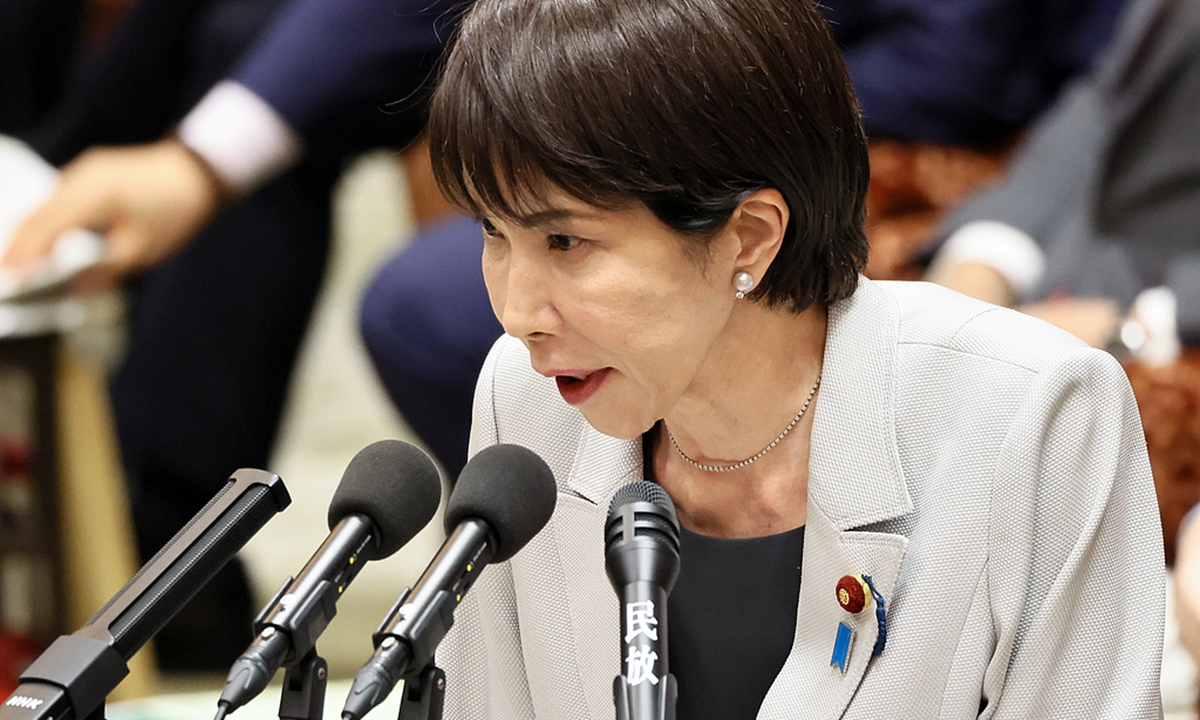
Japanese Prime Minister Sanae Takaichi attends the House of Representatives Budget Committee and responds to questions at the Diet building in Tokyo on November 10, 2025. Photo: VCG
Last week, Japanese Prime Minister Sanae Takaichi claimed in the Diet that a use of force by the Chinese mainland against Taiwan could constitute a "survival-threatening situation" for Japan. This term refers to a situation where Japan could exercise the right of collective self-defense. Following Takaichi's remarks, China expressed strong dissatisfaction and firm opposition and has lodged stern representations with Japan. On Monday, Takaichi claimed that she "made the remark in line with the government's conventional position," so she "will not retract it." In response to Takaichi's rhetoric and China's reaction, US President Donald Trump said in an interview with Fox News on Tuesday, "Many of our allies are not our friends either… Our allies have exploited us more in trade than China has." The underlying message of his statement is clear for the world to understand.Takaichi, known as the "female version of Abe", is the first female prime minister in Japan's history. In less than a month in office, she has sparked strong protests from China multiple times. In the past, she paid frequent visits to the Yasukuni Shrine, continued to deny the Nanjing Massacre, and vigorously hyped the "China threat" theory. Upon taking office, Takaichi blatantly ignored international norms and Japan's political commitments, meeting with Taiwan's representative during the APEC meeting, all of which exposed her anti-China stance. By boasting that "a Taiwan emergency is a Japanese emergency", Takaichi is aiming to use it as an excuse to exercise Japan's right to self-defense and intervene in the Taiwan Straits. In fact, this rhetoric is a smokescreen to cover up her governance challenges at home. Currently, Japan faces rising debt, soaring prices, and a serious aging population and declining birthrate. In short, Japanese people's livelihoods are in urgent need of improvement. Against this backdrop, Takaichi avoids addressing Japan's internal issues in such dire circumstances, but instead pushes for military expansion, even planning to raise defense spending. Such a decision that puts the cart before the horse will only drag Japan into the quagmire of conflict and turn it into a disruptor of regional peace.
Takaichi's dangerous rhetoric exposes the ambitions of Japan's right-wing forces to revive militarism. Historically, Japanese militarists have waged aggression more than once under the pretext of a "survival-threatening situation." For example, Japan brazenly created the September 18th Incident under the pretext of exercising the right of self-defense. Its aggression against China inflicted untold suffering on the people of China, Japan, and other Asian countries. This year marks the 80th anniversary of the victory of the Chinese People's War of Resistance against Japanese Aggression and the World Anti-Fascist War. Japan should deeply reflect on its wartime responsibilities and earnestly learn from history.
In response to the Chinese mainland's strong protest over Takaichi's provocative remarks, the Taiwan authorities absurdly claimed that the mainland had "overstepped diplomatic protocol." In essence, this reflects the "Taiwan independence" separatists' collusion with external interference forces to rely on them to seek independence through military build-up. However, this will only lead to a "dead-end" outcome, ultimately pushing Taiwan island into the abyss of war and chaos.
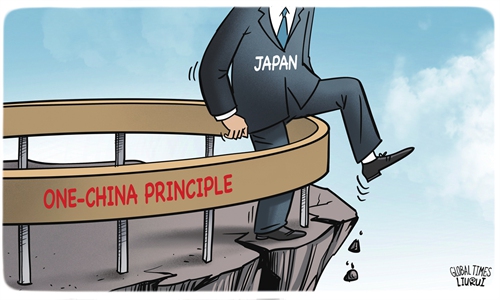
The Taiwan question is China's internal affair, and no external force has the right to interfere. This is a universally recognized fact in the international community and an inviolable red line. Whether it is Takaichi's dangerous and reckless remarks, or the "Taiwan independence" forces' separatist actions, both seriously undermine regional peace and stability and infringe upon China's core interests. The determination of the Chinese people to safeguard national sovereignty, unity and territorial integrity is as firm as a rock and their ability is incredibly powerful. Any force attempting to split the country or interfere in China's internal affairs will ultimately face devastating retaliation and fall into an abyss from which there is no return. The Japanese prime minister's incitement of dangerous, far-right rhetoric is playing with fire; those who play with fire will eventually burn themselves!
The author is a commentator on international affairs. opinion@globaltimes.com.cn
RELATED ARTICLES