China has made preparations to carry out substantial countermeasures against Japan: state media linked social media account
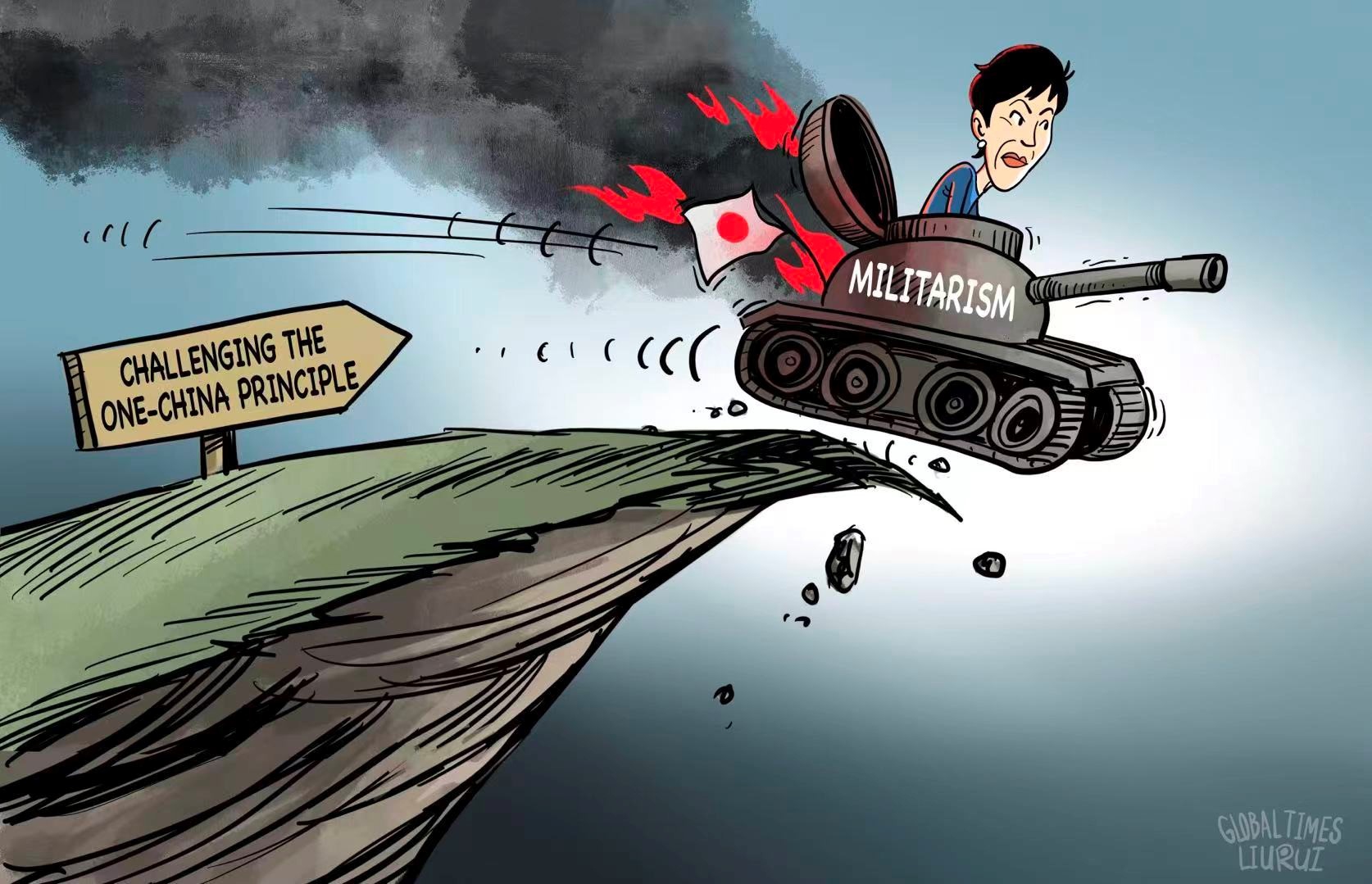
Illustration: Liu Rui /GT
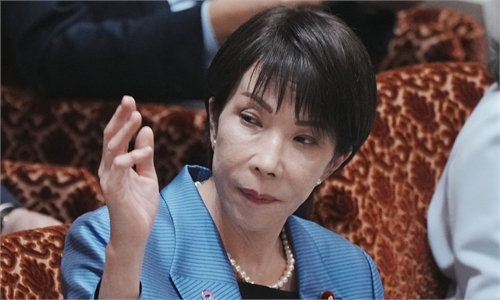
The egregious nature of Japanese Prime Minister Sanae Takaichi's recent remarks over Taiwan lies not only in how they openly undermine the political foundation of China-Japan relations, but also in her refusal to retract her erroneous statements after the incident, showing no remorse, and if Japan remains obstinate, China will no longer have any reason to show restraint. "China has made preparations to carry out substantial countermeasures against Japan," read an article published on Saturday by yuyuantantian, a social media account affiliated to China's state broadcaster China Central Television. The article stressed that "with regard to Sanae Takaichi's blatant provocative remarks, our patience has its limits."
The article lists moves Chinese side has taken since November 14.
Chinese Foreign Ministry released at 2:56 am on Friday that upon instructions, Chinese Vice Foreign Minister Sun Weidong summoned the Japanese ambassador to China Kenji Kanasugi.
In the afternoon of the same day, Chinese Foreign Ministry spokesperson raised three pointed questions to Japan regarding its recent military and security activities.
At the same time, the Chinese Ministry of National Defense spokesperson issued a stern warning to Japan: should the Japanese side fail to draw lessons from history and dare to take a risk, or even use force to interfere in the Taiwan question, it will only suffer a crushing defeat against the steel-willed PLA and pay a heavy price.
In the evening, the Chinese Embassy in Japan announced that Chinese Ambassador to Japan Wu Jianghao, acting on instructions, met with Japanese Vice Minister for Foreign Affairs Kenji Funakoshi.
Early on the morning of the Saturday, an article under the byline "Jun Sheng" titled "Japan will suffer unbearable price if it dares to intervene militarily in cross-Straits situation" was published on the frontage of the People's Liberation Army Daily.
The yuyuantantian stressed that this year marks the 80th anniversary of the victory in the Chinese People's War of Resistance Against Japanese Aggression and the World Anti-Fascist War. Against this backdrop, the series of remarks made by Sanae Takaichi are even more egregious in nature.
China's above statements have escalated from "urging Japan to immediately cease interfering in China's internal affairs" just a few days ago, to "otherwise, Japan must bear full responsibility for all consequences".
What such shift in China's tone truly means what consequences Japan will face and what price it will have to pay?
On Thursday, China's Vice Foreign Minister, upon instructions, summoned the Japanese Ambassador to China to make serious démarches over Japanese Prime Minister Sanae Takaichi's erroneous remarks regarding Taiwan.
The phrase "upon instructions," per the yuyuantantian article, is used in very rare cases. It has never before appeared in China-Japan interactions before, the article said.
Even more noteworthy: this summon was conducted by a vice-ministerial official. As head of the Japanese government, Sanae Takaichi's public remarks threatening military force over Taiwan constitute the gravest provocation since Japan's defeat in 1945, which was unprecedented in severity. In response to Japan's provocation, China's warnings carry heavier weight, read the yuyuantantian article.
Japanese affairs expert Xiang Haoyu from the China Institute of International Studies was quoted in the article as saying that "upon instructions" means handling a task assigned by superiors - indicating the Vice Foreign Minister was not merely speaking as a deputy, but directly conveying the stance of a higher authority. In other words, this is China's national will, backed by 1.4 billion Chinese people.
Sanae Takaichi must understand: the Chinese people are not to be trifled with. Provoke them, and things will get ugly, the article warned.
Back then, with just "millet plus rifles", the Chinese people drove Japanese aggressors from our land. Now, we have not only unyielding resolve, but torrents of steel. Any Japanese politician who dares to gamble recklessly will suffer a crushing defeat, the article warned.
Netizens' comments were also mentioned in the article by yuyuantantian, as they analyzed that the next step after "summon upon instructions" is "heightened alert," then it is "counterstrike on orders".
The path forward is for Sanae Takaichi to choose, the yuyuantantian article noted.
Beyond the Foreign Ministry, in recent days, the China's State Council Taiwan Affairs Office, the Ministry of National Defense have also issued statements condemning Takaichi's erroneous remarks.
Ding Nuozhou, Japanese affairs expert at Nankai University's Institute of Japan Studies, said that this shows the incident has transcended ordinary diplomatic disputes. Multiple agencies issuing coordinated statements is itself a stance.
This further confirms that China has classified Takaichi's remarks as a major principled issue touching national dignity and core interests. Japan must reflect and correct its mistakes, and there is no room for ambiguity, read the article.
In order the expose the egregious nature of Takaichi's remarks, the article reviewed the timeline of the incident.
On November 7, Takaichi publicly assert that "a Taiwan contingency is a Japan contingency," suggesting Japan might exercise its so-called collective self-defense right. China immediately lodged stern representations and strong protests. In the coming days, whenever the Ministry of Foreign Affairs of China held a regular press conference, it responded to this matter. Faced with advice from rational members in the Diet on November 10, Takaichi refused to retract her remarks and defended her position, claiming it is "in line with the government's conventional position." It was only after this that the level of China's lodging representations level was elevated.
The yuyuantantian article asserted that viewing the entire process, it is clear that China has given Japan ample opportunities and room for maneuver. Even as the situation escalated, China still clearly outlined a path for resolving the tension: Japan must deeply reflect on its historical wrongs, correct and retract the wrong remarks at once.
If Japan remains obstinate, China will no longer have any reason to show restraint, it warned.
In China's response, there are two key phrases: "All consequences must be borne by the Japanese side" and "it will definitely meet a firm response from China." A search of publicly available official information reveals that the phrase "a firm response" is being used for the first time in a China-Japan diplomatic context, per the the yuyuantantian article.
According to the yuyuantantian article, these statements signal that China has made preparations for substantial countermeasures.
Ding told the writer of the article that "all consequences" refer to any actions that comply with international law and international practices.
In terms of countermeasures, China has accumulated ample experience related to Taiwan question. About 80 percent of the items on the Ministry of Foreign Affairs' existing counter-sanctions list involve the Taiwan question, including actions against certain Japanese politicians. If necessary, China can take similar measures at any time, read the article.
The article predicted that next, China may suspend government-level exchanges with Japan in areas such as the economy, diplomacy, and military. In the past, when China referred to "all consequences," some of these measures were actually implemented.
China is Japan's largest trading partner, and data shows that many of Japan's products are "highly dependent" on imports from China. On Friday, both the Ministry of Foreign Affairs and the Chinese Embassy in Japan issued warnings, advising Chinese citizens to avoid traveling to Japan in the near future.
Due to Japanese government's wrong actions, the atmosphere surrounding personnel exchanges between China and Japan has worsened. The official diplomatic advisory issued by China indicates that the situation has been recognized by the government as posing a substantial threat, according the yuyuantantian article. "This is a concrete reflection of the negative spillover effects caused by the Japanese government's erroneous actions on Japanese society."
The impact goes beyond this. "A firm response" is not just diplomatic rhetoric, but also carries a clear military implication. Both China's Ministry of Foreign Affairs and Ministry of National Defense have used this phrase in reference to fundamental issues, according to Xiang Haoyu, a distinguished research fellow at the Department for Asia-Pacific Studies of the China Institute of International Studies.
In recent days, Japan has attempted to revive old military rank titles from the Imperial Japanese Army, including terms like "Colonel." This move would break with the longstanding practice of the Japan Self-Defense Forces (JSDF) using unique titles to downplay its military nature. Furthermore, many of Japan's military reports mention plans to engage in submarine warfare off China's doorstep.
All these signs suggest that Japanese militarism is far from dead, the article pointed out. But if Japan attempts to fight submarine warfare with China, its politicians should look at aircraft carriers the Liaoning, the Shandong, the Fujian, the recently tested amphibious assault ship Sichuan, and the Dongfeng missiles
By then, Takaichi will get a firsthand experience of what "a firm response" really means, it warned.
The article pointed out that over the past week, nearly all of China's responses have referenced one key backdrop: this year marks the 80th anniversary of the victory in the Chinese People's War of Resistance Against Japanese Aggression and the World Anti-Fascist War. Japan's actions threaten peace in East Asia and challenge the post-World War II international order.
Lü Yaodong, Deputy Director of the Institute of Japanese Studies at the Chinese Academy of Social Sciences, told Yuyuantantian that as a defeated nation in World War II, Japan's national conduct is explicitly constrained by the UN Charter and Article 9 of its domestic pacifist Constitution, which include renouncing the use of force to settle international disputes and renounce war as a right of sovereignty.
This is the core arrangement of the post-war East Asian order - Japan has no right to unilaterally breach it, the expert said.
Therefore, China's characterization of Takaichi's remarks goes beyond bilateral China-Japan relations, per the article. It explicitly states that they "gravely violate international law and basic norms of international relations and seriously undermine the post-war international order."
In recent days, discontent with Japan is not limited to China. Since Sanae Takaichi took office, her remarks and actions have drawn public criticism or wariness from neighboring countries including Russia and South Korea.
From the September 18 Incident to the sneak attack on Pearl Harbor, Japan back then step by step marched toward external aggression by hyping a so-called "survival threatening crisis." And the article raised the question that "is a similar dangerous narrative rising again?"
At last, the article sent yet another warning to certain individuals in Japan:
Stop living in your delusions of arrogance and grandeur!
Both China and Japan have a similar saying: "If you don't court death, you won't die." There are some things that you simply cannot do!
Global Times
RELATED ARTICLES