Overseas F&B brands accelerate localization
China’s booming market and shifting consumer trends drive deeper adaptation
Coffee cups pile on a coffee machine. File photo: VCG
Less than one month after Starbucks said it would sell control of its operations in China to Boyu Capital, Costa, another well-known UK coffee brand in the country, is reportedly drawing interest from a Chinese investor considering a bid for its business.
Centurium Capital, the private equity backer of fast-growing Chinese coffee chain Luckin Coffee Inc, is considering a bid for UK cafe operator Costa Coffee, Bloomberg reported on November 11, citing people with knowledge of the matter.
The Chinese investment firm has been evaluating whether to make an offer for Costa Coffee, which is being sold by Coca-Cola Co, the people said. The exact structure of any proposal hasn't been finalized, and it's unclear whether Centurium would potentially be bidding on its own or through Luckin.
The news comes at a time when strong "buyers" and "sellers" across China's food and beverage sector — including the coffee industry — are increasingly partnering to tap the market's growth potential with greater efficiency.
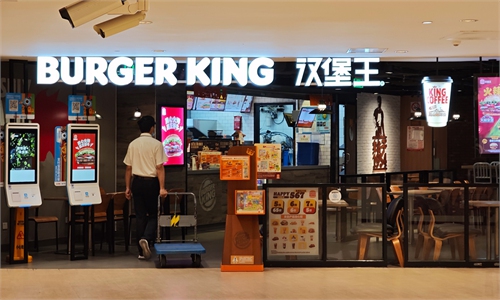
On November 11, CPE, a Chinese asset management company, announced that it had formed a strategic partnership with the Burger King brand to establish a joint venture.
Chinese industry experts noted that the entry of domestic capital could reshape the competitive dynamics in China's fast-growing coffee market by accelerating supply-chain localization, strengthening digital operations and expanding affordable high-quality offerings, thereby enhancing their overall resilience and efficiency in the sector.
Full-chain localization
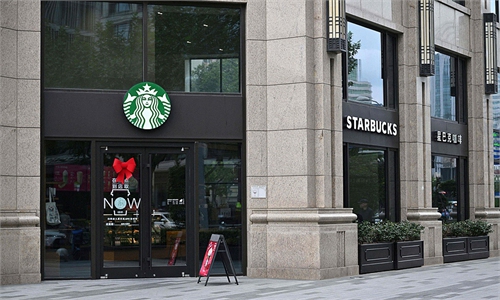
Starbucks Coffee Co announced on November 4 that it had entered into an agreement to form a joint venture (JV) with Boyu Capital, a leading alternative investment firm, to operate Starbucks retail outlets in China.
Under the agreement, Boyu and Starbucks will operate a joint venture with Boyu holding up to 60 percent interest in Starbucks retail operations in China. Starbucks will retain a 40 percent interest in the joint venture and will continue to own and license the Starbucks brand and intellectual property to the new entity. Boyu will acquire its interest based on a cash-free, debt-free enterprise value of approximately $4 billion, according to the announcement on Starbucks' official website.
Not limited to coffee, China's catering industry — now exceeding 5 trillion yuan — is pushing international brands that hope to retain their market share of this vast and expanding market to accelerate China-specific localization strategies.
CPE announced on November 11 that it had formed a strategic partnership with the Burger King brand to establish a joint venture — Burger King China, marking the next phase of the brand's growth in the Chinese market, according to a statement from the company.
The Burger King brand is wholly owned by Restaurant Brands International (RBI). CPE will inject an initial investment of $350 million into Burger King China. Upon completion of the transaction, CPE will hold about 83 percent of the joint venture, while RBI will retain around 17 percent, per the statement published on CPE's official WeChat account on November 10.
Some Chinese media outlets reported that the Burger King chain operated roughly 1,300 stores in the Chinese mainland as of September this year, down from 1,587 at the end of 2023 and 1,474 at the end of 2024. Over the past year, closures had been reported in several cities, including Beijing, Shanghai, and Southwest China's Chongqing Municipality and Fuzhou in East China's Fujian Province.
During the earnings call in February, executives from RBI Group discussed the performance of Burger King China. CFO Sami Siddiqui stated that in 2024, the total number of restaurants across RBI Group increased by 3.4 percent, but the number of Burger King restaurants in China decreased by approximately 100 basis points. Sami also revealed that the average sales per store for Burger King China are relatively low, only one-tenth of those in France, according to news outlet bjnews.com.cn.
Under the new structure, Burger King China is expected to upgrade its supply-chain integration, pricing flexibility and product innovation, aligning more closely with the speed of consumer trends in China's quick-service restaurant sector, Zhang Yi, CEO of the iiMedia Research Institute, told the Global Times on Sunday.
In the eyes of the market analysts, localization has become a strategic necessity rather than an optional adjustment for foreign food and beverage companies.
"The trend now extends far beyond ingredients or menu tweaks — reaching into operational systems, management structures, supply chains and brand positioning," Zhang said.
The shift from simple "menu tweaks" to full-scale localization across operations, supply chains, and brand positioning reflects that international chains are no longer merely adapting to the Chinese market — they are increasingly relying on China as a core engine of their global growth, said Hu Qimu, a deputy secretary-general of Forum 50 for Digital-Real Economies Integration.
'Chinese brand' means opportunities
These cases reflect a broader shift: China is no longer just a consumer market but a strategic accelerator for global companies, driven by the strong pull of its vast consumer potential.
In the first half of this year, domestic demand contributed 68.8 percent to GDP growth, with final consumption accounting for 52 percent, making it the main engine of expansion, data from China's National Bureau of Statistics showed.
Foreign brands are transitioning from exporting standardized global templates to co-creating localized operating systems with Chinese capital, Chinese platforms, and Chinese supply chains, according to those market watchers.
Why are global players taking this path? Chinese experts say the shift reflects an "upgrading strategy": In one of the world's largest consumer markets, foreign brands are seeking more efficient, more cost-effective ways to continue sharing China's growth dividends.
McDonald's localization in China is also widely viewed as a case of keeping pace with the dynamics of the Chinese consumer market, with its number of stores tripling since its China operations came under majority Chinese ownership, the company's report said.
McDonald's, which in 2017 restructured its China retail operations through a joint venture, now operates as "Golden Arches China" with Chinese capital holding a major stake.
Over the past eight years, McDonald's China has expanded its store network from approximately 2,300 stores in 2017 to more than 7,100 stores today, covering more than 280 prefecture-level cities nationwide, according to a report released by McDonald's China on August 1, 2025.
China has become McDonald's second-largest and fastest-growing market worldwide, data from the company's report showed.
Luckin has grown rapidly in recent years, brushing past Starbucks in China, where it has over 26,000 stores — more than three times as many as Starbucks, data from Bloomberg showed.
With the entry of Chinese capital, Starbuck China will continue to be headquartered in Shanghai and will own and operate the 8,000 Starbucks coffeehouses across the market, with a shared vision of growing to as many as 20,000 locations over time.
The partnership between Starbucks and Boyu marks a new chapter in Starbucks' 26-year journey in China, combining Starbucks globally recognized brand, coffee expertise, and partner-centered (employee centered) culture with Boyu's depth of understanding of Chinese consumers, according to the statement from Starbucks.
For Costa, long positioned as a premium player in the coffee sector, industry insiders said the reported collaboration would enable it to upgrade its product innovation and broaden its offerings — areas where it has fallen increasingly behind fast-moving domestic rivals.
In the context of China's fast-expanding platform economy, the "fully self-built supply chain model" long relied upon by traditional foreign chains is no longer sustainable, Zhang said.
Zhang noted that Chinese platform enterprises far outperform individual brands in delivery capacity, data integration, digital marketing and supply-chain responsiveness, forcing international food and beverage companies to deeply integrate with domestic platform ecosystems to remain competitive in the Chinese market.
RELATED ARTICLES