US naval operations chief maintains ambiguity, ‘not surprised’ by Takaichi’s remarks; US aims to exploit crisis to tighten control over ally, says expert
By Published: Nov 18, 2025 12:00 PM


Admiral Daryl Caudle, US chief of naval operations Photo: AFP
Amid the fierce tension flared up between China and Japan because of Japanese Prime Minister Sanae Takaichi's recent erroneous remarks on Taiwan, Admiral Daryl Caudle, US chief of naval operations who is visiting Japan, told local media Monday that he was "not surprised" by Takaichi's remarks and claimed that he "can understand the position that it is very concerning to her."At a time of heightened political tensions between China and Japan, the visit of the highest-ranking US Navy officer to Japan undoubtedly reveals the US consistent strategic intention, which is to exploit the crisis as an opportunity to tighten its control over its ally, while at the same time, it can be understood as Washington needing to conduct a close-range assessment of Japan's true intentions and actions to avoid being dragged into a passive position, according to some observers reached by the Global Times on Tuesday.
Takaichi claimed at a Diet meeting on November 7 that the Chinese mainland's "use of force on Taiwan" could constitute a "survival-threatening situation" for Japan. She refused to retract her remarks which imply the possibility of armed intervention in the Taiwan Straits.
Multiple Chinese ministries and government agencies have condemned the Japanese side's related moves and remarks, warning that Japan would face a resolute response if it dared to meddle in the Taiwan question, amid ongoing backlash at home and abroad triggered by the erroneous and provocative remarks of Takaichi.
In an interview with Nikkei and other outlets, Caudle, the top uniformed officer in the US Navy, claimed that "I would just say the word existential is a big word, and sometimes we have different [ideas of] what that might mean," but "I can understand the position that it is very concerning to her," Nikkei Asia reported on Tuesday.
The Nikkei Asia report highlighted that "Caudle maintains ambiguity on Takaichi's view" while also mentioning that the US and Japan have maintained "strategic ambiguity" regarding the Taiwan question. The report also cited some observers' argument that Takaichi's comments make it easier for Beijing to read Tokyo's intentions.
Previously, US President Donald Trump appeared to "defend China," as described by the Daily Mail, during a night interview with Fox News on November 10, when the host raised Japanese Takaichi's recent claims about Japan potentially interfering in Taiwan Straits and asked whether China was "not our friend." Trump pushed back, saying, "a lot of our allies are not friends either."
In the deliberately vague statements from the US Chief of Naval Operations, one can detect a certain degree of support for Japan "stirring things up," but more importantly, the core message is to tighten the leash on Japan, Li Haidong, a professor at the China Foreign Affairs University, told the Global Times on Tuesday.
While Tokyo is allowed, even encouraged, to provoke China, but under no circumstances is it permitted to let things spiral into actual conflict. The recent remarks and deeds by Takaichi have clearly put the US in an uncomfortable, passive position, Li said.
Precisely at a moment when US-China relations are gradually stabilizing and easing, Takaichi seeks to manufacture instability and crisis. By playing the classic "small nation gambling against great powers" tactic, she intends to create a crisis, thereby forcing the major powers to serve Japan's interests and advance its military and strategic ambitions. This is a long-standing Japanese playbook, the professor explained.
Per the Nikkei Asia report, the top US naval officer also hinted that Japan might be allowed to build nuclear-powered attack submarines while stating that building them is not something that could be done overnight and would require much discussion. Caudle also urged Japan to ramp up defense spending to 5 percent of Japan's GDP.
In response to a question regarding Japanese Prime Minister Takaichi avoiding stating whether her administration adheres to the Three Non-Nuclear Principles, Chinese Foreign Ministry Lin Jian recently said that "while Japan claims to be a peace-loving country and advocates a world free of nuclear weapons, the Sanae Takaichi administration has been making ambiguous statements about the Three Non-Nuclear Principles and implying the possibility of quitting the principles. Japanese senior officials even claimed that Japan has not ruled out the possibility of possessing nuclear submarines. These fully reveal that Japan is making a major negative policy shift, which sends a dangerous signal to the international community."
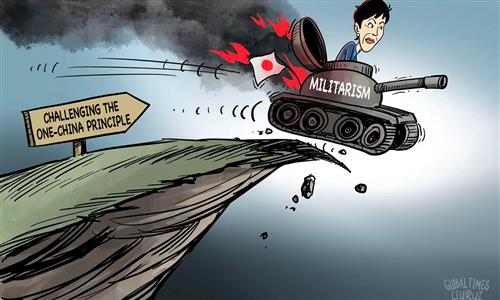
He continued to raise three pointed questions to Japan regarding its recent military and security activities. "Owing to these moves by Japan, its neighboring countries in Asia and the international community have to strongly call into question and worry about: Has Japan truly made a clean break with militarism? Is Japan sincerely committed to the exclusively defense-oriented policy and the Three Non-Nuclear Principles? Will Japan still act on its commitment to peace
RELATED ARTICLES