Johannesburg G20 summit ‘a chance to ensure voices, interests of Global South are not just heard, but shape global agenda’
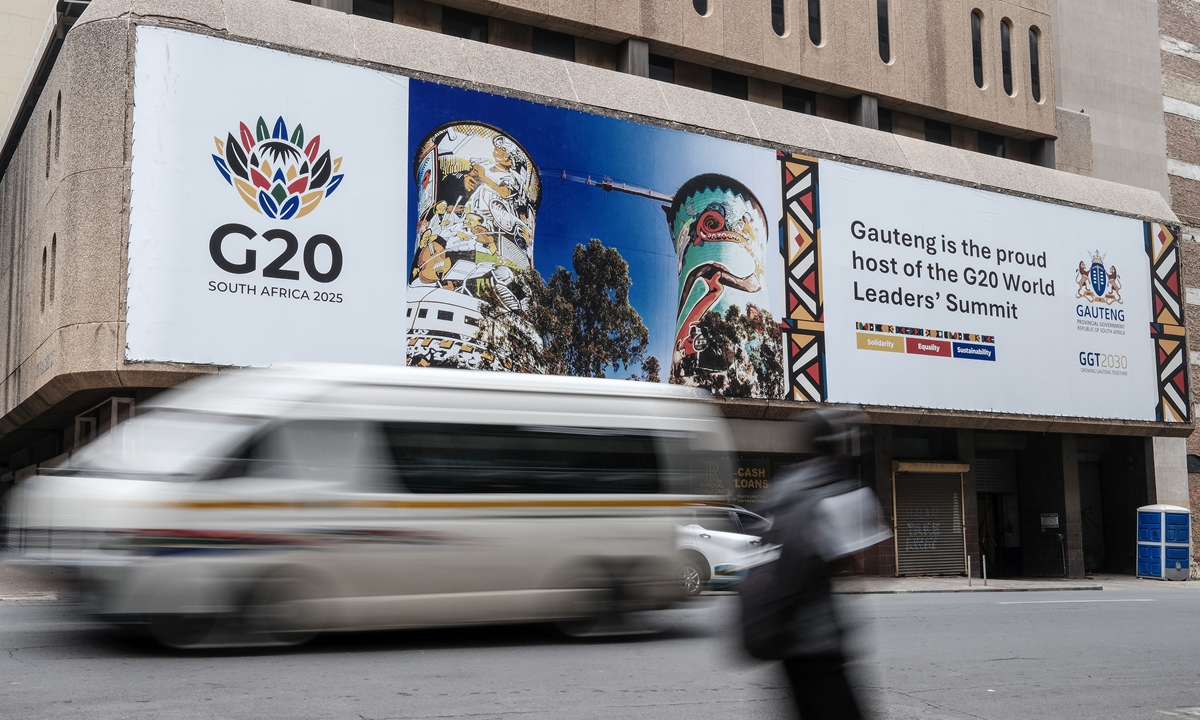
A billboard advertising the G20 Summit can be seen in the city center of Johannesburg on November 20, 2025, as South Africa prepares to host the 2025 G20 meeting, the premier forum for international economic cooperation. Photo: VCG
Editor's Note:For the first time since its inception in 1999, the G20 is holding its annual summit on African soil, in Johannesburg. What can be expected from this historic gathering? In an exclusive interview with Global Times, Abner Mosaase (Mosaase), head of international relations at the Gauteng Growth and Development Agency, South Africa, and member of the African National Congress International Relations Committee, told Global Times (GT) reporter Li Aixin that this summit is a chance to ensure that voices and interests of the Global South are not just heard, but will shape the global agenda.
GT: The 2025 Johannesburg G20 marks the first summit on African soil. How significant is this milestone in your view?
Mosaase: We see hosting this summit not just as a South African opportunity, but as an opportunity for the entire African continent and the Global South.
We have witnessed some historic developments. First, the African Union became a member of the G20 in 2023. Second, South Africa is hosting the G20 for the first time on behalf of the African continent. For many years, we stood outside, looking at platforms like this - platforms shaped by the developed world. Now, we have a chance to bring Africa in and elevate the continent to the pedestal where the developed world stands. Africa is no longer on the sidelines - it is competing on equal footing among the countries of the world.
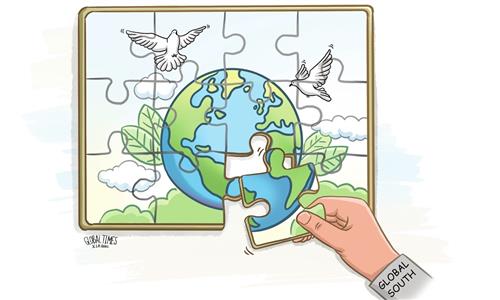
This moment is equally significant for the Global South. I think the new agenda-setting for the world is emerging first in the BRICS countries, and the G20 serves as the broader forum where BRICS ideas find expression - whether in financial architecture, payment systems or the free movement of people. This summit is a chance to ensure that voices and interests of the Global South are not just heard, but shape the global agenda.
GT: Against the backdrop of geopolitical tensions, economic sluggishness and rising protectionism, this summit highlights "Solidarity, Equality, Sustainability." What message do you think this theme is meant to convey?
Mosaase: The theme reflects the challenges the world is facing.
From the perspective of equality and sustainability, unequal economic relations have failed the poor, the working class and the toiling masses worldwide. Global warming and related issues are major challenges.
We need sustainable economics - including environmental economics, digital economies and the hubs generated by global developments. We need the vision of eco-cities and we must ensure the world becomes a clean, ecological place to live. While building new industries and re-industrializing for job creation and energy transition, we must remain true to the climate and human health. Real action is needed.
From a solidarity perspective, countries not represented in the G20 must still have their voices heard - for example, the suffering people of Palestine. We call for peaceful resolutions to conflicts, with diplomacy as the preferred option.
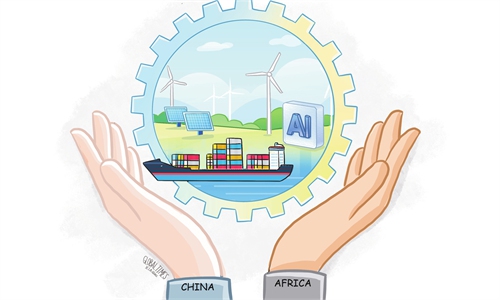
GT: How would you assess the practice of China-Africa cooperation in advancing "solidarity, equality, sustainability"?
Mosaase: We see China as a very important partner in cooperation with Africa. From our historical perspective, China has always been clear that it does not interfere in domestic politics but focuses on supporting the building of people's livelihoods. This principle of non-interference has earned China many supporters around the world.
Over decades of diplomacy in Africa, China has also supported debt relief and financial cooperation. China joined the African Development Fund and African Development Bank in 1985 and has participated in other regional development plans, contributing to a diversified financial ecosystem. Financial sustainability and inclusive growth remain at the heart of G20 priorities today.
China has supported digital infrastructure in Africa - over 200,000 kilometers of optical fiber laid, expanded access and involvement in submarine cable projects. Joint innovation initiatives include public cloud services in South Africa, 5G networks, smart cities and e-commerce collaboration.
I have also witnessed China's cooperation firsthand. Just this week, I met with more than six Chinese companies and associations in South Africa to strengthen partnerships. I personally facilitated a memorandum of agreement between Chinese and South African municipalities covering smart city projects, eco-villages, digital economy, agriculture and mining.
In the context of the G20, South Africa and China are at their best. The two sides meet almost every day, shaping the agenda for development — not just in South Africa, but across the entire African continent.
GT: South African President Cyril Ramaphosa said recently that South Africa will symbolically hand over the G20 presidency to an "empty chair" in the absence of US leadership at the summit. What core challenge facing the G20 do you think this reflects?
Mosaase: The problem is not with the G20. The problem is with the US government.
And when the US government criticizes South Africa or other African countries, we still see US businesspeople actively investing in the African continent. This shows that the US government and the American people are not always aligned.
In fact, the US' absence is their loss. While the US is stuck in its own problems, the world is moving, ideas are being exchanged and we trust China to help strengthen the developing world and show that progress does not depend solely on the US.
China is one of the fastest-developing economies in the world, improving lives not only in China but around the world. So we are not worried. As long as China is present, we are very happy. China and other like-minded countries in the G20 will continue to shape the global agenda and move the world forward.
It is very important that the G20 protects itself from being steered by a small group of countries. As we move toward the G20, we have many streams - B20 for business, C20 for civil society, T20 for think tanks, U20 for urban municipalities, Y20 for youth, W20 for women, L20 for labor unions.
The G20 also needs to establish a strong conflict resolution mechanism. In cases like the US not attending the summit, or the Russian president not being able to come because of an ICC indictment, the issues must be addressed within the parameters and resolutions of the G20, so that we can find a way to resolve them.
It needs to reaffirm its rules and governance mechanisms, which needs to be implemented rigorously, in order to navigate unilateralism. Overall, we see BRICS as a key driver in enabling the G20.
GT: As influential voices of the Global South, how can China and South Africa together use platforms such as the G20 to promote a more inclusive and diversified paradigm for global trade and governance?
Mosaase: We can engage think tanks and academic institutions globally, ensuring that decisions are informed by multiple perspectives - not only those aligned with the richest countries. There must be studies on global economic inequality, climate adaptation, financing and digital development, with contributions from Africa, Latin America and Southeast Asia. This way, the G20 can resist being captured by a small group of powers.
We need a decolonized world, and we must oppose new forms of colonialism. We need inclusive multilateralism, peace, stability, resistance to bullying and a world focused on development. Against this backdrop, China and Africa need to maintain consistent messaging on the transformation and improvement of global governance.
RELATED ARTICLES