The Global Governance Initiative illuminates the future of a community with a shared future for humanity

Illustration: Liu Rui/GT
I.The world stands at a historical crossroads
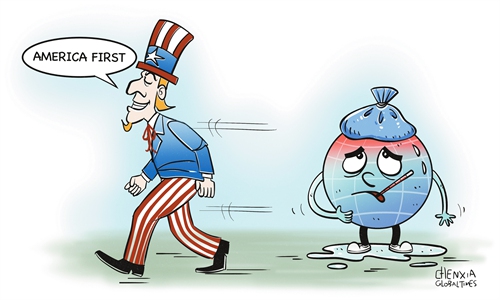
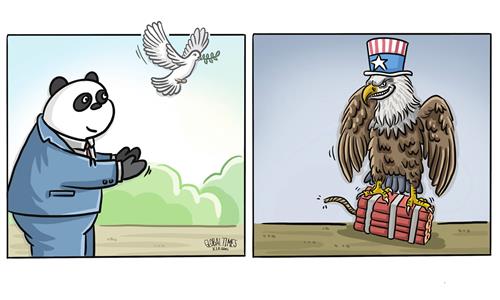
The international landscape is growing increasingly turbulent. Besides the protracted conflict in Ukraine and the flare-up of conflicts in Gaza, the world is faced with a myriad of crises — escalating climate alarms and food, energy and debt challenges. This fragile state is exacerbated by a resurgence of unilateralism, protectionism and hegemonism, which collectively threaten the foundations of globalization and place immense strain on the international system.
What is happening to the world? What should we do? These are the critical questions facing all humanity.
On September 1, 2025, Chinese President Xi Jinping, at the Shanghai Cooperation Organisation Plus meeting, put forth the Global Governance Initiative (GGI). Following China's previous contributions — the Global Development Initiative, Global Security Initiative and Global Civilization Initiative — the GGI represents another important public good offered by China to the international community. The initiative emphasizes sovereign equality, the international rule of law, multilateralism, a people-centered approach and concrete actions. It directly tackles the inequities and injustices embedded in today's global governance. At its heart lies a fundamental question, especially urgent against the backdrop of a deepening global governance deficit: By whom, how and for whom should global governance be carried out?
II. The light of vision: the underlying logic of GGI
The GGI draws on values deeply rooted in the Chinese civilization and captures China's experience in participating in global governance. It provides a distinct Chinese response to the world's growing demand for a more equitable and just international order.
(1) A firm rejection of hegemonic governance
For centuries, a hegemonic model of governance has held sway, directed by a select few Western powers. This system — spanning colonial expansion, Cold War confrontation and narratives of "civilizational superiority" and "democracy VS authoritarianism" — has cloaked plunder in the language of governance. Its consequences are clear: a yawning North-South divide and endless regional conflicts. The GGI mounts a direct challenge to this outdated order. By championing "sovereign equality" and the principle that "international rules should be written jointly by all countries, and global affairs should be governed together by all countries," it offers nothing less than a systematic and principled correction to hegemonic governance.
(2) A solid endorsement of multilateralism
Multilateralism today risks being hollowed out, as some countries instrumentalize international institutions for self-interest. In response, the GGI advocates for true multilateralism, built upon the central roles of the UN, the bedrock of international law, and the principles of fairness and justice. This vision enshrines equality as the cornerstone of international engagement.
(3) Unwavering commitment to a community with a shared future for humanity
From President Xi's vision of building a "community with a shared future for humanity" first proposed in 2013 to the subsequent launch of the Global Development Initiative in 2021, the Global Security Initiative in 2022, and the Global Civilization Initiative in 2023, China has been steadily charting a path toward this goal. The new GGI stands as a crucial pillar among these "Four Major Initiatives." By focusing on the reform of governance rules — a core variable in international relations — the GGI seeks to translate this grand vision into actionable policies.
III. The power of action: China's deeds demonstrate global responsibility
Actions speak louder than words. By putting forth the GGI, China is matching its vision with credible, wide-ranging actions.
China is a steadfast champion of world multipolarity. It diligently fulfills its duties as a permanent member of the UN Security Council, safeguarding the outcomes of the World Anti-Fascist War and working toward a more just and equitable international order. It has facilitated the historic expansion of BRICS and fostered "Greater BRICS Cooperation" for higher-quality development, strengthened the Shanghai Cooperation Organisation as a key regional body, and engaged proactively in the G20 and APEC.
China's solidarity with the rest of the Global South is equally resolute. It has been promoting high-quality Belt and Road cooperation, and played an instrumental role in creating the Asian Infrastructure Investment Bank, the Silk Road Fund and the New Development Bank.
As a responsible major country, China is deeply engaged in global governance in emerging areas, including artificial intelligence, cyberspace, climate change, and the domains of the deep sea, polar regions and outer space. It works diligently to meet its carbon peaking and carbon neutrality goals in line with the Paris Agreement. On the digital front, China has contributed to the UN Global Digital Compact by formulating its own Global Initiative on Data Security. Furthermore, it is promoting AI governance by proposing the establishment of a World Artificial Intelligence Cooperation Organization and launching the Global AI Governance Initiative.
IV. The path forward: a better global governance order
In the wake of World War II, 80 years ago, China joined other nations in founding the United Nations, turning a new page in global governance. In 2025, as the UN marks its 80th anniversary, the world finds itself at a new starting point. The GGI , fully consistent with the purposes and principles of the UN Charter, has been introduced to meet the needs of our time. It will foster broader consensus within the international community, make the global governance system more just and equitable, and open up brighter prospects for a peaceful, secure, prosperous and advancing human society.
Let us take the GGI as our guide. Through planning together, building together and benefiting together and an unwavering commitment to fairness and justice, we can break the waves of hegemonism and arrive at the shore of a community with a shared future for humanity.
The author is an observer of international affairs. opinion@globaltimes.com.cn
RELATED ARTICLES