Chinese premier urges China, Germany to strengthen dialogue, address concerns
Merz reportedly plans to visit China in early 2026, calls China important force in intl order in interview
By Published: Nov 24, 2025 08:51 PM

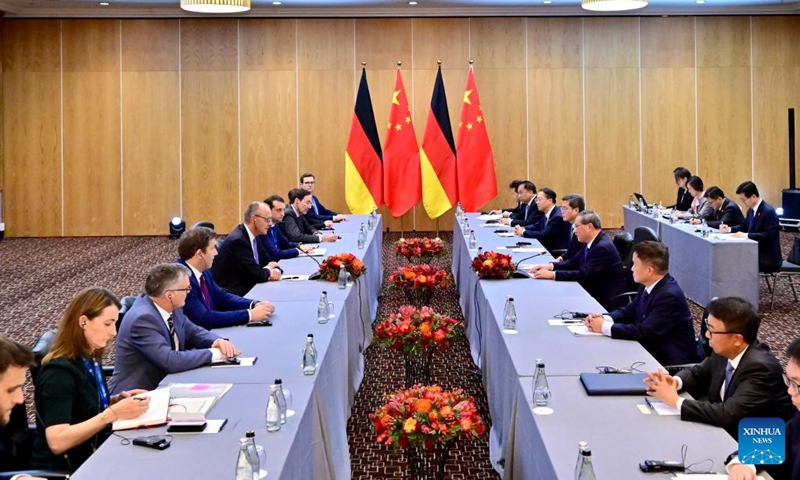
Chinese Premier Li Qiang meets with German Chancellor Friedrich Merz in Johannesburg, South Africa, Nov. 23, 2025. (Xinhua/Zhai Jianlan)
Chinese Premier Li Qiang said during his meeting with German Chancellor Friedrich Merz on the sidelines of the G20 summit on Sunday local time that the governments of China and Germany should make joint efforts to strengthen dialogue and communication, and properly handle their respective concerns, according to the Xinhua News Agency.Noting that China and Germany are each other's important economic and trade partners, Li said that since the establishment of diplomatic ties 53 years ago, China and Germany have continuously strengthened dialogue and cooperation, which effectively promoted both sides' common development, per Xinhua.
China is willing to enhance strategic communication with Germany, adhere to respecting each other's core interests and major concerns, and cement the political foundation for the development of the bilateral relations, Li said.
It is hoped that the German side will practice a rational and pragmatic China policy, Li said, expressing expectations for Germany's efforts to overcome obstacles and pressure when promoting bilateral ties, and focus on common interests and consolidate the foundation of cooperation, according to Xinhua.
China is willing to work with Germany to seize development opportunities and exploit innovative cooperation with an open attitude, said the Chinese premier, envisaging cooperation progress in emerging fields such as new energy, intelligent manufacturing, biomedicine, hydrogen energy technology and intelligent driving, in order to promote industrial transformation and upgrades, and activate new cooperation impetus.
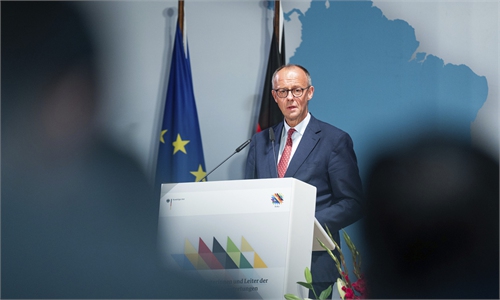
Following the meeting with the Chinese premier, Merz revealed his plans to travel to China in January or February of 2026, the German media Deutsche Welle reported.
Addressing a press conference on the sidelines of the G20 summit in Johannesburg, Merz said a precise date for the visit has yet to be set, but it would take place in the "first weeks of next year," the German Press Agency (dpa) also reported.
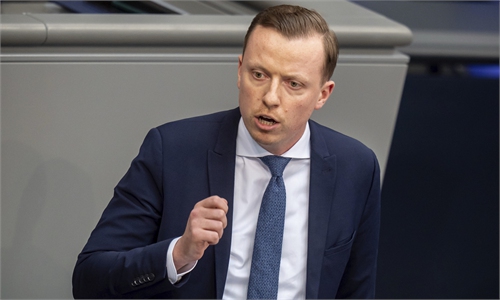
Klingbeil paid a visit to China to take part in the fourth China-Germany High-Level Financial Dialogue last week. As the first minister of the new coalition government to travel to China - following Foreign Minister Johann Wadephul's postponed trip - Klingbeil's visit, while viewed by some Chinese analysts as an "ice-breaker" for bilateral relations, comes as the German government rolls out a slew of measures that cast China in a negative light on trade.
Besides revealing his plan to visit China early 2026, Merz also praised China as Germany's important trading partner, and an important force in international order, according to a report by China Media Group (CMG).
Not only in the region, but across a much broader scope — including the emerging global order unfolding before our eyes— China holds significant influence, Merz was quoted as saying in the media report.
"I must say, both yesterday and today, what truly impressed me is that we can clearly see the world is undergoing a major reordering. New connections are being formed, and the role the US is playing in this process is rather limited," Merz said, per the CMG report.
Merz clearly recognizes the importance of China-Germany relations, which are especially crucial for the German economy, said Jiang Feng, a research fellow at Shanghai International Studies University and president of the Shanghai Association of Regional and Country Studies.
"In the past, Germany rarely described China from this perspective. His reference this time to China's role in upholding the international order shows the country's expectations of China," Jiang told the Global Times on Monday.
Rather than calling Germany's current position a positive signal, it is more accurate to see it as an objective one, Jiang said, noting that Merz acknowledges the importance of the relationship, but whether ties will further improve, gain stability, or play a larger role remains uncertain.
During his interview with Deutsche Welle, Merz claimed that if necessary, ending the Ukraine crisis will also be a topic of discussion during next year's talks in China, although he hopes that a ceasefire will occur beforehand and that this issue will not overshadow his visit.
Merz continued Europe's usual position of hoping that China will play a greater role in resolving the Russia-Ukraine conflict. However, Europe also understands that the real key to resolving the conflict lies in Washington and Moscow, Jiang noted. "Therefore, it also reflects a message directed at his domestic audience and European political forces," he said.
As he noted that the role of the US as a major power appears to be declining, the US absence from the G20 reinforced his view that it is necessary to consult with China on issues of global governance and European security, Jiang said.
RELATED ARTICLES