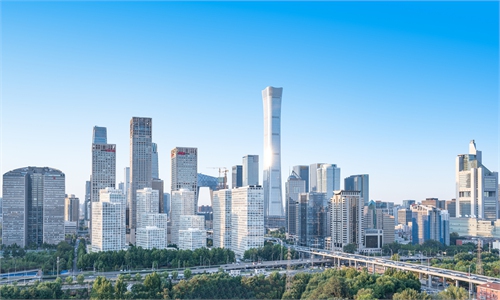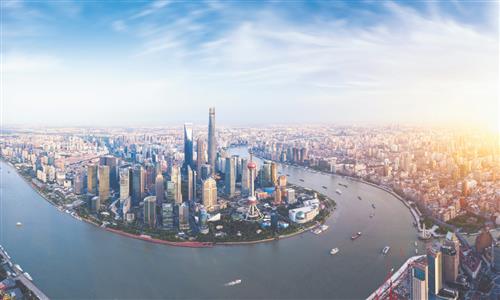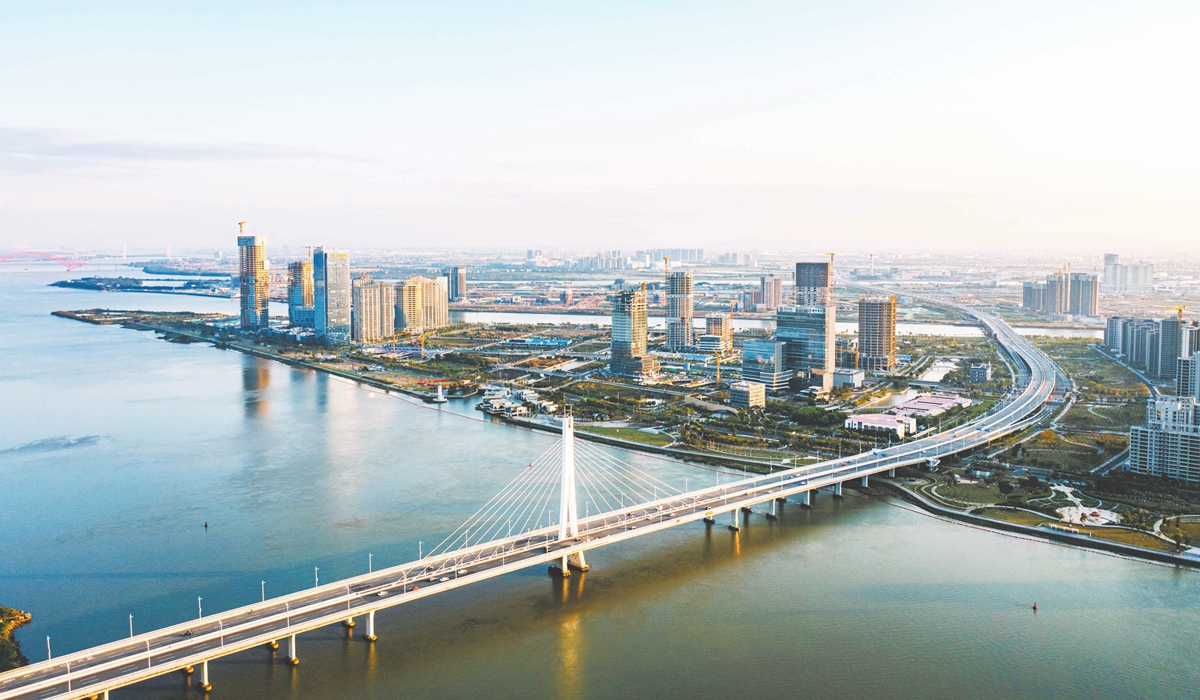
An aerial view of the Nansha Free Trade Zone in Guangzhou, capital of South China's Guangdong Province. Photo: VCG
Editor's Note:The 2025 Understanding China Conference, themed "New Plan, New Development, New Choices - Chinese Modernization and New Vision for Global Governance," is being held in Guangzhou, capital of South China's Guangdong Province, from Sunday to Tuesday. This event gathers politicians, strategists, entrepreneurs and scholars to discuss topics such as China's 15th Five-Year Plan (2026-30) and the newly launched Global Governance Initiative (GGI). Why is it essential to understand China by understanding both its five-year plans and global initiatives like the GGI? Rafael Zerbetto (Zerbetto), a Brazilian expert at China International Publishing Group and a recipient of the Chinese Government Friendship Award, shared his views with Global Times (GT) reporter Li Aixin.
GT: As a foreign expert who has lived and worked in China for many years, you personally witnessed the country's economic and social transformation during the 14th Five-Year Plan period (2021-25). Now that China is moving toward the 15th Five-Year Plan period, what has impressed you most about the changes you've seen in the past five years?
Zerbetto: What stands out most to me is the remarkable progress in China's energy transition. Five-year plans make missions accomplished. When I moved to China 10 years ago, China's energy production was heavily dependent on fossil fuels, and it seemed impossible to me that such a great change would be realized in such a short time. During the 14th Five-Year Plan period, China developed its renewable energy sector at an incredibly fast pace. It's not only about building power plants, but about a comprehensive and integrated development that includes technological development, development of industrial chains to produce windmills, solar panels, more efficient transmission lines, new-energy vehicles and much more. China not only upgraded its own energy sector, but also reduced the cost of solar and wind power, making them accessible to other developing countries.
GT: In your view, why has China been able to deliver rapid economic growth through its five-year planning while maintaining long-term social stability?
Zerbetto: China promotes synergy between the different agents involved in governance. For example, political parties cooperate under the guidance of the Communist Party of China (CPC), and once a goal is established, everyone works toward achieving it. In contrast, in Western countries, political parties maintain their divergences until the end, resulting in long debates, negotiations and shifts, making the future difficult to predict.
While governments come and go in the West, China's five-year plans stay and deliver. A five-year plan is a comprehensive development plan that sets clear targets and overall direction, and that plan is maintained no matter what, providing stability for middle- and long-term investments and a good business environment. Social stability is explained by the people-centered governance of the CPC, which is efficient in regulating the economic development and certifying that it will also bring outcomes for the people.
GT: Looking at the 15th Five-Year Plan, what feels "new" or particularly noteworthy to you?
Zerbetto: Autonomous development is a key point of the 15th Five-Year Plan. Since the reform and opening-up, China's industry relies on investments, technologies and services from foreign countries. But since the US started to sanction Chinese companies and prevent China from buying certain high-tech products, the country realized the risks of such dependence. To address these risks, China will not stop using imported technologies or receiving foreign investments; meanwhile, it will develop homegrown alternatives that tend to become competitive on a national and international scale. In other words, sanctions were intended to be a chokehold on China, but China turned them into a starting pistol.
The 15th Five-Year Plan is the first since President Xi Jinping's instruction on the development of new quality productive forces. This suggests that Chinese development in the coming years will emphasize innovative and future-oriented businesses. China noticed that it is facing a new round of scientific and technological development and regards it as an opportunity: As those sectors are new, all players are on a similar level, but China has advantages, such as the biggest consumer market in the world, an impressive number of scientists and research institutions, and convenient policies for the sectors.
In the scope of Chinese modernization, two sectors are especially important: The low-altitude economy and smart cities will grow fast in the coming years, making people's lives more convenient, creating high-quality jobs, and promoting breakthroughs in the scientific and technological capacity of China.
GT: A focus of the theme of this year's Understanding China conference is the four major initiatives China has put forward, including the GGI. If you were to explain the GGI briefly, how would you describe it?
Zerbetto: For decades, Global South countries have been complaining that they lack a voice in international governance mechanisms and institutions. However, this asymmetric power between North and South became much more serious in the last decades, with emerging economies representing a much higher share of the world GDP than before, but still with a lower voice in international governance. As we saw this year at the UN Security Council, the US alone vetoed many democratic decisions regarding the situation in Palestine. This approach to global governance, based on the leadership of one or a few hegemonic powers, failed to promote peace and development. It was also unsuccessful in addressing international problems and conflicts and fostering democratic international governance.
President Xi launched the GGI in this context, when the world needs not only to reform the UN and other institutions and mechanisms, but also update the approach to global governance to eliminate hegemonism in favor of shared responsibility of all countries for international governance. This is much more convenient for a multipolar world and also more efficient to address international problems such as global warming.
GT: The 15th Five-Year Plan is about China developing itself, whereas the GGI and the other three initiatives are about working with other countries to jointly develop the world. Why is it that "understanding China" today requires understanding both the 15th Five-Year Plan and initiatives like the GGI?
Zerbetto: China leads the world in many fields, is fully integrated in international production and distribution chains and has the biggest consumer market in the world, creating a big impact in the whole world. It means China's pursuit of stable growth at home is a gift of steadiness to the world.
The same logic also works in the opposite direction: China is the major trade partner of most countries, has deep exchanges with the world in many fields and Chinese companies are expanding their operations abroad, so the international situation may affect China's domestic business environment. Because domestic and international markets are interconnected, we cannot understand China without understanding its international and domestic strategies.
On the other hand, taking good care of one's own development is about non-interference in the internal affairs of other countries, letting each country choose its own development path, while "working with the world to shape a better future" is about the need to work together to deal with challenges such as climate change, which requires cooperation among countries. When you take care of your own business, you prevent conflicts that may escalate to wars and bring bad outcomes; when you shape a better future through cooperation, you promote mutual trust and understanding, both of which are essential for building world peace. This is China's way - focus inward for development, reach outward for common prosperity.
RELATED ARTICLES