Illustration: Xia Qing/GT
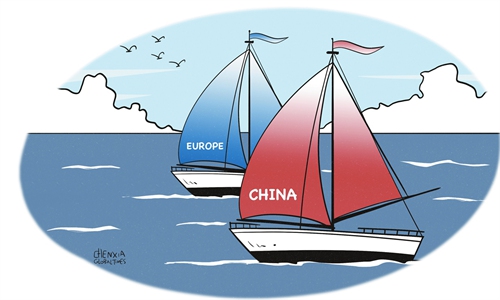
Recently, an article in the Financial Times claimed that trade is an exchange, but that because China can manufacture almost everything better and more cheaply, it supposedly has "nothing it wants to import" from the rest of the world - leading to the conclusion that "China is making trade impossible." This view not only is biased but also ignores the fundamental logic and real-world dynamics of international trade.Trade reflects the comparative advantages of buyers and sellers, and international trade is no exception. Different strengths complement one another, and based on factors such as tariffs and logistics costs, all parties derive economic benefits from cross-border exchange. China's role in global trade is far from being simple. Imports have not only been an important area that the China has strengthened, but also an essential supplement to meeting the needs of Chinese manufacturing and consumers.
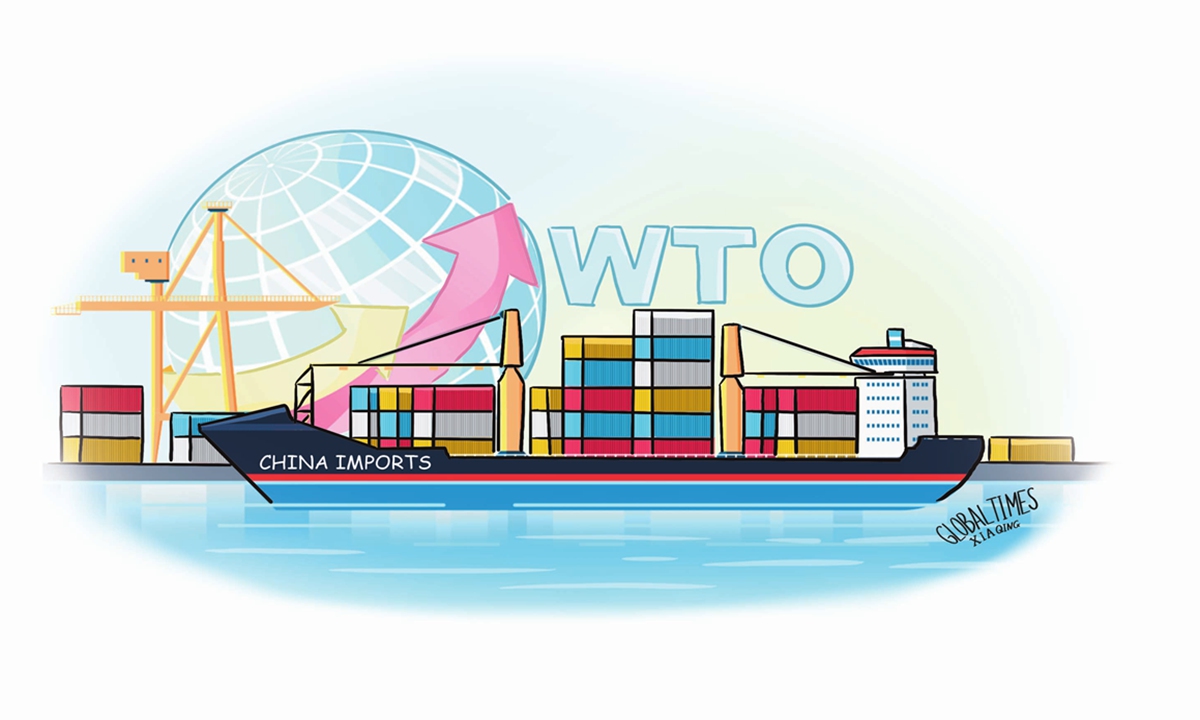
With the expansion of China's economic scale, companies and consumers now have stronger purchasing power and a greater willingness to buy, which has become a major driver of rising imports. In the first 10 months of 2025, China's imports reached 15.19 trillion yuan ($2.12 trillion). With the final two months of this year still to be added, China's import volume is on track to grow more than tenfold over the past 24 years. China's economic diversity creates broad opportunities for countries around the world.
Likewise, China's growing consumer purchasing power has fueled stronger demand for diversified food products. Rising imports of soybeans and alfalfa supply feed for China's livestock industry, as well as imports of various food items, provide a stable and expanding demand for exporting countries. This creates a dependable and sustainable market for farmers and producers, enabling them to maintain stable planting or breeding expectations.
China's differentiated market demand offers development security for agricultural producers worldwide. Whether in the US, Europe, Brazil, Australia, New Zealand, ASEAN, Africa or Central Asia, China is an indispensable market.
Although China is a major manufacturing power, mechanical and electrical products make up a substantial share of its imports. China serves as a key cooperative hub in global manufacturing. These manufacturing-related imports occur with developing and developed economies. According to China's Position on Some Issues Concerning China-US Economic and Trade Relations released in April, machinery, electromechanical equipment and optical instruments accounted for 12.1 percent, 11.1 percent and 7.8 percent, respectively, of China's imports from the US in 2024.
The Chinese government has played an important role in supporting and expanding imports. China remains committed to economic globalization and, while honoring its obligations, works to uphold and reinforce the multilateral trading system centered on the WTO. China has actively implemented the WTO Trade Facilitation Agreement, reducing import costs, speeding up customs clearance and using digital technologies.
This year, protectionism has had a noticeably stronger impact on global trade. Increased trade risks and heightened the vulnerability of global supply chains. China has not chosen to retreat or shield itself. Instead, it has further opened its market, welcoming all parties to benefit from the fast-paced growth of the Chinese economy.
China continues to advance negotiations on free trade agreements, establish intergovernmental mechanisms with trading partners, and encourage and expand cross-border e-commerce imports, enhancing the resilience of supply chains.
In addition, this year marks the eighth China International Import Expo, which has become an important platform for participants to gain insights into the Chinese market, and explore cooperation opportunities. With all these vibrant and intensive economic and trade activities in the country, as well as the willingness and commitment China has shown in promoting trade and opening-up, China is not making trade "impossible," but rather giving global trade more possibilities in various aspects.
The author is a senior research fellow at the Chinese Academy of International Trade and Economic Cooperation. opinion@globaltimes.com.cn
RELATED ARTICLES