Illustration: Xia Qing/GT
The Chancay-Shanghai sea route has handled 5.35 billion yuan ($760 million) in imports and exports, with cargo throughput reaching 197,000 tons after one year of operation.Driven by this route, Shanghai's trade with Peru grew 47.1 percent year-on-year in the first 10 months of this year, the People's Daily reported on Sunday, citing the latest data from Shanghai customs.
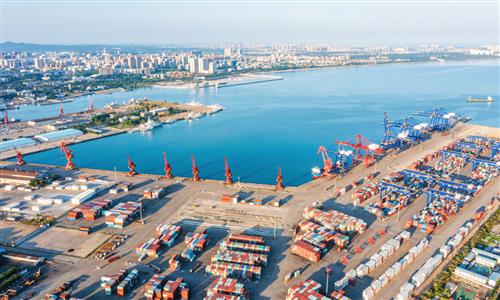
Chancay Port is an important project under the Belt and Road Initiative jointly built by China and Peru. The port, South America's first smart port, stands as a model of win-win cooperation between the two countries and a vivid example of China-Latin America collaboration. Amid increasing volatility in global markets, this more stable trade channel enables Peru and other Latin American economies to participate in the global trade with greater certainty.
Located in Chancay Bay north of Peru's capital Lima, Chancay Port officially began its operation on November 14, 2024. With customs services extended directly into the port, companies' logistics and clearance costs have been significantly reduced.
According to the People's Daily, the launch of the Chancay-Shanghai route has shortened the shipping time between China and Peru from the previous 35-40 days to just 23 days, cutting logistics costs by about 20 percent.
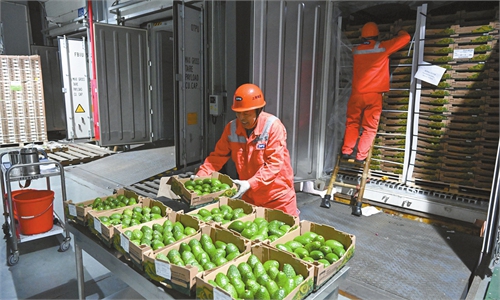
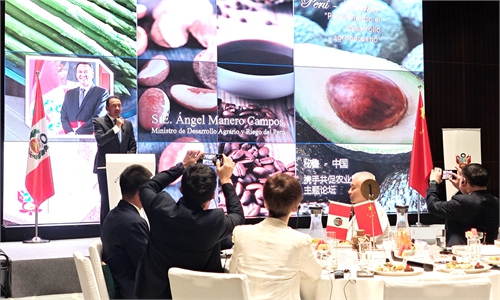
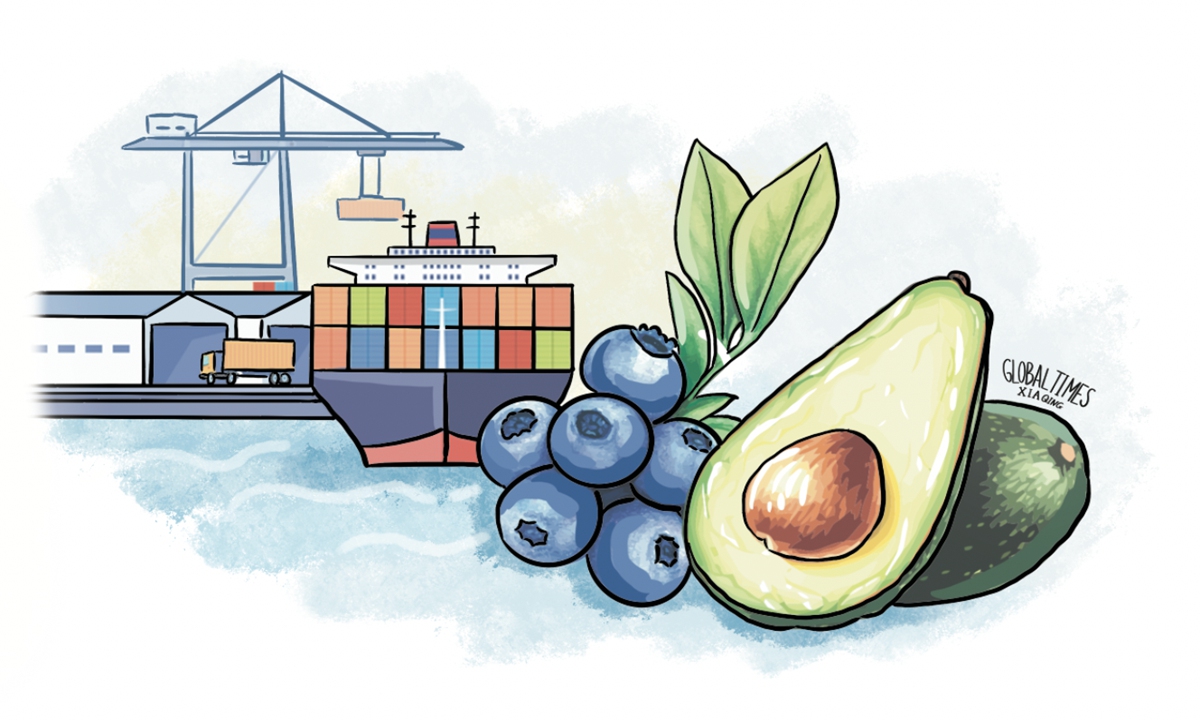
Chancay Port's main export goods include blueberries, avocados, palm oil and grapes - products that are highly sensitive to transit time. In the past, shipments took up to 40 days to reach the Chinese market, leaving exporters exposed to price swings and schedule risks. By reducing these uncertainties, the new route does more than just lower the costs, it effectively liberates the trade potential of the local economy from the constraints of traditional long-distance transport logistics.
With this stabilizing and boosting effect in place, the People's Daily reported that Peru's foreign trade has strengthened significantly: In the first nine months of this year, exports grew 17.3 percent year-on-year, with China remaining its largest export destination. Through the smart port, Peruvian blueberries, avocados, palm oil and grapes are also exported onward to markets such as Mexico and the US.
As Latin America's first smart port, Chancay's throughput and export capacity have risen rapidly. In just one year, it has become Peru's third-largest port, spurring the growth of new business sectors and accelerating upgrades across regional industrial chains.
Chancay Port's importance extends beyond trade facilitation. It is also emerging as a driver of employment and regional development. As throughput continues to increase and operations expand, the port is expected to further stimulate the economic growth of surrounding cities.
Chancay is more than a maritime gateway linking Latin America with Asia, and its positive economic significance for the local economy goes beyond expanding foreign trade growth. Chancay Port is designed to benefit broader populations - creating jobs, speeding trade, and positioning Peru as a regional logistics hub.
In the first five months of 2025 alone, trade through the Chancay Multipurpose Port Terminal surpassed $777 million. The project is expected to generate $4.5 billion in annual economic benefit for Peru, equivalent to 1.8 percent of the country's GDP, and create some 8,000 jobs, the Xinhua News Agency reported.
The port is increasingly driving employment and regional development. Rising throughput and expanding operations create direct and indirect jobs while boosting logistics, warehousing, transportation, and manufacturing. This growth stimulates nearby cities and strengthens regional competitiveness with shared momentum for coordinated growth.
Given the current robust momentum, it is foreseeable that Chancay Port is poised to further reshape Latin America's integration into global supply chains. As a Pacific gateway, it will release the vast potential of South-South trade, positioning Peru as a strategic hub linking Asian markets with the local region.
Beyond traditional trade, the project reflects a shift in China-Latin America cooperation toward higher-value infrastructure, advanced logistics and digital port systems, fostering more resilient and mutually beneficial economic ties.
The port is expected to catalyze a logistics and industrial ecosystem, from cold-chain operations to agri-processing and maritime services. By anchoring these clusters, Chancay can become a growth pole that boosts regional competitiveness.
The author is a reporter with the Global Times. bizopinion@globaltimes.com.cn
RELATED ARTICLES