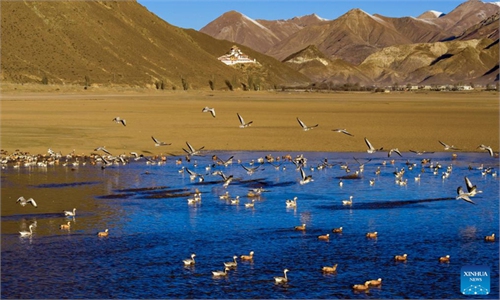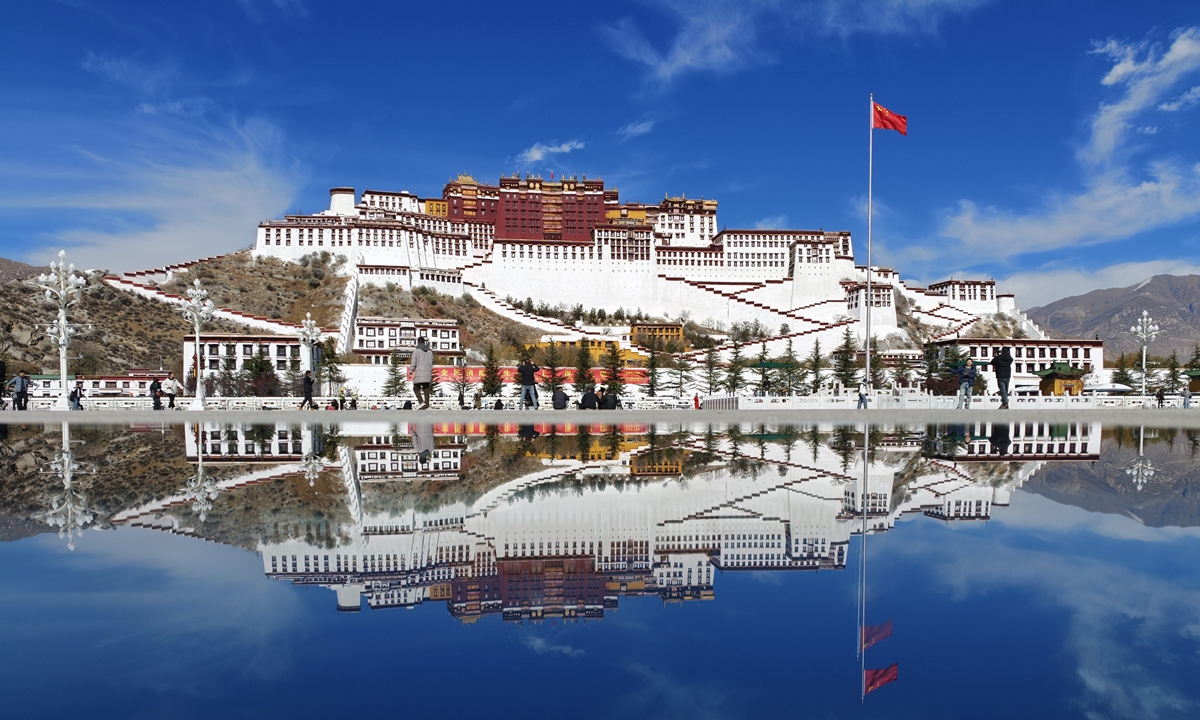
A view of the Potala Palace in Lhasa, Xizang. Photo: VCG
Editor's Note:
Xizang, a region known for its breathtaking landscapes and unique cultural traditions, has long become a target of Western smear campaigns and falsehoods about China. What is the truth? In the "Truth Seen in Xizang" series, the Global Times publishes conversations with and articles from scholars and observers from around the world who have visited the region, sharing their firsthand experience of traveling to Xizang and observing the daily lives of people there. Through their insights and experiences, we aim to present an authentic perspective on the Xizang Autonomous Region. This is the 12th installment of the series.
Since my childhood, China has been a source of inspiration for me. I have always been eager to learn more about its rich history, culture and development.
During my student life in China, I traveled extensively, visiting most of the major cities and nearly all of the key provinces. One of the most memorable journeys during my early years in China was my visit to Xizang in 1982. I was captivated by the region's breathtaking natural beauty, unique culture and spiritual heritage.
Recently, I had the opportunity to attend the "2025 Forum on the Development of Xizang, China" in October this year. Through this forum, I have witnessed firsthand the transformative journey the region has undergone over the last few decades.
These changes are striking, and they reflect an approach to development that is comprehensive, well planned and people-centered, one that holds valuable lessons not only for China but also for other countries with geographically challenging regions.
During this trip, the scale and quality of infrastructure development in Xizang was truly impressive. Lhasa Konggar International Airport has undergone major expansion and become highly modernized, greatly improving connectivity between the region and major cities across China. The road network has been expanded and upgraded, facilitating trade, tourism and social mobility. Internet and mobile connectivity have reached high standards, enabling people in even remote areas to access digital services, education and information.
Economically, Xizang has witnessed robust growth across multiple sectors. Traditional agriculture and pastoralism are being modernized, alongside the emergence of new industries like tourism and small-scale manufacturing. The health industry has made remarkable progress, and Tibetan medicine has gained strong momentum. Local businesses are thriving, and local residents are contributing not only to regional and national development but also to improving their own living standards.
What is perhaps most remarkable about Xizang's transformation is the tangible improvement in people's lives. The central government's approach to developing Xizang places its people at the center, with government subsidies, incentives and favorable policies facilitating access to opportunities that were once out of reach.
Schools are now modern and well equipped, offering quality education for children from all communities and ethnicities, while healthcare facilities have been significantly upgraded, offering comprehensive medical services even in the remote areas. Modern living standards now coexist with the preservation of cultural heritage, ensuring that development does not dilute Xizang's unique identity.
One of the most notable achievements has been the eradication of absolute poverty in Xizang. Local communities that once struggled under harsh conditions now enjoy better living standards, improved healthcare and greater access to education. The gap in lifestyle between Xizang and major cities elsewhere in China has narrowed considerably, reflecting the effectiveness of sustained and targeted development policies. This inclusive approach has empowered residents to transform their lives and contribute meaningfully to the regional economy.
I was particularly impressed by the special attention given to the welfare of ethnic minorities and the active participation of local minority communities in government, private enterprise and the services industry.
Engaging with the local people, I noticed that they are now well educated, confident and proud of the developments in the region. Compared to the 1980s, most people have been educated in local universities, with some graduating from prominent institutions in Chengdu, Beijing, Shanghai and other major cities in China. Happiness and a sense of fulfillment were evident in their smiles, laughter, healthy appearance and well-dressed attire.
Today, Xizang residents enjoy the opportunities that would have been unimaginable just a few decades ago, reflecting a successful balance between modernization and minority welfare.
The leadership of the Chinese government has played a decisive role in this transformation. While Xizang possesses natural endowments, it also faces formidable development challenges: Its high altitudes, rugged mountains and harsh climatic conditions have historically hindered infrastructure projects, communication networks and economic growth. Rapid development in such an environment requires not only vision but also sustained investment, careful planning and long-term commitment.
The Chinese government's strategic planning, substantial financial support and people-centered approach have paved the way for a comprehensive and effective development model. Xizang stands today as a testament to what visionary policies can achieve, even in regions with significant natural limitations. Its development underscores the potential of combining economic growth with social welfare, environmental stewardship and cultural preservation. The progress made in infrastructure, economy, education, health and social development highlights a coherent and people-centered approach to regional development.
The Chinese experience in developing Xizang also offers important replicable lessons for other countries, particularly those with geographically challenging regions. Developing high-altitude or remote areas is inherently complex and costly, but strategic investment, a people-centered approach and a long-term vision can yield remarkable results.
Pakistan, for instance, has high mountainous regions such as Gilgit-Baltistan and border areas adjoining the Karakoram Mountains. These regions face similar challenges in terms of terrain, climate and accessibility. Learning from China's experience in Xizang could help Pakistan uplift these areas, improve the livelihoods of local communities and achieve inclusive regional development.
Key takeaways include the importance of infrastructure connectivity, investment in education and healthcare, supportive government policies for entrepreneurship, and environmentally sustainable practices. Equally crucial is the commitment to minority welfare and the empowerment of local populations, ensuring that development is inclusive and equitable.
In Xizang, one sees more than development; one sees a vision. Every citizen has the opportunity to thrive, where traditions and modernity coexist, and where government policies actively serve the people. The region's journey is not only a source of pride for China but also a model that other countries, including Pakistan, can study and adapt to uplift their own remote and underserved regions.
Xizang's story is a reminder that with dedication, foresight and a people-centered approach, even the most challenging environments can become hubs of growth and prosperity.
The author is the founding chair of Global Silk Route Research Alliance, a sinologist, a researcher at Global South Economic and Trade Cooperation Research Center, and a non-resident fellow of CCG. opinion@globaltimes.com.cn
RELATED ARTICLES