Mexico’s tariff hikes on China to cause major disruptions for some key industries of the Latin American country: expert
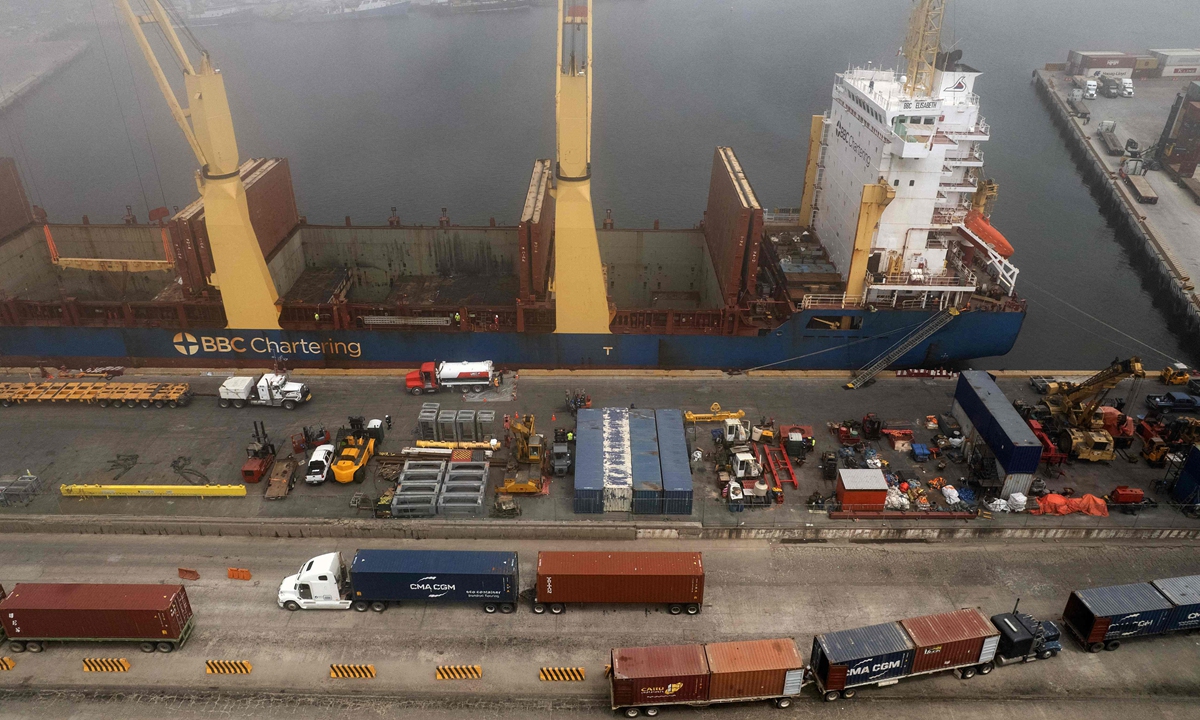
This aerial view shows the Port of Ensenada in Baja California state, Mexico on April 11, 2025. Photo:VCG
Mexico's Congress is reportedly set to vote this week on proposed tariffs on China, despite fierce opposition from relevant Mexican businesses, according to media reports. A Chinese expert said on Wednesday that if implemented, the move could cause major disruptions for some key Mexican industries.
Mexico's lower house early Wednesday approved tariffs of up to 50 percent next year on imports from China and several other Asian countries, Reuters reported. The bill still requires Senate approval, despite opposition from China and local business groups, according to the report.
After a review by the Finance and Economy ministries, at least 750 changes were made to the original proposal. Of more than 1,400 products initially targeted, over 300 ultimately ended up exempt. Even so, the levies will apply to a wide range of products, from clothing and footwear to steel, aluminum and auto parts, Bloomberg reported.
Mexico first unveiled the proposed tariffs in September but the proposal has struggled to gain broad support in Congress. The proposal would raise tariffs by up to 50 percent on imports of automobiles, textiles, clothing, plastics, steel and other products from China and other Asian countries that do not currently have a trade pact with Mexico, including India, South Korea, Thailand, and Indonesia, Reuters reported.
Notably, foreign media, including Bloomberg and Reuters, singled out China among the targets of the proposed tariffs in their reports.
"If the additional tariffs on China are adopted, it would have a clear impact on Mexico's economy and cause major disruptions for Mexico's industries, particularly the automobile sector, which relies heavily on Chinese components," Wang Youming, director of the Institute of Developing Countries at the China Institute of International Studies in Beijing, told the Global Times on Wednesday.
According to Reuters, experts have warned that the proposed tariffs could disrupt critical supply chains at a time when Mexico's economy has essentially stalled. Meanwhile, Bloomberg reported that manufacturers reliant on Chinese inputs warned of rising costs, and lawmakers, including some from the ruling party, sought to avoid a dispute with a region many consider crucial to Mexico's trade diversification.
Victor Cadena, executive vice president of the Mexican Chamber for Commerce in China (Mexcham China), noted on Wednesday that the bill to increase tariff has been in the Mexican Congress since September, already four months, and till now this bill has not been approved nor have it entered into force.
Cadena told the Global Times that the chamber's position on the move remains the same as its statement posted in September. That statement said that "it recognizes the sovereignty and self-determination of both Mexico and China and proposes a continuous dialogue led by actions that promote win-win cooperation, shared gains and mutual development."
Talking about the importance of the Chinese market, products and supply chains to Mexican businesses and consumers, Cadena said that "certainly the importance is huge," noting that China is the second-largest trading partner of Mexico globally for over 20 years, and Mexico is the second-largest trading partner of China in Latin America.
Meanwhile, media reports noted that Mexico's proposal comes as it faces heavy pressure from US tariff threats. Bloomberg claimed that the move was fueling expectations that it could soon make room for US tariff relief on Mexican steel and aluminum.
Wang said that compromising under US pressure and implementing additional tariffs on China would ultimately affect Mexican companies and consumers. Also, since many Mexican products made with Chinese components are exported to the US market, the proposed tariffs, if implemented, would also impact US importers and consumers, the expert said.
Previously, on September 11, when asked to comment on Mexico's proposed tariffs, Chinese Foreign Ministry spokesperson Lin Jian said that China advocates a universally-beneficial and inclusive economic globalization, opposes all forms of unilateralism, protectionism and discriminatory and exclusive measures, and firmly rejects moves that are taken under coercion to constrain China or undermine China's legitimate rights and interests under any pretext. "We will firmly protect our rights and interests in light of the developments of the situation," said Lin.
RELATED ARTICLES