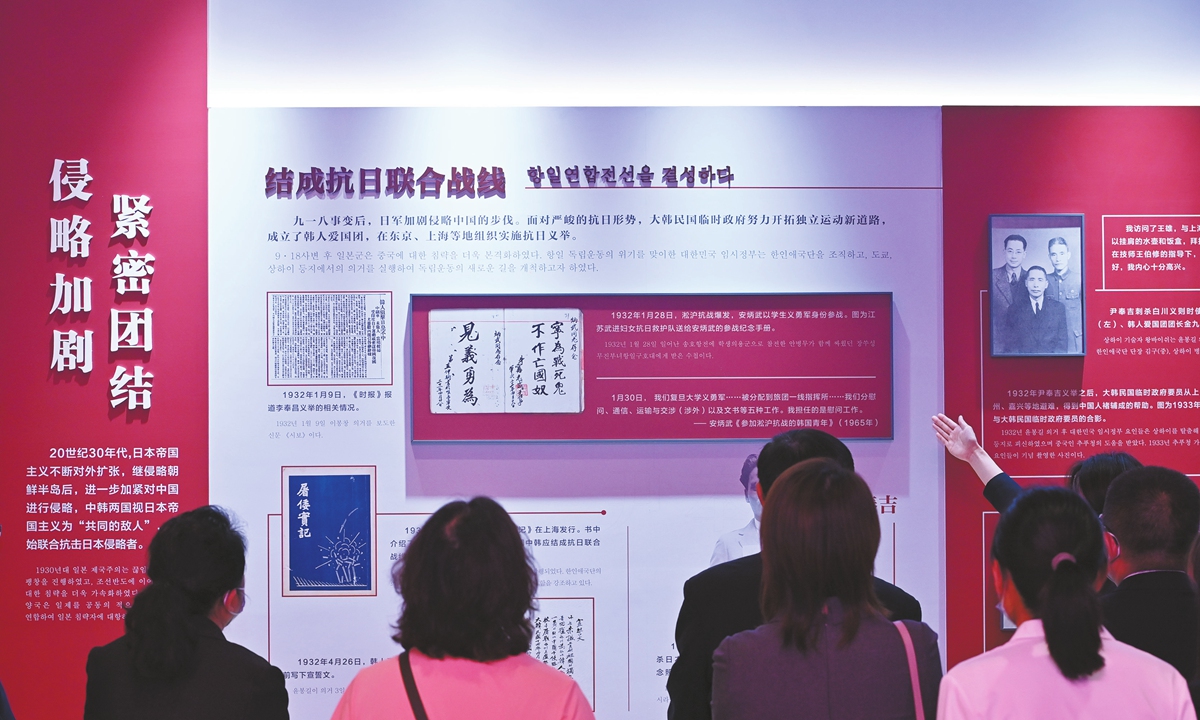
The Museum of the War of Chinese People's Resistance Against Japanese Aggression hosts a special exhibition on the China-South Korea joint resistance against Japanese aggression during World War II in Beijing, on September 3, 2022. Photo: IC
Editor's Note:China and South Korea are important neighbors, geographically close and culturally connected. During the struggle against Japanese imperialist invasion, the two countries forged a deep relationship built on mutual support and solidarity. Today, as the remnants of Japanese militarism re-emerge and even grow more rampant, the shared memory of resistance serves as an important historical bond between the two countries.
To enhance understanding of South Korea and grasp the trajectory of China-South Korea relations, the Global Times, in collaboration with Chinese universities and think tanks, is releasing a series of reports on South Korea. In the third installment of the series, we explore why shared memories of resistance should be strengthened and how to build China-South Korea consensus on global governance.
Both China and South Korea once suffered under Japanese imperialist aggression, and in their shared struggle against invasion, the two countries forged a profound bond of friendship. This shared history of resistance has become a spiritual link of great significance in China-South Korea relations.
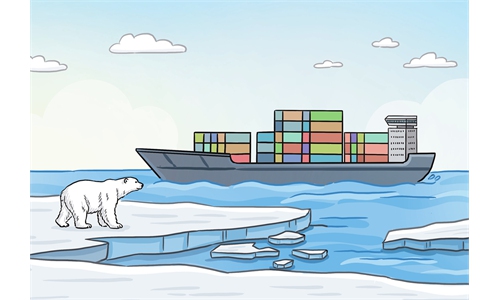
Amid today's complex and shifting international landscape, systematically revisiting the historical record of China-South Korea joint resistance is not only vital for both peoples to gain a clearer understanding of history and to honor those who sacrificed their lives, but also for infusing new depth and vitality into China-South Korea cooperation in the new era. Whether it's addressing climate change, advancing reform of the multilateral trading system or safeguarding regional peace and stability, China and South Korea can draw upon their shared historical memory to build a stronger consensus and pursue mutual benefit and shared progress, playing a more coordinated and positive role in global governance.
During the previous Yoon Suk-yeol administration, China-South Korea relations sank to their lowest point since the establishment of diplomatic ties, largely due to Seoul's pro-US and anti-China stance. Since taking office, however, President Lee Jae-myung has made clear efforts to repair and revitalize relations with China. Chinese President Xi Jinping's recent attendance at the APEC Economic Leaders' Meeting in Gyeongju and his first state visit to South Korea in 11 years marked a major step forward. The two leaders agreed to strengthen strategic communication and consolidate the foundation of mutual trust and deepen cooperation in areas including economy and trade, finance, agriculture, law enforcement, and science and technology - signaling a steady rebound in bilateral relations.
In this context, reviving the shared memory of China and South Korea's resistance against Japanese aggression can serve as a meaningful way to reshape perceptions, strengthen mutual understanding, and foster genuine people-to-people connections between the two nations.
Shared history of joint resistance
China and South Korea share deep-rooted historical ties of cooperation against Japanese aggression. During the years of Japanese aggression, China gave strong support to the Korean independence movement. China not only offered political asylum and military assistance, but also provided geographical, diplomatic and moral support, helping sustain Korea's struggle for independence. In many ways, China was both a supporter and a witness to Korea's independence movement.
During an address by former South Korean president Moon Jae-in in 2020, he touched on his visit to the Provisional Government of the Republic of Korea building in Chongqing in 2017 and said, "The Provisional Republic of Korea Government is the root of what we are today and the Republic of Korea's legitimacy and spirit."
The Korean Independence Movement integrated with the Chinese People's War of Resistance Against Japanese Aggression following the latter's full-scale outbreak. During the most arduous years of China's resistance, Korean patriots fought side by side with Chinese soldiers and civilians, with many sacrificing their lives.
However, it is worth noting that some in South Korea remain unaware of the scale and significance of Korean anti-Japanese resistance activities in China. Some forces have emphasized the self-reliant nature of its independence movement, downplaying China's role in providing shelter, training and diplomatic support to the KPG and in shaping the foundations of modern Korea's armed forces.
Strengthening cooperation through shared legacy of anti-Japanese resistance
China and South Korea need to move on from rediscovering their "shared memories" of wartime resistance to building a "shared narrative."
At the government level, both sides should deepen exchanges on wartime history. Official dialogues between China and South Korea could include more opportunities to discuss historical issues related to the war of resistance. Holding bilateral meetings in cities that witnessed shared resistance efforts - and including visits to historical sites of joint struggle in the itineraries of high-level South Korean delegations - would help subtly reinforce mutual recognition of this shared history and solidify the foundation of political trust between the two nations.
In academia, it is essential to strengthen education and cultural exchanges related to wartime history, and to establish a joint platform for historical research. Creating a "China-South Korea Joint Research Center on the History of the War of Resistance" could facilitate the sharing of archival materials, joint studies and the compilation of co-authored textbooks and publications. Integrating the history of China-South Korea wartime cooperation into both countries' education systems would help younger generations understand and connect emotionally with this pivotal chapter in their shared past.
In diplomacy, the two governments should strengthen communication and coordination on historical issues, jointly defend historical truth and prevent differing historical perceptions from straining bilateral relations.
In culture and tourism, the mutual visa-free entry policy offers a timely opportunity to develop war-history tourism resources and deepen people-to-people ties. Joint youth exchange and study programs could further strengthen awareness and emotional connection between young people of both countries.
In everyday exchanges, China and South Korea should institutionalize joint commemorative events. An annual "China-South Korea Memory of Resistance Forum" could bring together representatives from both sides to visit key historic sites - such as the former KPG headquarters in Chongqing.
In public communication, both sides should enhance media cooperation and storytelling. Documentaries, podcasts, co-produced films and multilingual short videos can be produced for distribution on South Korean social media platforms. They can help remind the public not to forget history, highlight South Korea's own resistance efforts, and tell the powerful story of China and South Korea standing shoulder to shoulder. Such efforts can also challenge Western-centric or great-power-dominated narratives about the Korean Peninsula, bringing the focus back to the shared courage and sacrifice that once united China and South Korea.
Advancing global governance cooperation through shared memory
The shared memory of China and South Korea's joint resistance against Japanese aggression embodies values such as sovereign equality and mutual support, which deeply resonate with the core spirit of global governance initiatives. These values can be transformed into a shared governance consensus between the two countries, guiding both to work together for a more just and equitable international order. To this end, the two countries can advance cooperation through the following pathways.
First, jointly safeguarding the post-WWII international order. As both victors and beneficiaries of the post-WWII order, China and South Korea have a shared responsibility to uphold it. Lately, Japanese Prime Minister Sanae Takaichi's overtly provocative remarks on the Taiwan question, implying the possibility of military intervention in the Taiwan Straits, have extremely negative implications for the region. Nowadays, the rightward shift in Japan's national strategy has intensified, deviating from Japan's post-war path of peaceful development and posing a serious challenge to the post-war international order built on the United Nations Charter.
Japan has, in recent years, been revamping its security and defense policies, accelerating the revision of its pacifist constitution, and breaching the exclusively defense-oriented principle. It has even attempted to alter its three non-nuclear principles. These moves have placed neighboring countries and the international community on high alert.
China and South Korea should therefore strengthen coordination in responding to Japan's revisionist tendencies and rightward shift on historical issues, jointly defending the post-WWII order and stability in the region.
Second, deepening economic and trade cooperation to counter deglobalization. Both China and South Korea are major beneficiaries of globalization, with shared interests in maintaining a rules-based free trade system. In the face of unilateral trade policies, the two countries should jointly safeguard the functioning of global trade rules, oppose deglobalization and trade unilateralism, and accelerate the second-phase negotiations of the China-South Korea Free Trade Agreement, advance the China-Japan-South Korea FTA, and expand the Regional Comprehensive Economic Partnership.
Third, strengthening regional coordination to oppose a new cold war in Northeast Asia. A new cold war in Northeast Asia serves no one's interest. The two should enhance dialogue and coordination, resist bloc politics and zero-sum confrontation, and jointly maintain peace, stability and prosperity on the Korean Peninsula and across the region.
Fourth, addressing global challenges together - climate change, public health and digital governance.
Fifth, enhancing maritime cooperation and managing differences responsibly through dialogue and consultation, and maintaining open communication to prevent incidents and ensure maritime stability.
Sixth, expanding people-to-people and cultural exchanges. Cultural and civil cooperation form the foundation of lasting trust. The two sides can jointly organize "Years of Cultural Exchanges" and leverage programs such as "East Asia Capital of Culture" to enhance mutual understanding through diverse cultural activities.
The author is an associate professor at the School of Foreign Languages and Literature, Shandong University. opinion@globaltimes.com.cn
RELATED ARTICLES