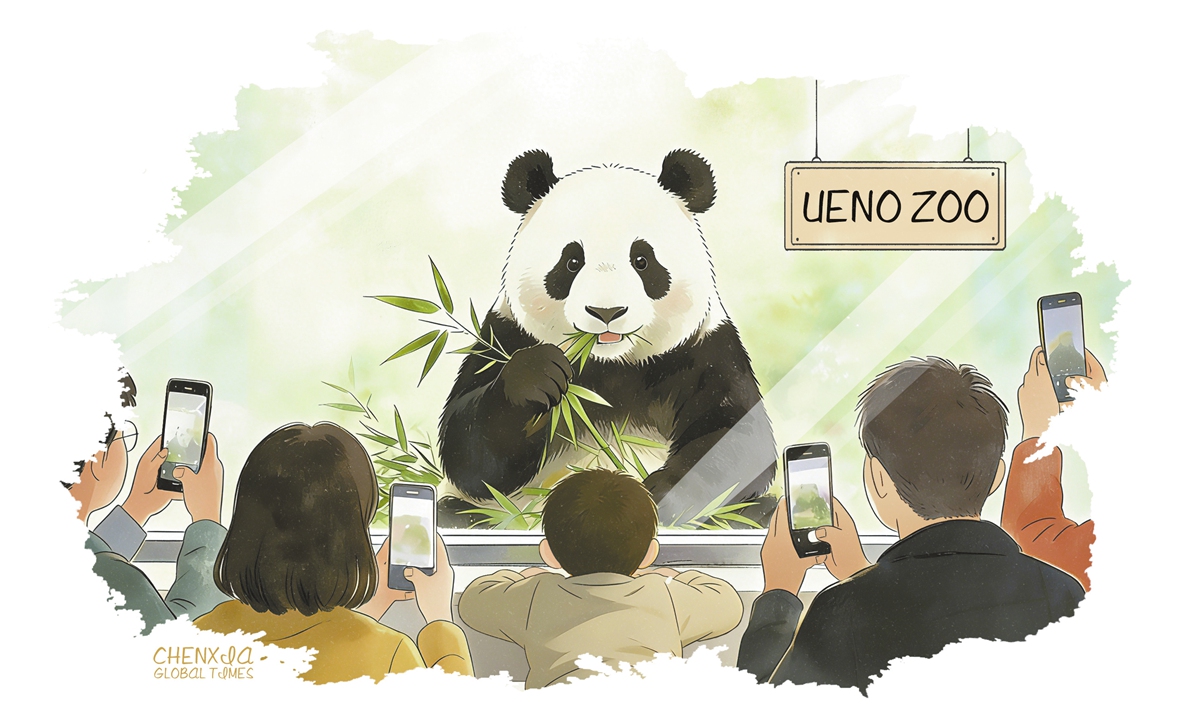
Illustration: Chen Xia/GT
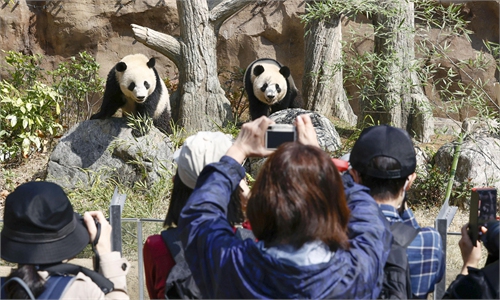
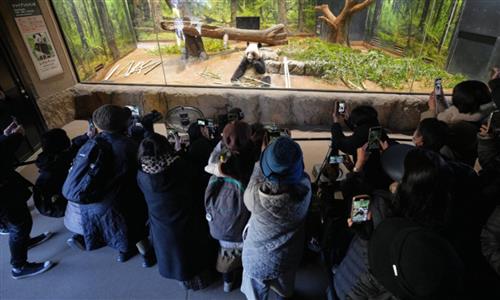
This week, Tokyo's Ueno Zoo has been gripped by a sense of warmth and reluctance. People have been lining up to bid farewell to giant pandas, a gesture that reflects not only the Japanese public's affection for the animal, but also the fact that Takaichi's misguided China policy has become an obstacle to the sincere desire of many Japanese for the continuation of warm China-Japan exchanges.
According to estimates by the zoo, from December 16 through the final viewing day on January 25, about 178,000 visitors are expected.
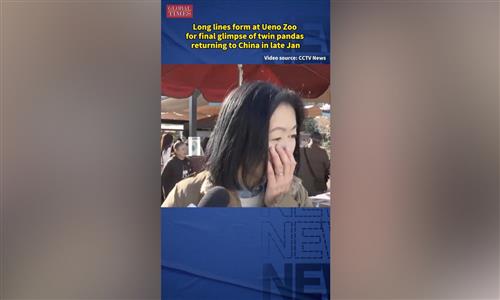
The scene inevitably evokes memories from more than half a century ago. In 1972, when the first pair of giant pandas, Lan Lan and Kang Kang, arrived in Japan, similar lines formed at the Ueno Zoo. Before the zoo opened that day, nearly 3,000 people were already waiting in line. Over the past five decades, from Kang Kang and Lan Lan to Xiao Xiao and Lei Lei, giant pandas have served as a cultural bond, etched into the memories of three generations of Japanese people. One Japanese visitor said that she has loved pandas since childhood, when she first saw Kang Kang and Lan Lan.
"Pandas going from China to other countries meet people's desire to see rare animals, and what they bring with them is the goodwill of the Chinese people," Lü Chao, a professor at the Liaoning Academy of Social Sciences, told the Global Times.
These warm exchanges have recently been forced into a real-world political test in Japan. In November, Japanese Prime Minister Sanae Takaichi stated during a Diet session that the Chinese mainland's "use of force on Taiwan" could constitute a "survival-threatening situation" for Japan, implying the possibility of military intervention in the Taiwan Straits. Such remarks dealt a serious blow to the foundations of China-Japan relations and undermined their political basis. To date, the Japanese government has not formally withdrawn the statement.
A series of erroneous remarks and actions by Takaichi has already created real and lasting obstacles to what could otherwise have been stable people-to-people exchanges between China and Japan. Such exchanges depend on stable expectations and mutual respect, yet her words have repeatedly introduced uncertainty, forcing ordinary people to bear the consequences of political adventurism.
At a deeper level, this is Japan's right-wing ideology that places it ahead of rational diplomacy and allows confrontation to override traditions of exchange. This approach not only erodes the political and social foundations of China-Japan relations but also ignores the rational public opinion in Japan that favors peaceful interaction.
Public sentiment is waiting for tensions to cool, yet policy continues to turn up the heat. The long farewell lines and the repeated questions about "whether we will ever see pandas in Japan again" all represent a clear expression of public feeling. Such sentiment is not unusual. People-to-people exchanges between China and Japan have long existed and remain vital channels for friendly relations. Pandas are merely one of visible and emotionally resonant symbols among them.
The Takaichi government needs to recognize that the long lines outside Ueno Zoo are about far more than affection for a pair of pandas - it is a genuine expression of the Japanese public's hope that cultural exchanges between China and Japan will continue. If the Japanese government's actions continue to ignore this sentiment, it will leave the public feeling disappointed and powerless, and even weaken the cultural trust and exchange foundations built up over time.
The lines outside the zoo and the words spoken in the Diet are extending in opposite directions. In one corner of Tokyo, politicians debate "geostrategy" and "confrontation." Outside Ueno Zoo, however, that long, quiet line speaks volumes about ordinary people's deep appreciation for warm human connections that transcend national borders.
RELATED ARTICLES